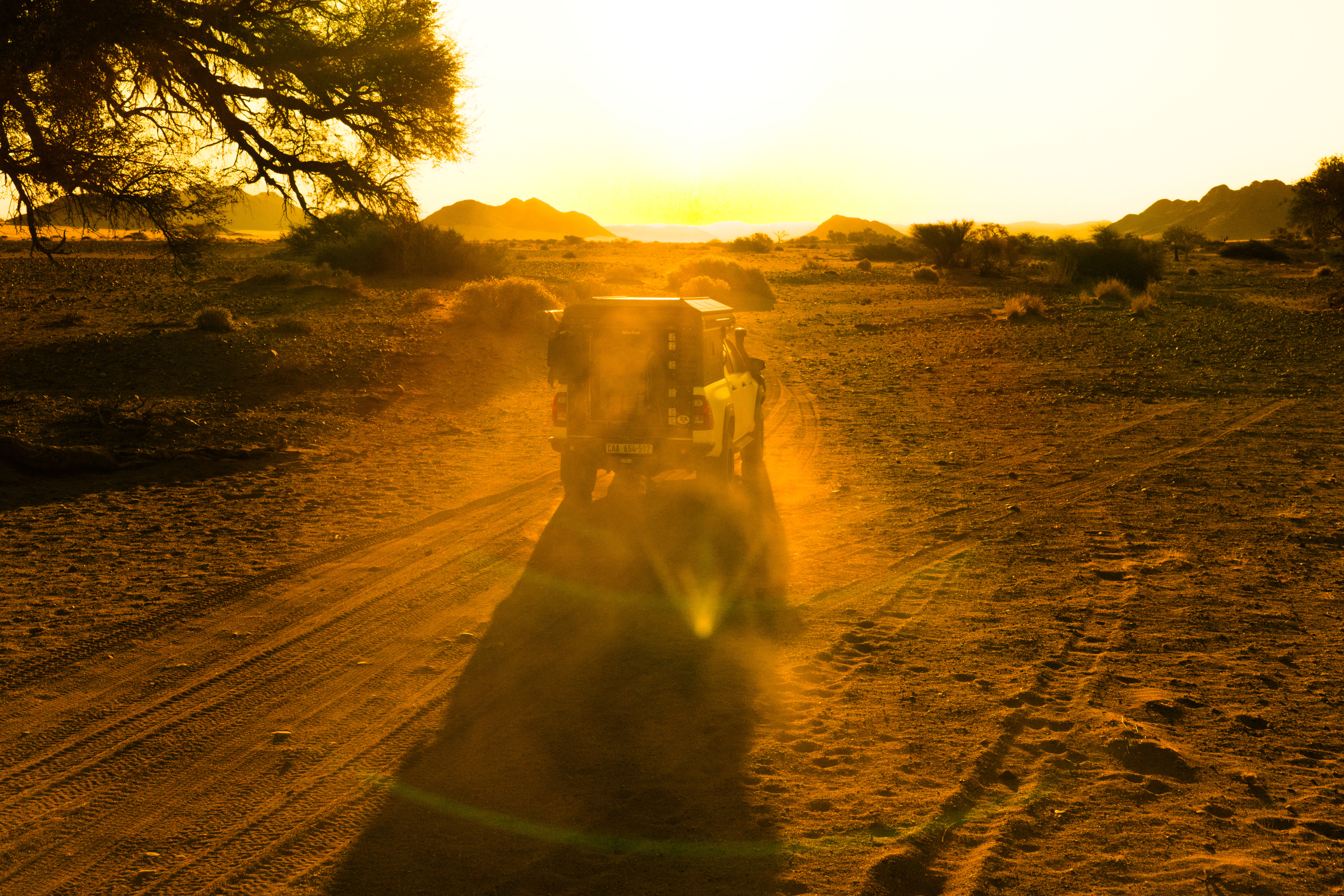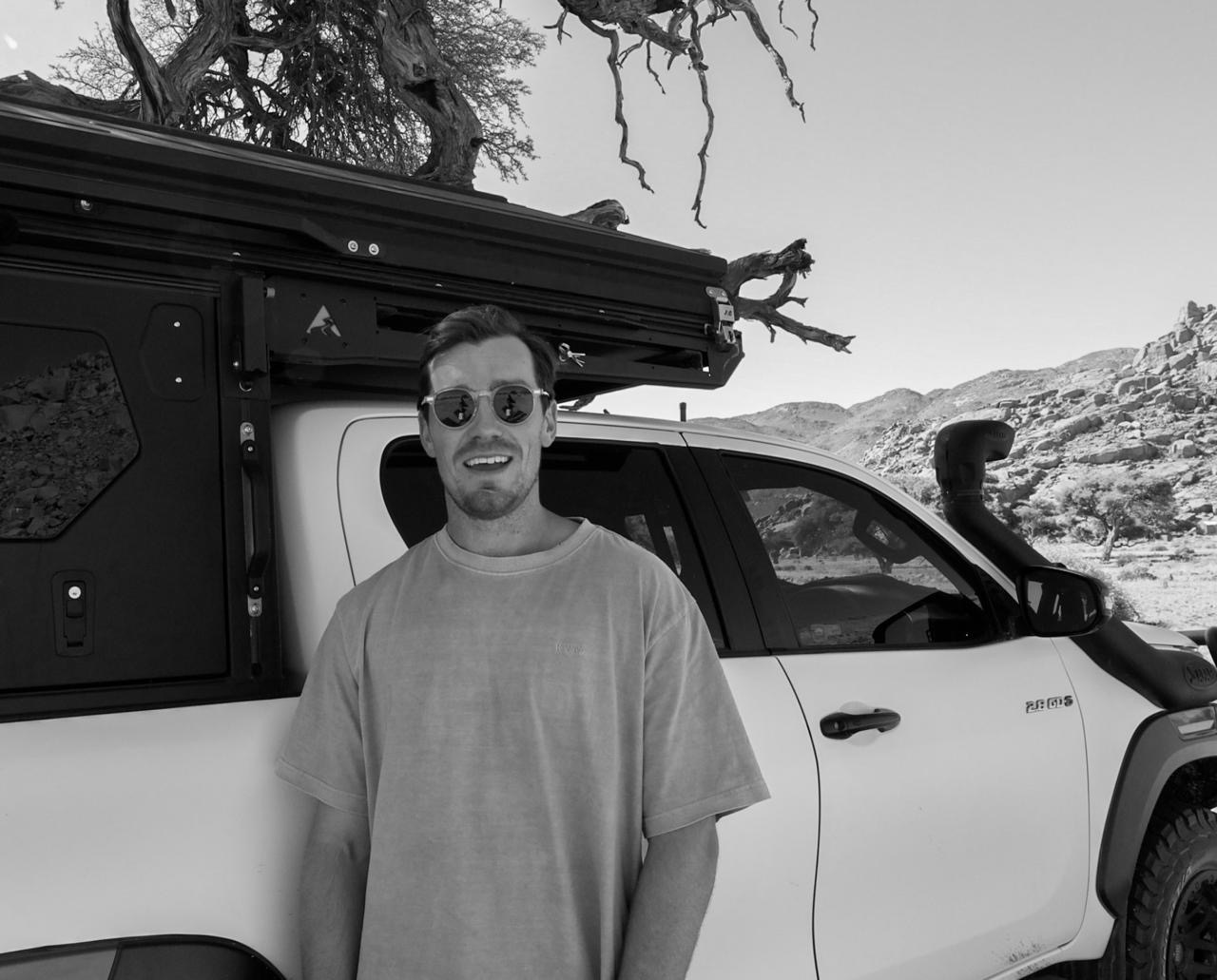
We were introduced to Harry Morris by our friend Zane Kapp, who told us about a young yachtie building his first overland rig. One look at Harry’s Instagram page made us question our life choices. Waterfalls that border Vietnam and China. Fijian coral reefs. Freediving with whales in Polynesia… While we can’t swap lives with him, we can certainly follow along. Now, thanks to Harry and his partner Caila O’Brien, who generously tag us in their updates and share photos of their adventures, we get to experience their travels vicariously. We’re sharing their story here, hoping it inspires you as much as they inspire us.
How did your upbringing shape your outlook and sense of adventure?
I grew up on a tobacco farm in Zimbabwe until I was ten, which deeply shaped my connection to the African bush and its raw beauty. When my family immigrated to Australia, I completed high school there, all I could think about was working a career that allowed me to travel. At eighteen, I returned to Zimbabwe on a solo trip with my first DSLR camera. That journey brought back powerful childhood memories and sparked a deeper connection to Africa, setting the foundation for my passion for travel and visual storytelling.
And now you’re on the boats?
I started working on yachts in 2016. The industry immediately appealed to me as a way to combine work, travel and access to incredibly remote parts of the world. All while being part of a team. It also offered exposure to diverse cultures and environments that few other careers can. After about a year, I realised my passion for filmmaking and documenting life abroad wasn’t going anywhere. I was fortunate to secure a role within one of the finest fleets in the industry. I started out as a deckhand and eventually qualified as a navigational officer. As the scale of the operation grew, I started filming at work more until a position for a dedicated, full-time media position became available. The constant change of horizons and cultures is why I love it as much as I did ten years ago.
What does your work life look like, and how do you spend your time when you’re on land?
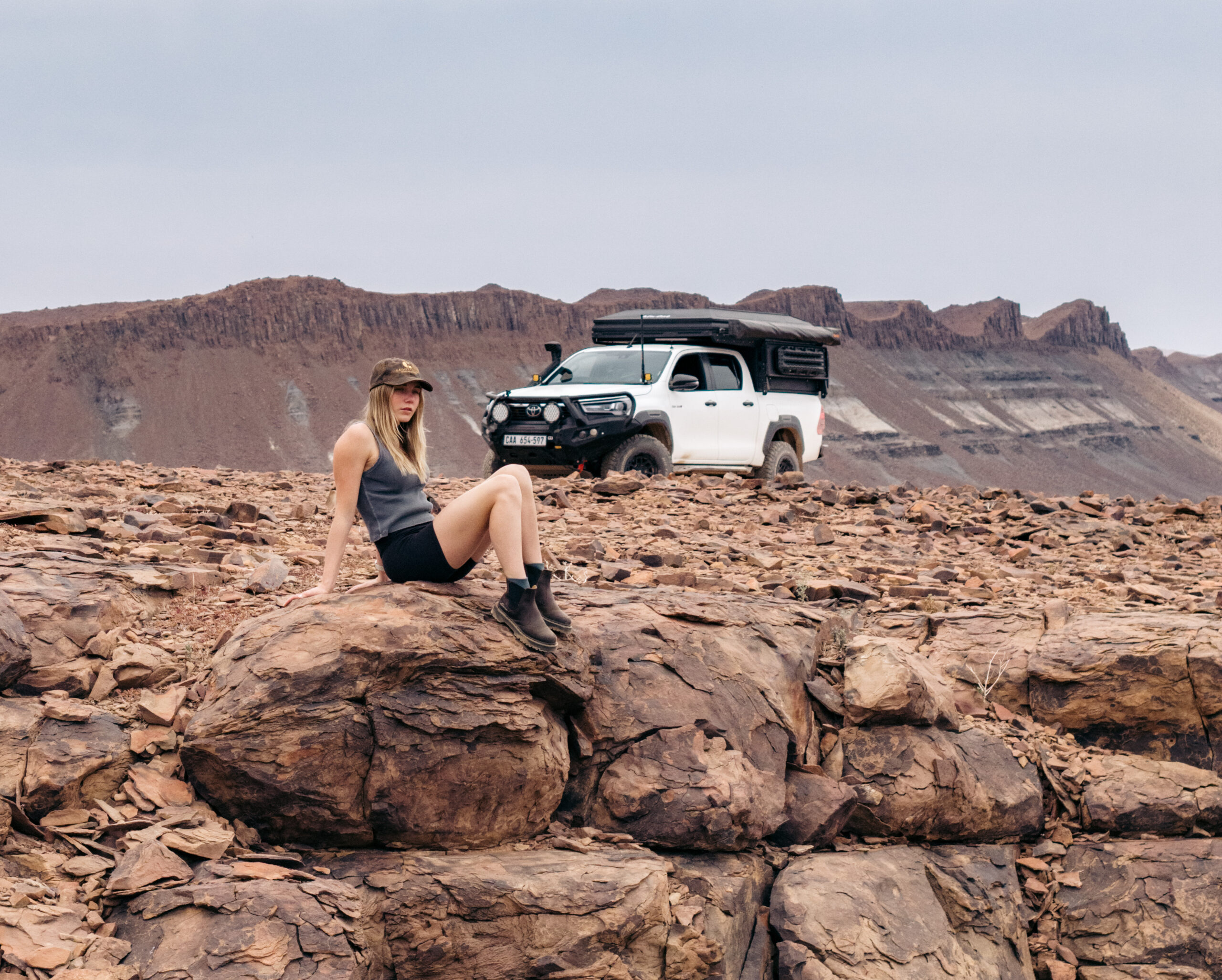
There really isn’t a typical work week for me, as everything depends on the vessel’s schedule. One week I might be on charter, where the focus is on being ready for anything. Dive rigs prepped, drones charged and cameras set to capture the guest experience as it unfolds. The following week could be spent entirely in the edit suite, crafting and delivering the final production. A significant part of my role also involves philanthropic and altruistic projects. Spending time in remote communities, working alongside the team to support those in need while documenting the process. Last year I took 58 flights across Europe, the Pacific, Mexico and the United States. While this lifestyle was once a dream, it can be mentally and physically demanding. When I’m off rotation, I reset by getting out into nature, slowing things down and focusing on personal creative projects. Overlanding has become the perfect counterbalance to yacht life. It allows me to work at my own pace, reconnect creatively and stay grounded.
What drew you to the Hilux for your first overland build?
I’ve always dreamed of building a dedicated overland rig. After driving different 4WDs in varied conditions, the Hilux consistently stood out for its reliability and solid feel. I also appreciate the balance Toyota strikes between capability and comfort. In my mind, the Hilux offered a more nimble platform that could handle technical terrain while still being comfortable on long highway drives. Something I see as an important factor for extended trips.
What was the first major upgrade you made?
The vehicle was completely stock when I bought it, which I actually really enjoyed. Driving it in factory form gave me a clear baseline and an appreciation for just how much the character of the vehicle would change once it was built out. The very next day, it went straight in for new tyres and suspension. That combination was by far the most noticeable upgrade. Not only did it transform the stance and overall presence of the rig, but more importantly, it completely changed how I felt behind the wheel. Suddenly, the Hilux felt capable and confident in the bush. Allowing me to leave the pavement, explore more challenging terrain and start using the vehicle for what it was truly intended – getting deeper into remote environments with purpose and confidence.
Tell us about your suspension setup and why you chose it?
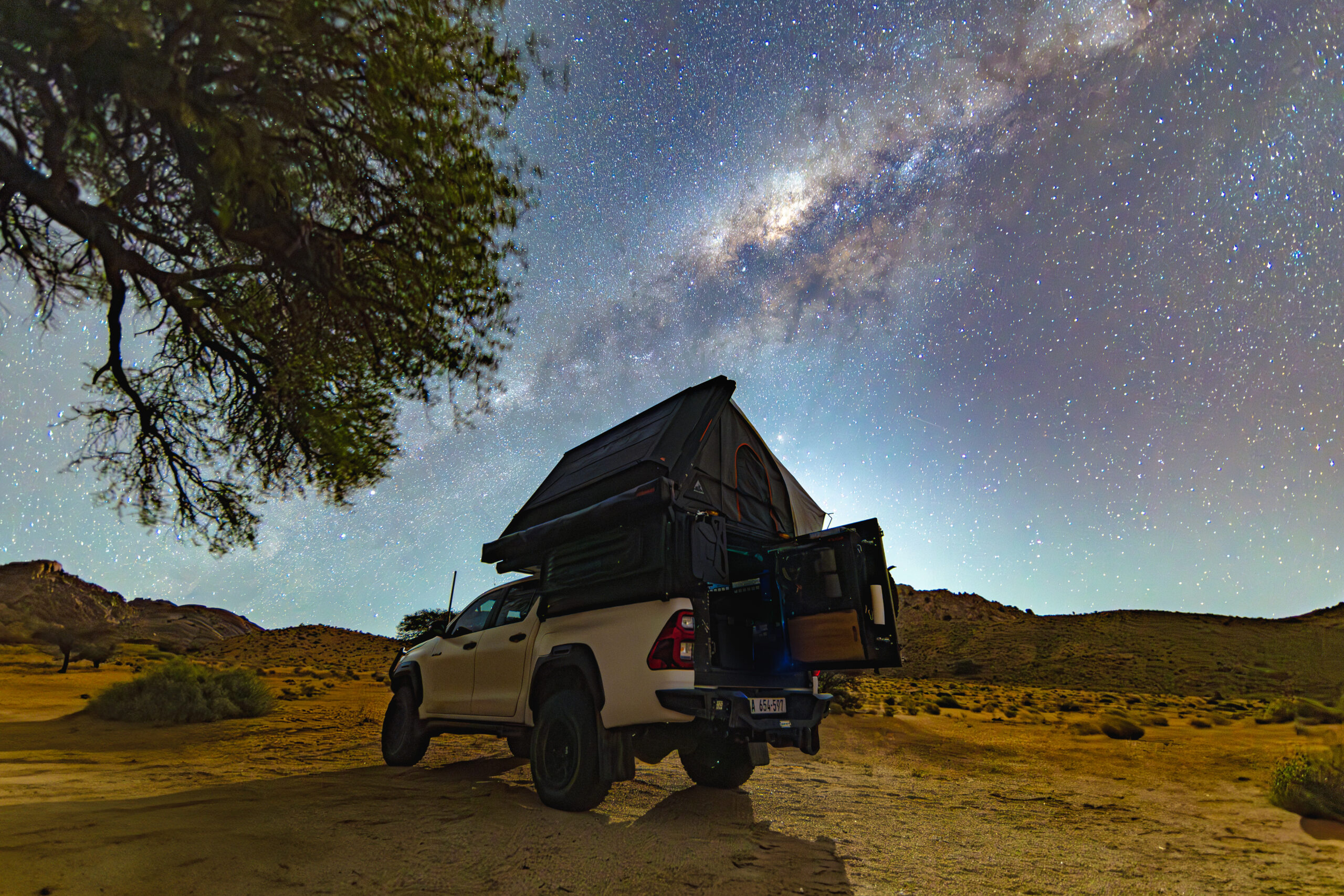
I’m running Tough Dog 9-stage adjustable suspension. It’s set up with a constant 500 kg rear load rating for the Alu-Cab ModCAP Family Camper and a full overlanding configuration. To complement this, the rear is also fitted with airbags. This allows me to fine-tune ride height and support depending on load and terrain. The adjustability has been key. Being able to dial in the suspension for varying weights, road conditions and driving styles makes a huge difference. Particularly on long-distance travel where comfort, control, and reliability all matter.
What tyres are you running?
I’m running BFGoodrich All-Terrain KO3s. They felt like the natural evolution of an already proven global tyre. The tread pattern strikes a great balance. Aggressive enough for sand and rocky terrain, yet quiet and predictable on long stretches of tar. Durability and puncture resistance were major priorities, especially in remote African conditions where tyre failures can quickly become trip-ending. The KO3s give me confidence to air down, carry heavy loads, and still cover long distances comfortably.
How did you approach power system for long-term, off-grid travel?
My power setup is still a work in progress. I’m running an EcoFlow Delta Pro paired with a 400W portable solar panel and an 800W alternator charger. It’s been a solid temporary solution and has allowed me to properly understand my real-world power demands. The plan is to move toward a more permanent system built around the REDARC Manager Alpha 75, combined with a 2000W inverter, 300W of fixed solar, and 300Ah of lithium storage. With drone and cinema camera batteries consuming a significant amount of power, the ultimate goal is to be fully off-grid and capable of charging equipment for weeks at a time without relying on external power.
Which Alu-Cab products did you choose?
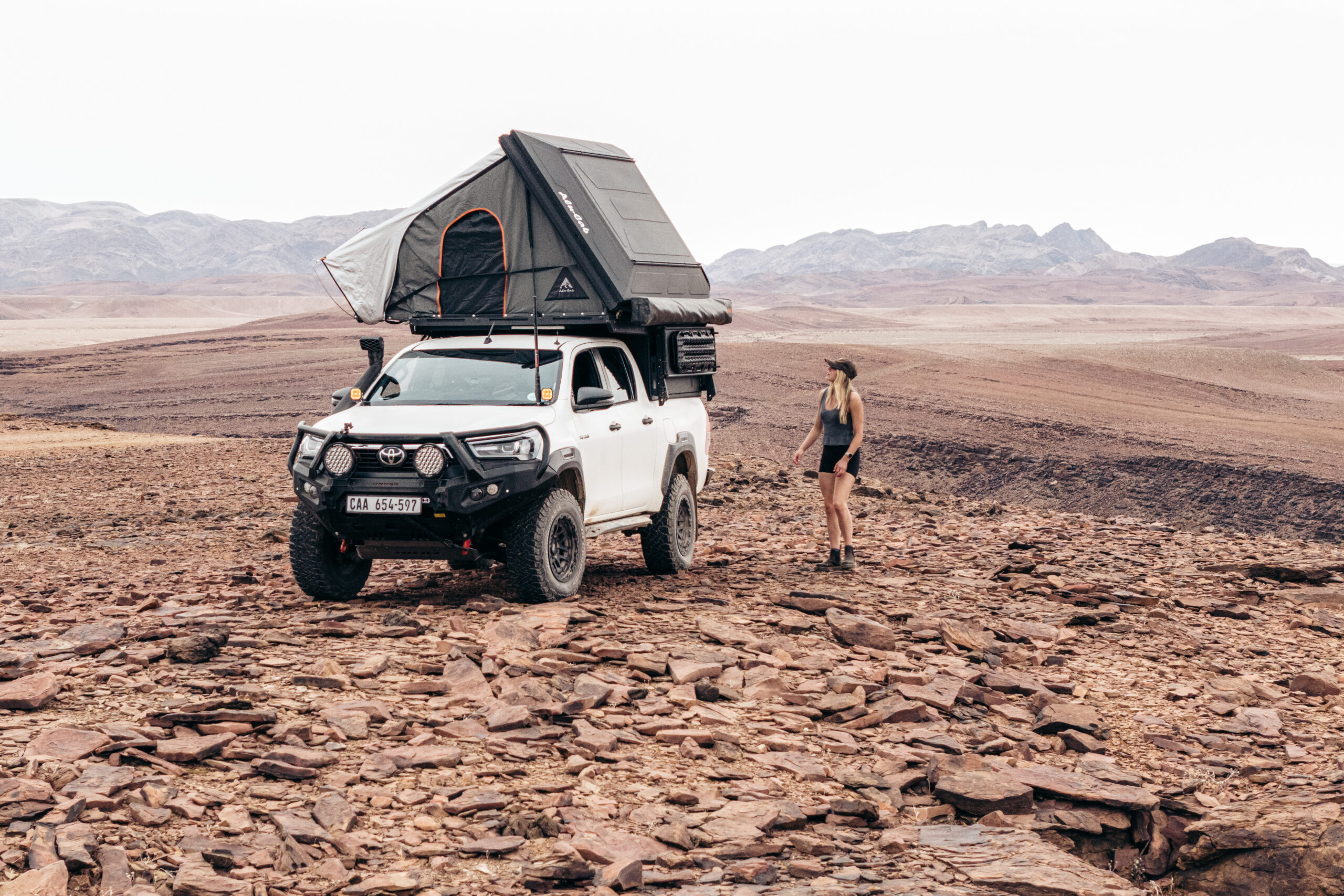
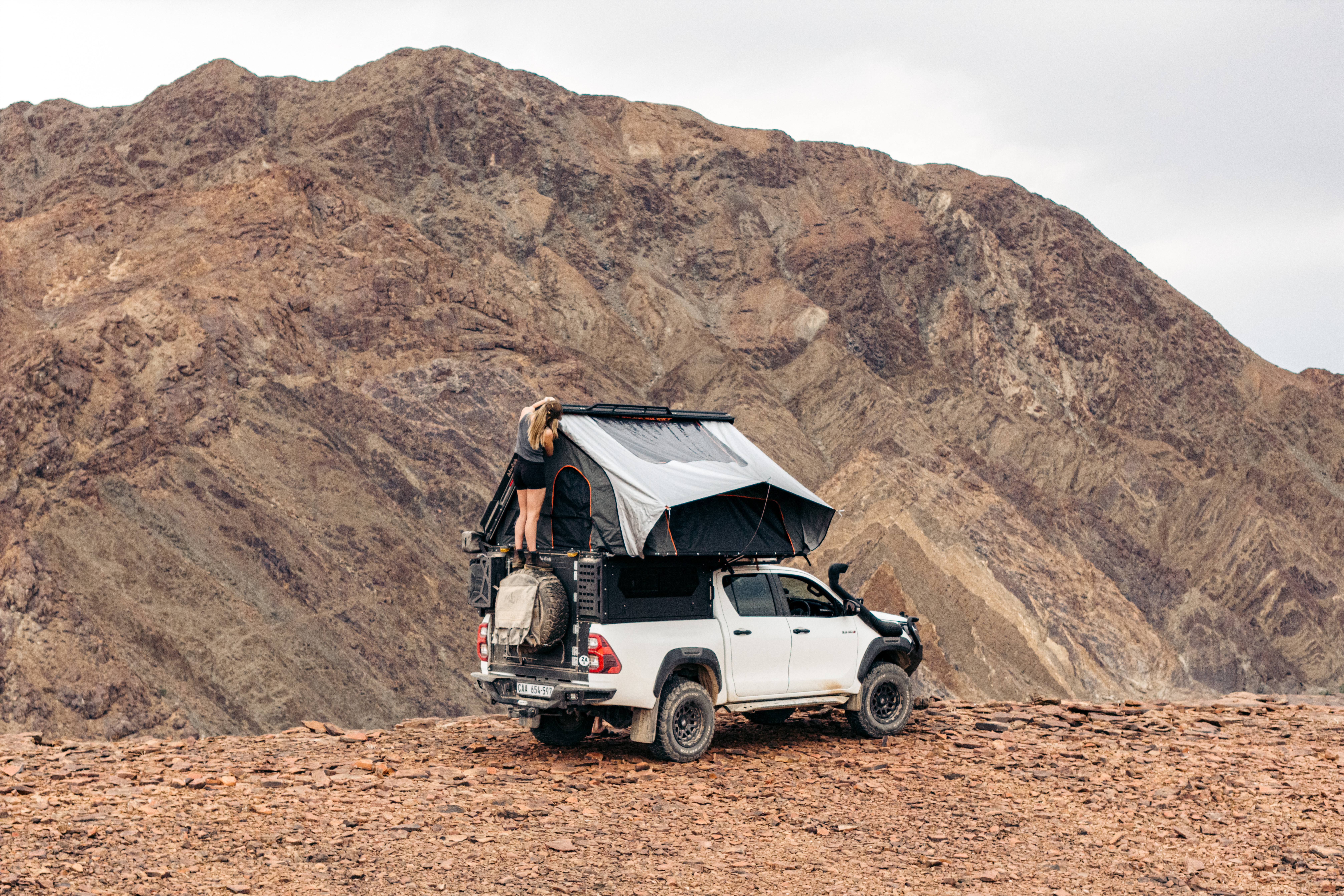
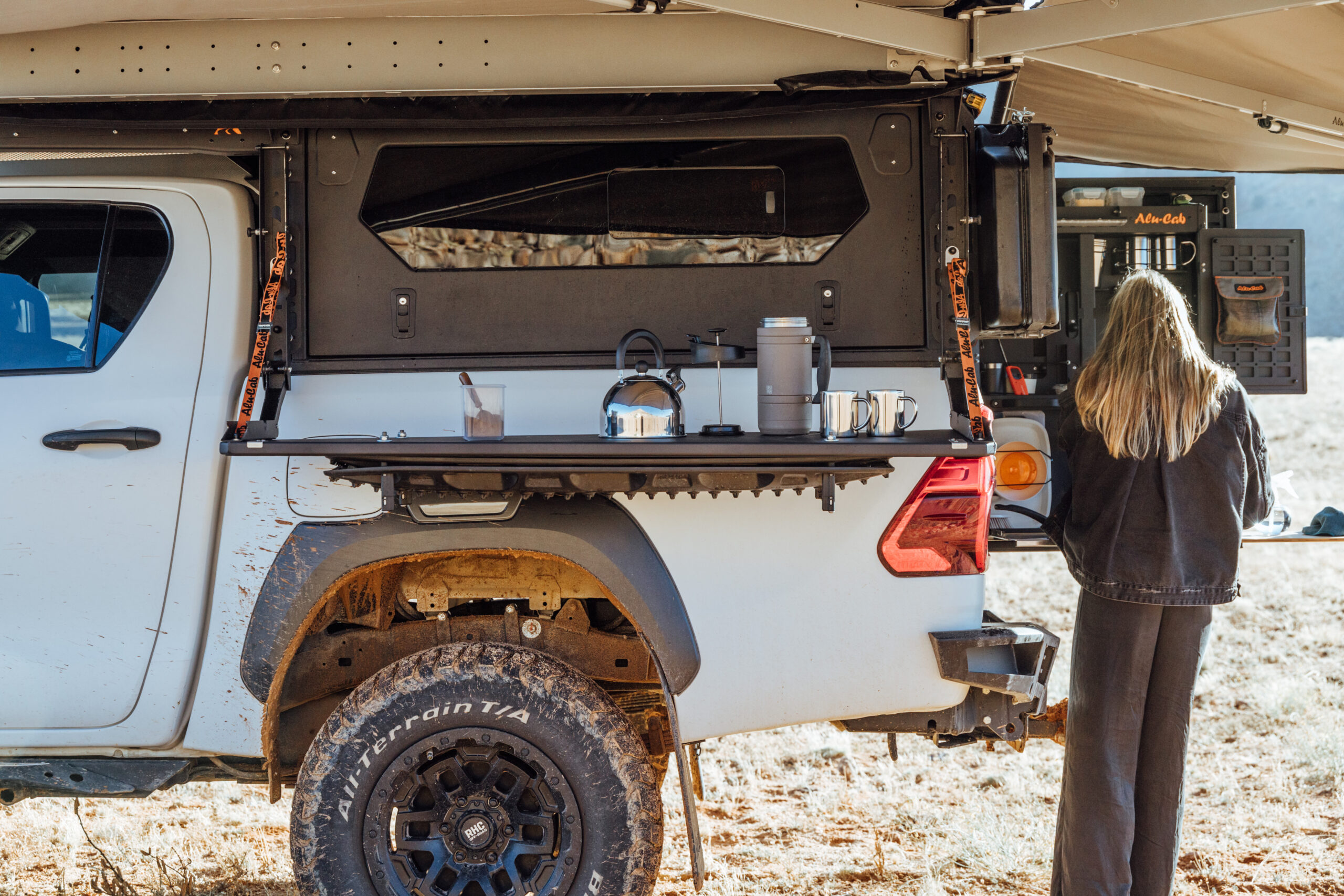
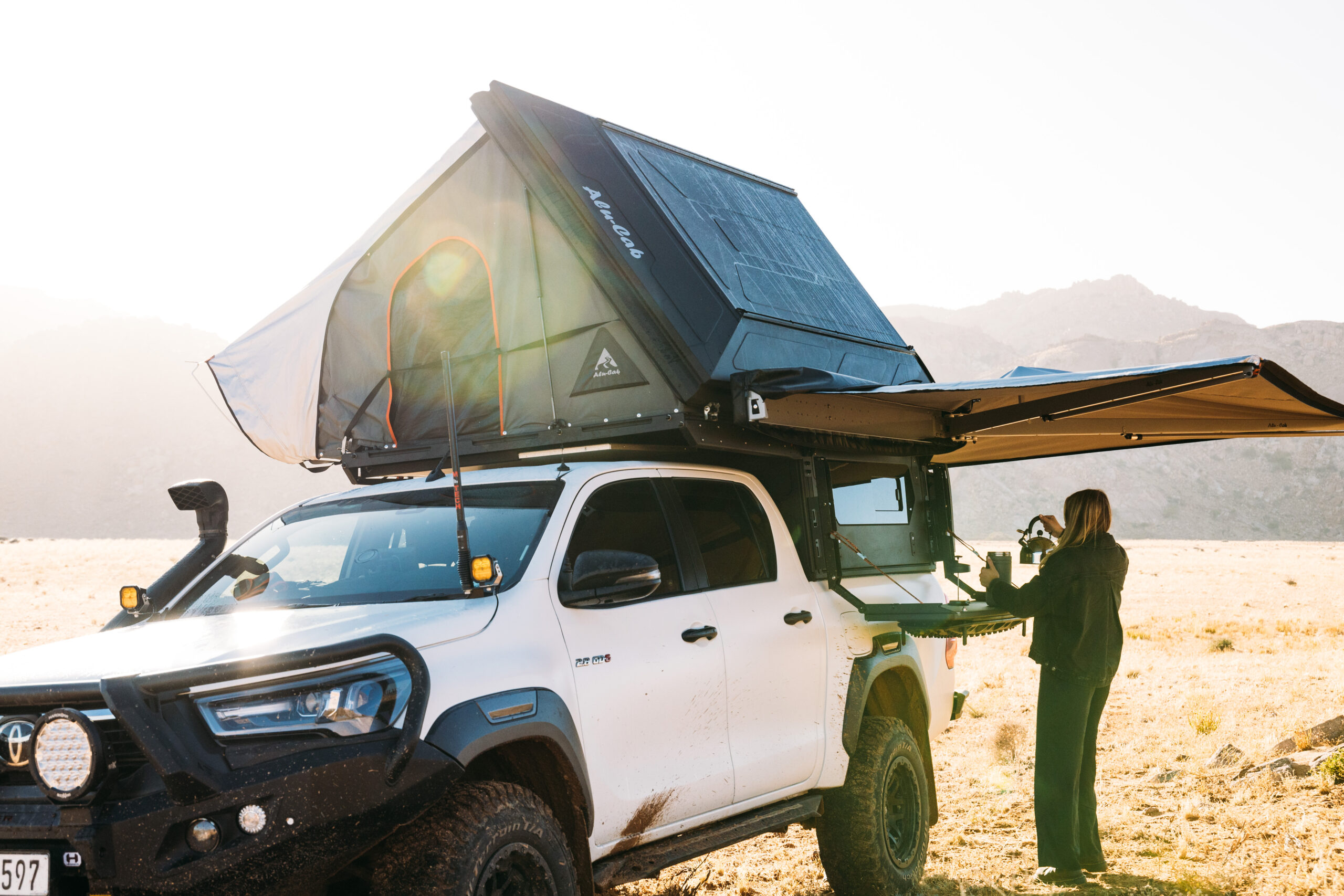
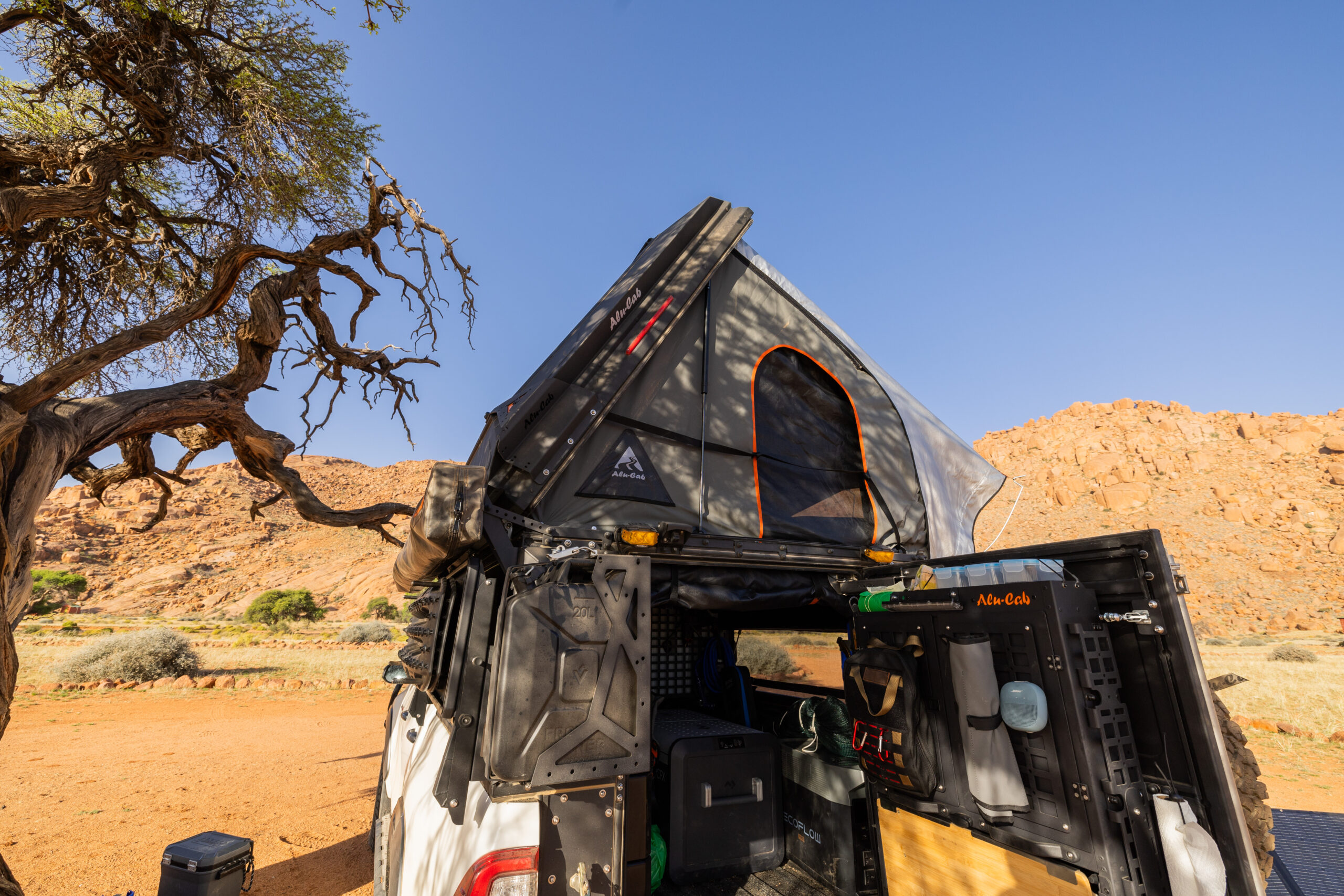
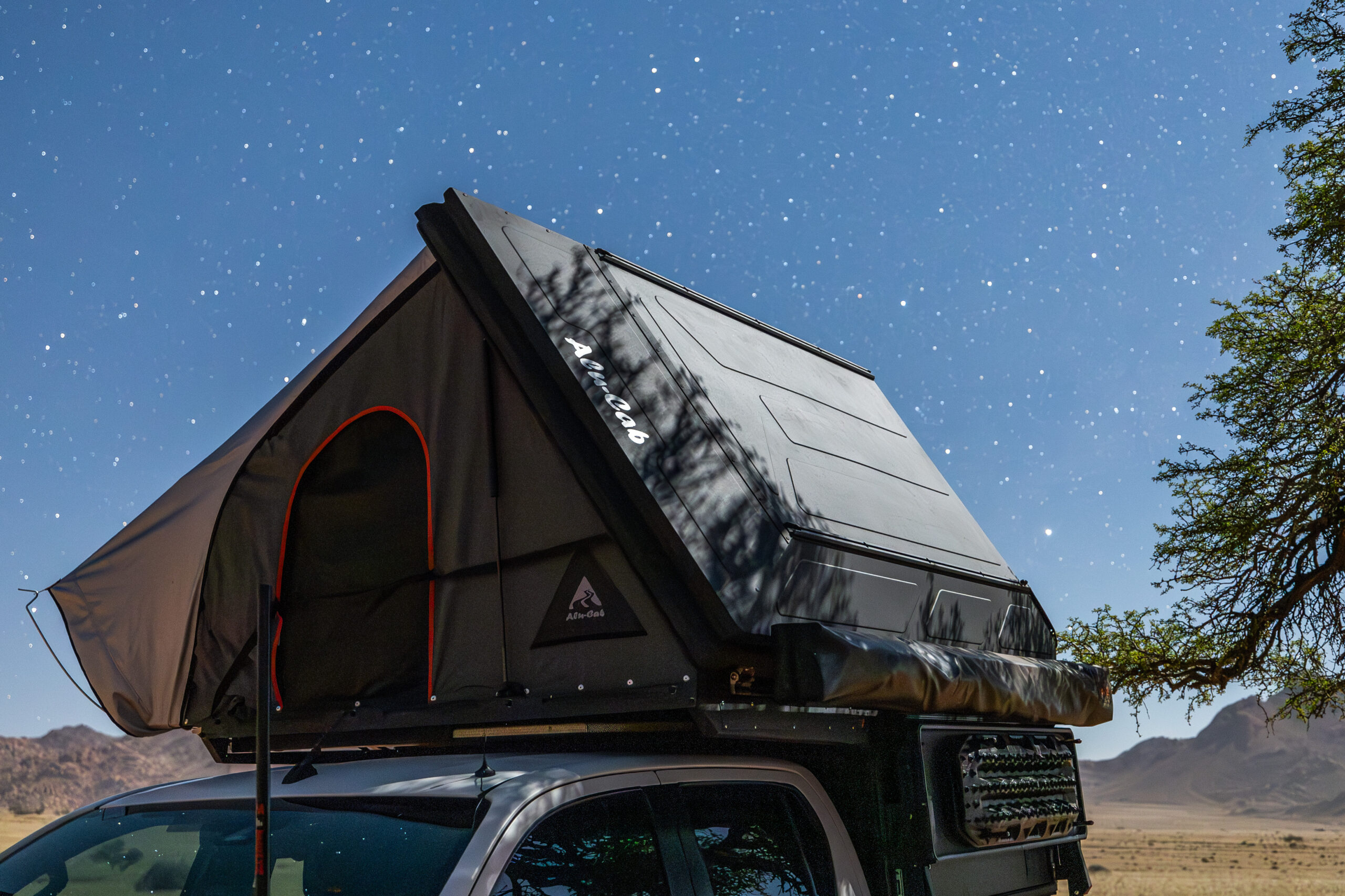
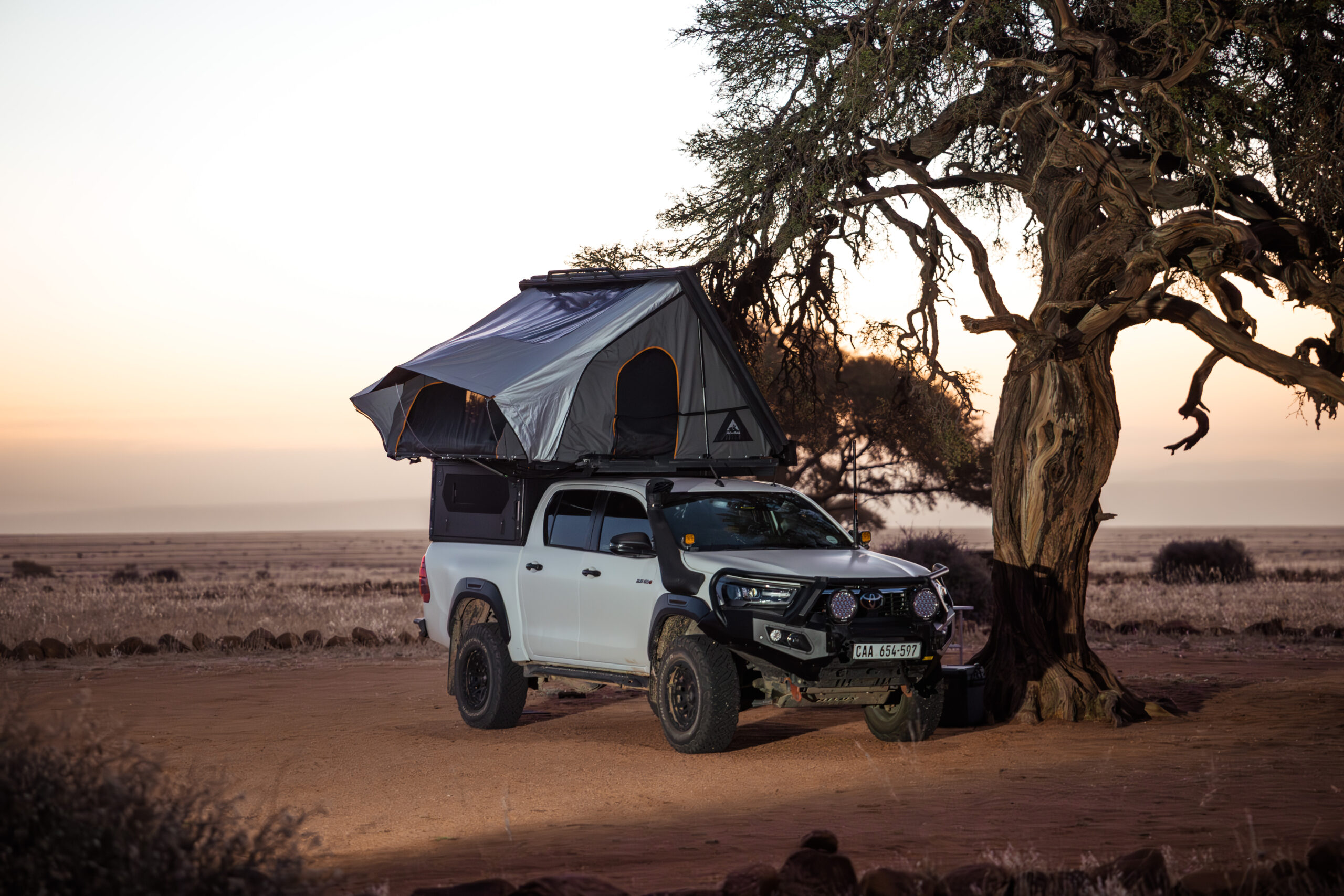
The foundation of the build is the Alu-Cab ModCAP Family Camper. I’d always wanted an Alu-Cab setup, and after days of research it became clear there was a standout option. I was looking for a system that could adapt to different trips without overcomplicating the vehicle, and the ModCAP offered exactly that balance of flexibility and functionality. To expand the living space, I added the ModCAP Family Camper, along with a ModCAP Rear Door Kitchen, Trax Side Table, Alu-Table, integrated water tank system, MOLLE plates, window grids, and canvas storage. This setup allows me to organise both living equipment and camera gear efficiently, which is critical for extended trips and remote filming. I also run the 270° Shadow Awning with Side Wall Kit and the Shower Cube, creating a comfortable and weatherproof camp wherever I stop. Supporting gear like Spare Wheel Bag, jerry can holders, gas bottle mounts, and mozzie nets round out an expedition-ready setup. I chose to go all in with the Alu-Cab system because I genuinely love the quality of the brand, everything feels incredibly strong, well thought out, and I’m a big fan of the overall look and finish.
Is there a DIY element you’re proud of?
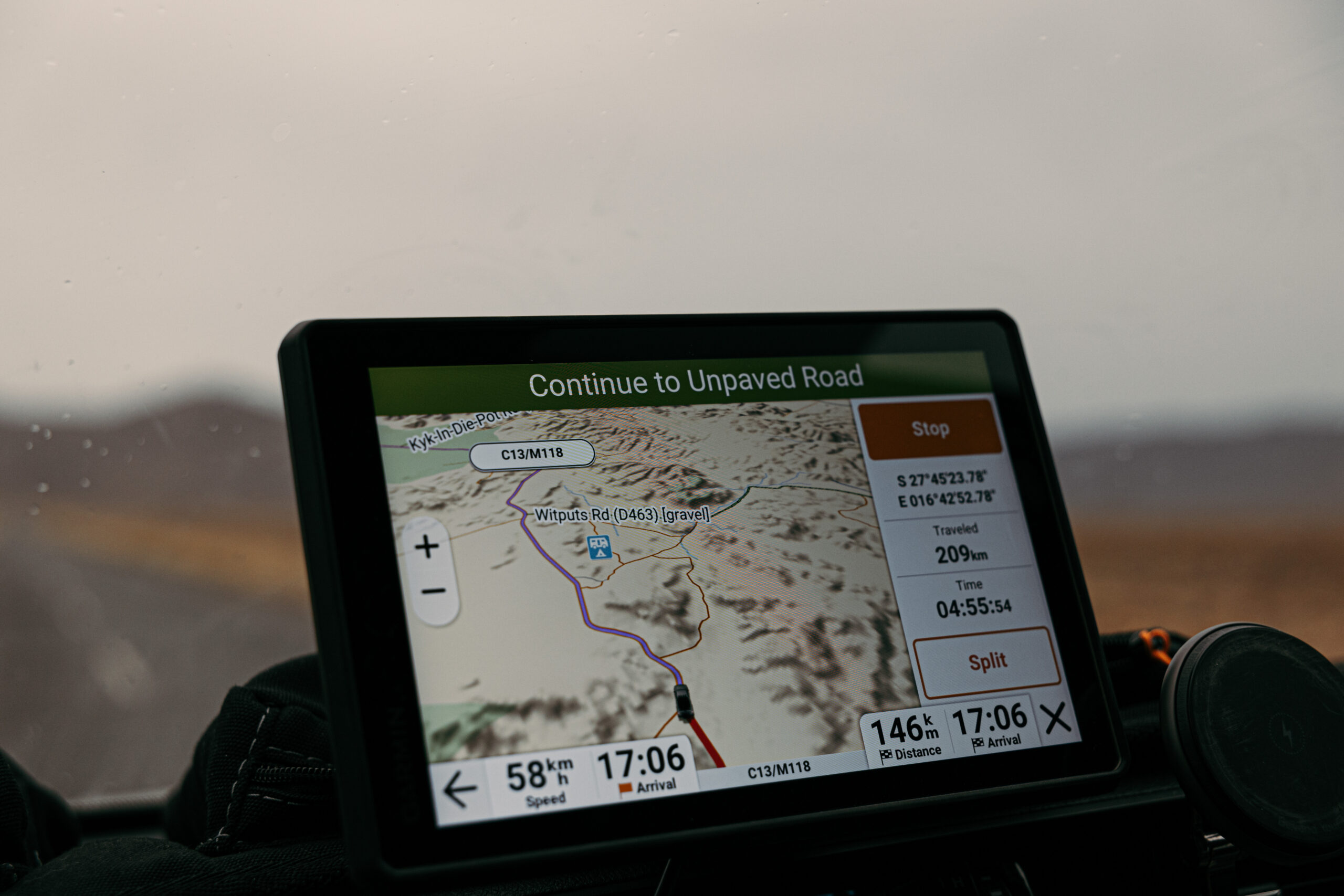
I haven’t done a huge amount of major DIY modifications yet, but one thing I’m really proud of is getting all of my route planning and monitoring systems properly set up and working in sync with each other. Dialling that in has made a big difference to how smoothly trips run, especially when travelling remotely. Beyond that, it’s been the smaller details like MOLLE organisation and refining how gear is stored and accessed. The rig is very much a living project and will always be a work in progress as I learn what works best in the field.
Did you face any challenges during the build process?
I was fortunate to have industry-leading professionals handle most of the work. Much of the build happened while I was overseas, and the communication from both Alu-Cab and Zane Kapp was exceptional. The process was remarkably smooth, with no major hurdles. After testing the setup on a major trip, would you change anything? If I were to do anything differently, I’d take less gear. As someone relatively new to overlanding, I definitely overpacked on camping equipment. You quickly realise you don’t need every YouTube-approved fire-lighting method or braai tool once you’re actually out there using the setup. Next time, I’ll focus more on the essentials, which will also free up valuable space for additional camera gear.
Why did you choose Namibia for the Hilux’s first major expedition?
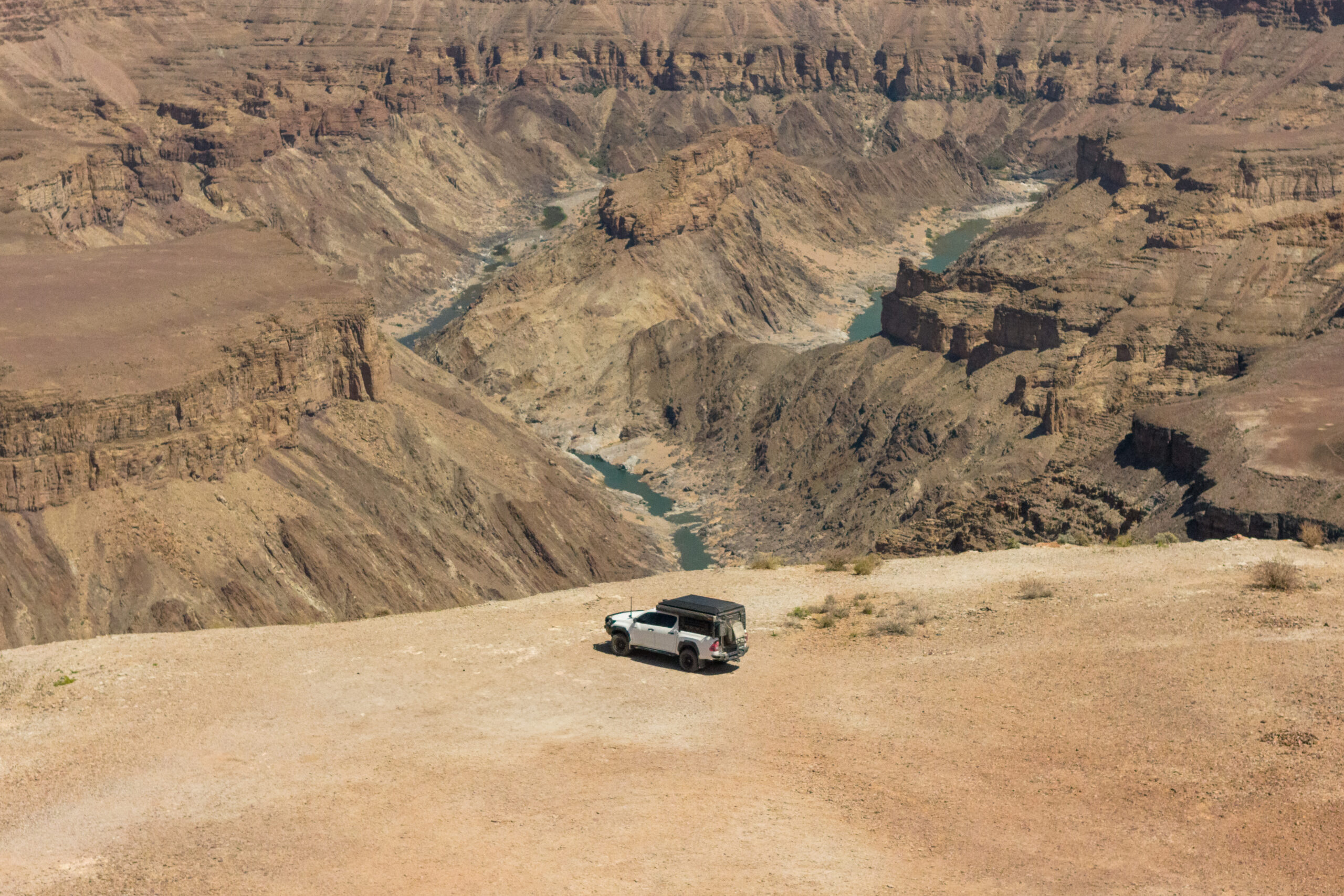
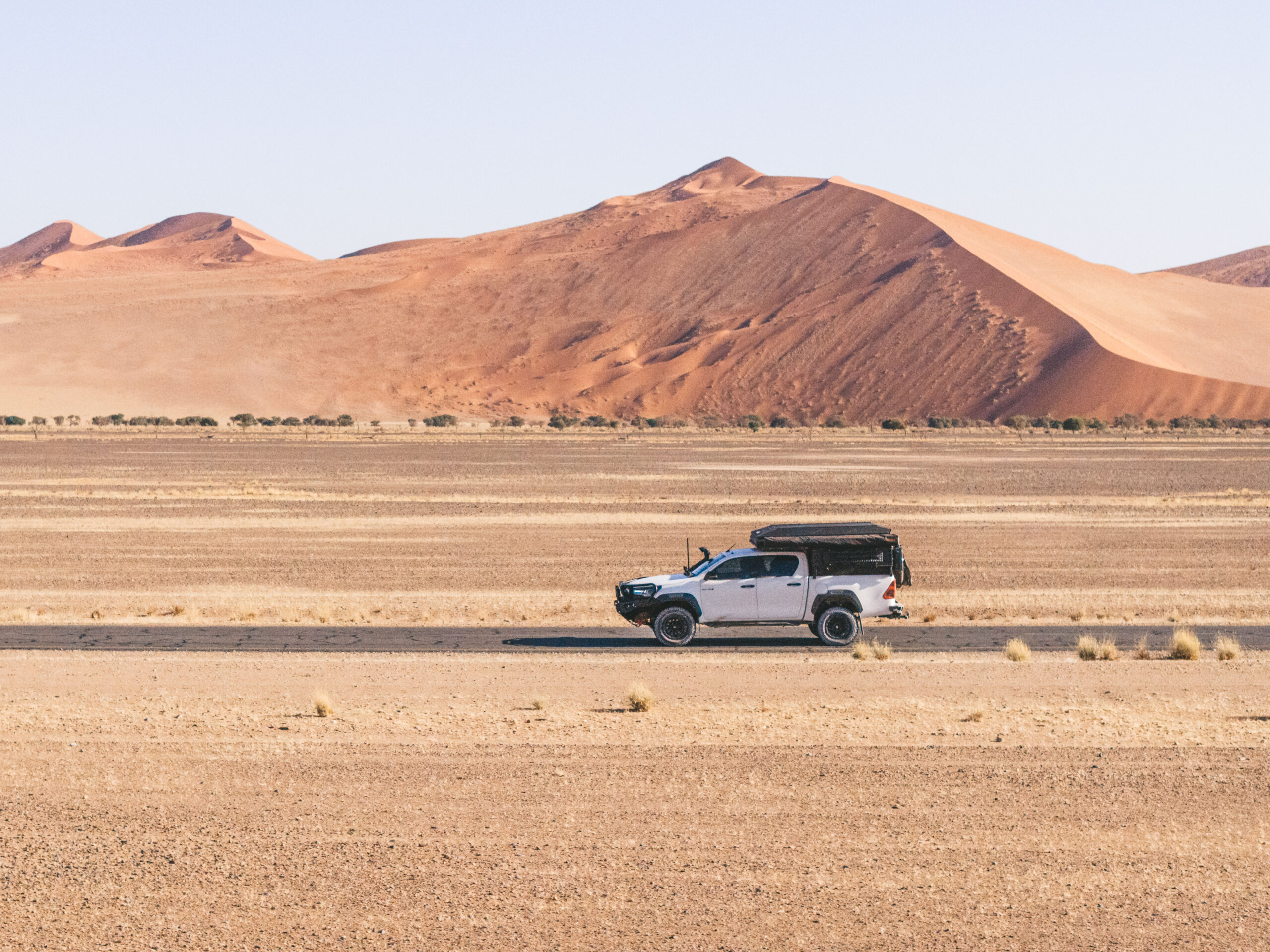
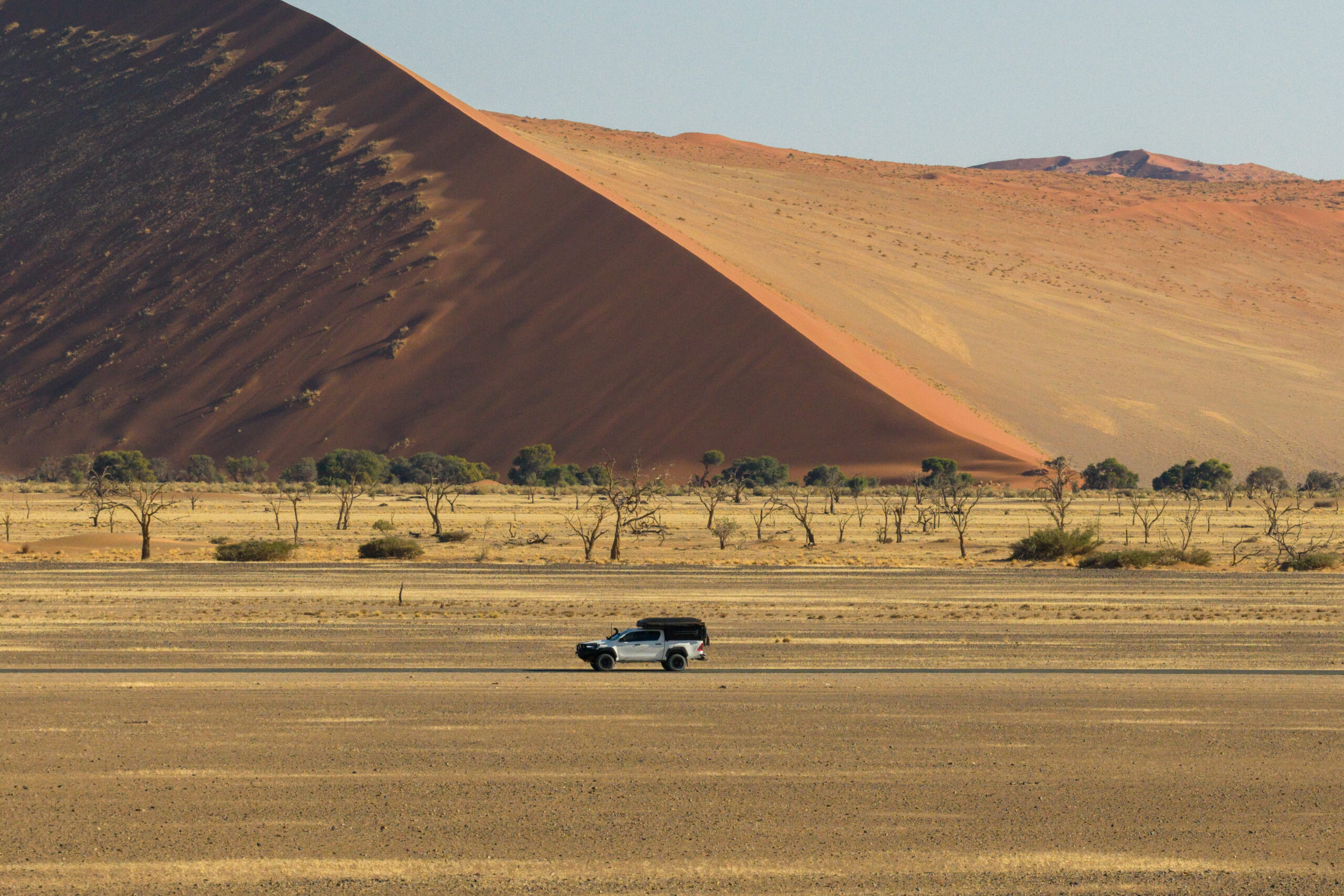
Namibia had always been high on my bucket list, and it felt like the perfect location for the Hilux’s maiden voyage. The country demands true self-sufficienc, vast distances, harsh conditions, and limited infrastructure mean both the vehicle and setup have to work flawlessly. On a personal level, returning to southern Africa was deeply meaningful. Namibia offered the ideal combination of technical driving, isolation, and visual beauty, making it the perfect testing ground and storytelling environment.
How did you approach planning and decision-making day to day on the road?
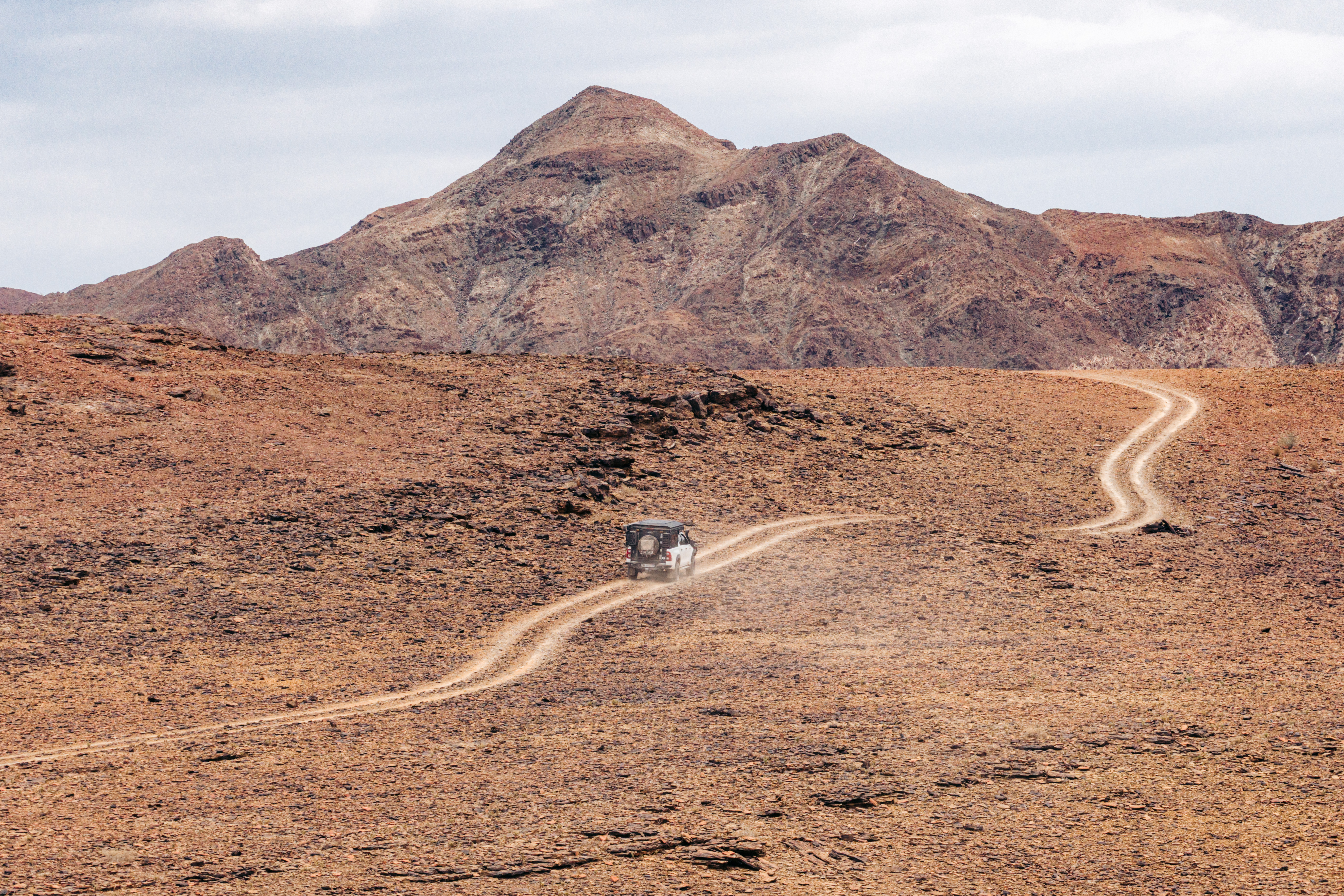
Planning focused on the essentials, routes, fuel range, water capacity, and recovery while still leaving room for flexibility. Many days we’d simply turn down an unplanned track and see where it led. Not every decision resulted in a great campsite, but that approach is also how we found some absolute gems along the way. We navigated using Tracks4Africa and Gaia GPS, and I marked points as we went using MapOut, which has been great for remembering locations and planning future trips.
Can you share a memorable off-road moment from the Namibia trip?
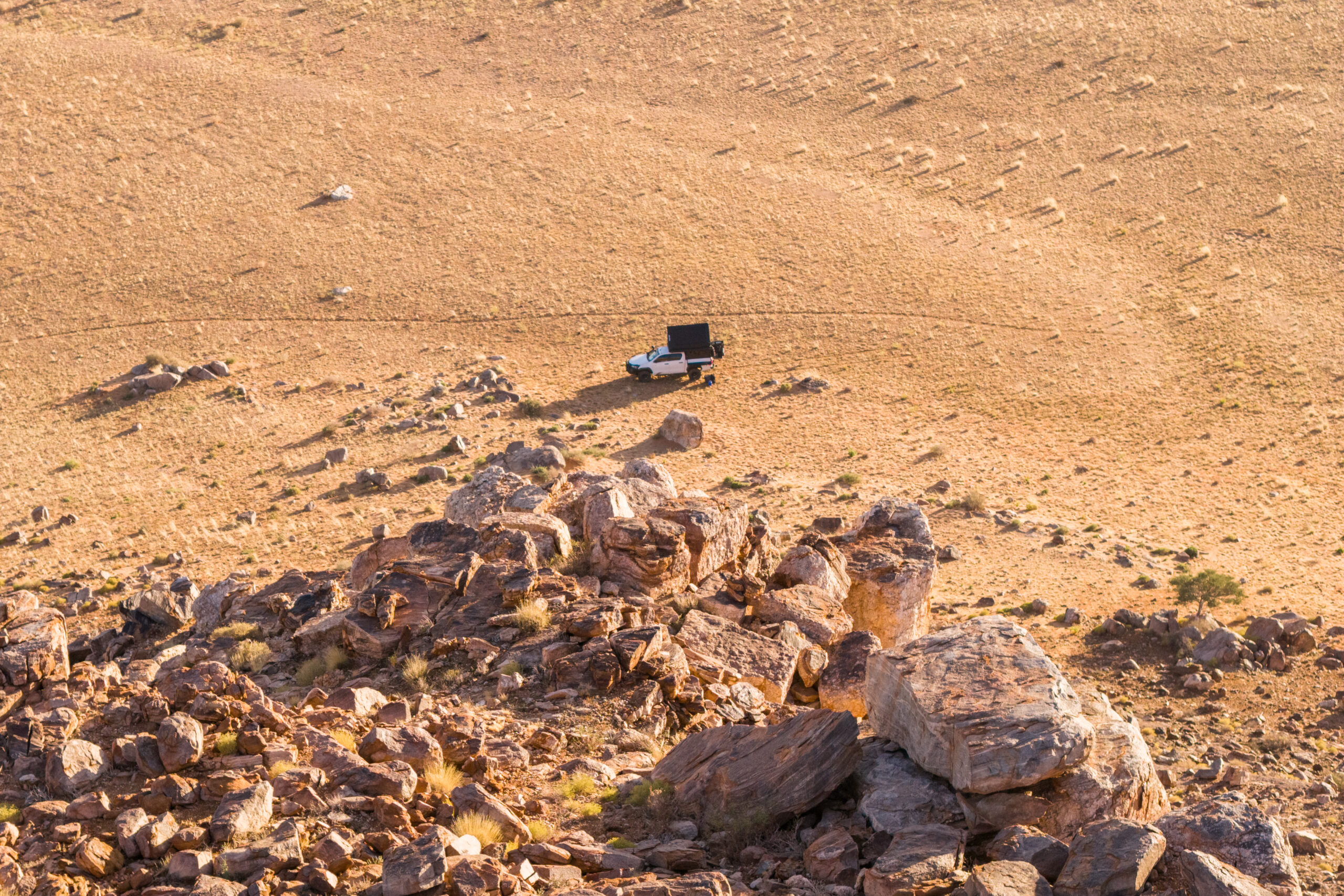
One standout moment was at a family friend’s farm and restaurant, Klein Aus, run by Pete (highly recommended). Pete suggested driving up a steep rock formation for sunset. When we arrived a few hours before golden hour it looked pretty intimidating from the base. I dropped the Hilux into low range and eased onto what was roughly a 30-degree incline. The vehicle slowly crept its way up the rock. It was a really special moment. We watched the sunset from the roof of the car, completely alone up there. Driving back down definitely highlighted the value of the upgraded power brakes. That experience truly cemented my confidence in the rig’s capability.
How did the Hilux perform across Namibia’s demanding terrain?
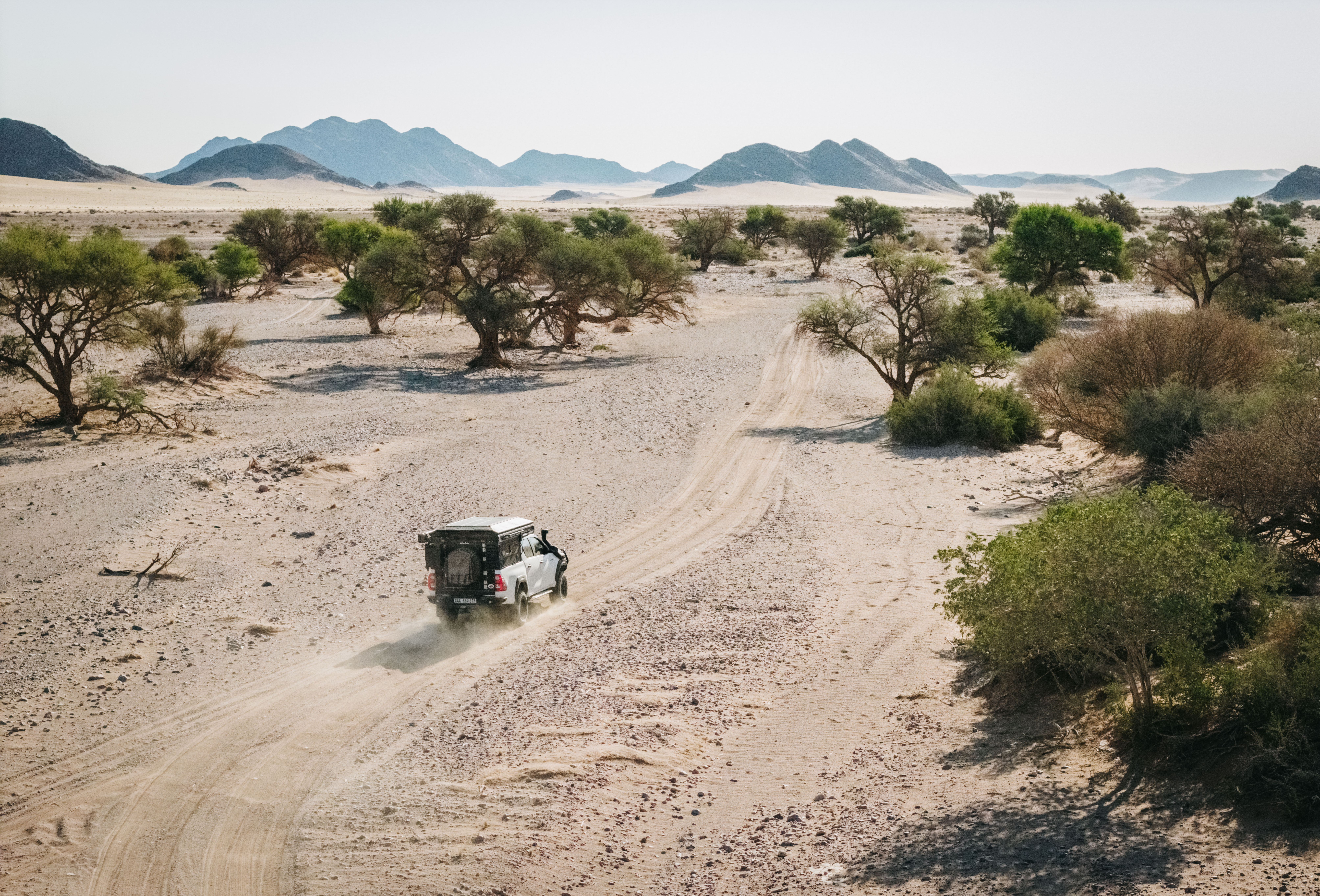
Exceptionally well. Namibian corrugations will test any vehicle. There were long stretches where conversation was impossible due to the noise and constant vibration. I was grateful for the suspension and tyre upgrades. The Hilux handled long, punishing days with real ease and confidence.
Where did you camp along the way?
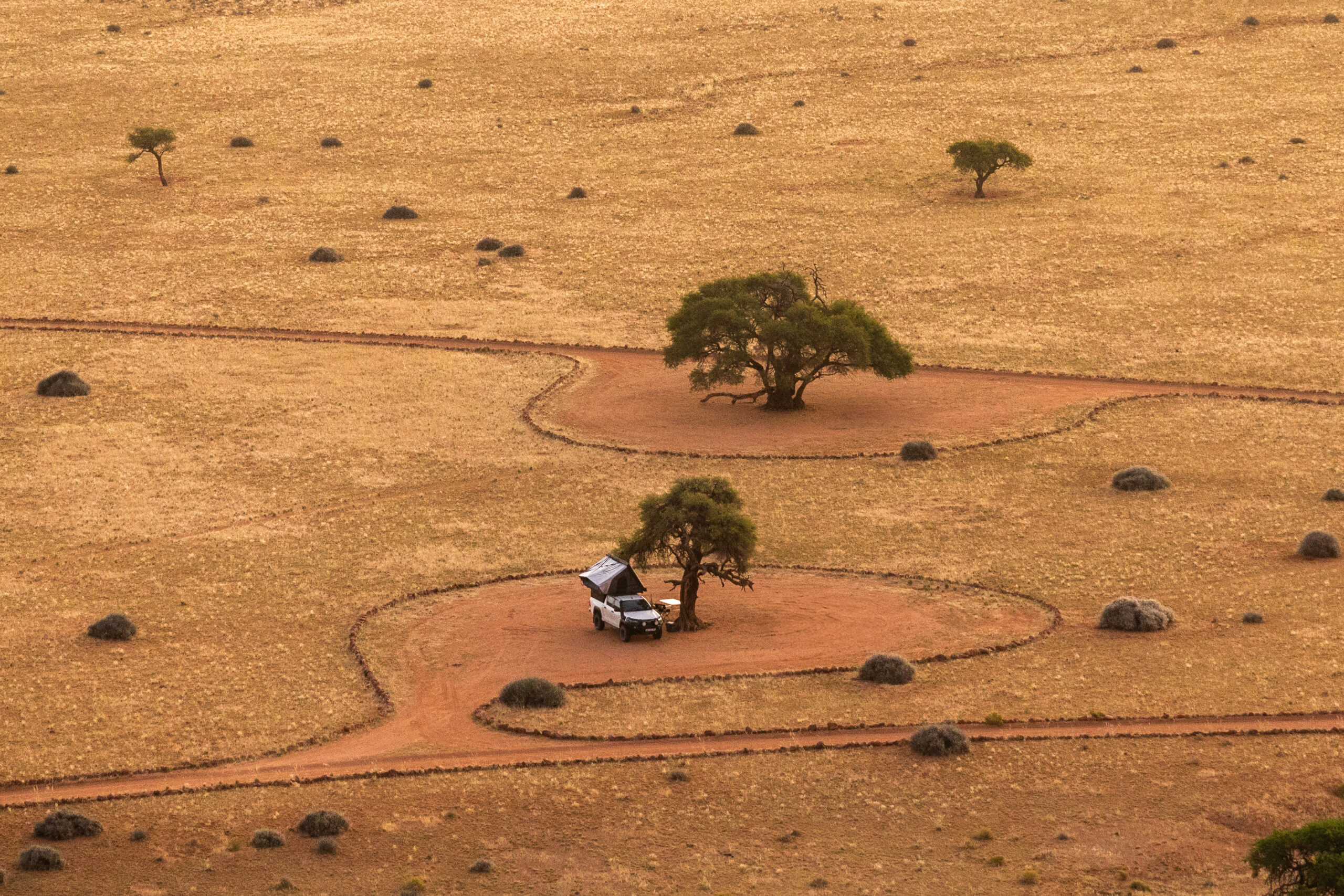
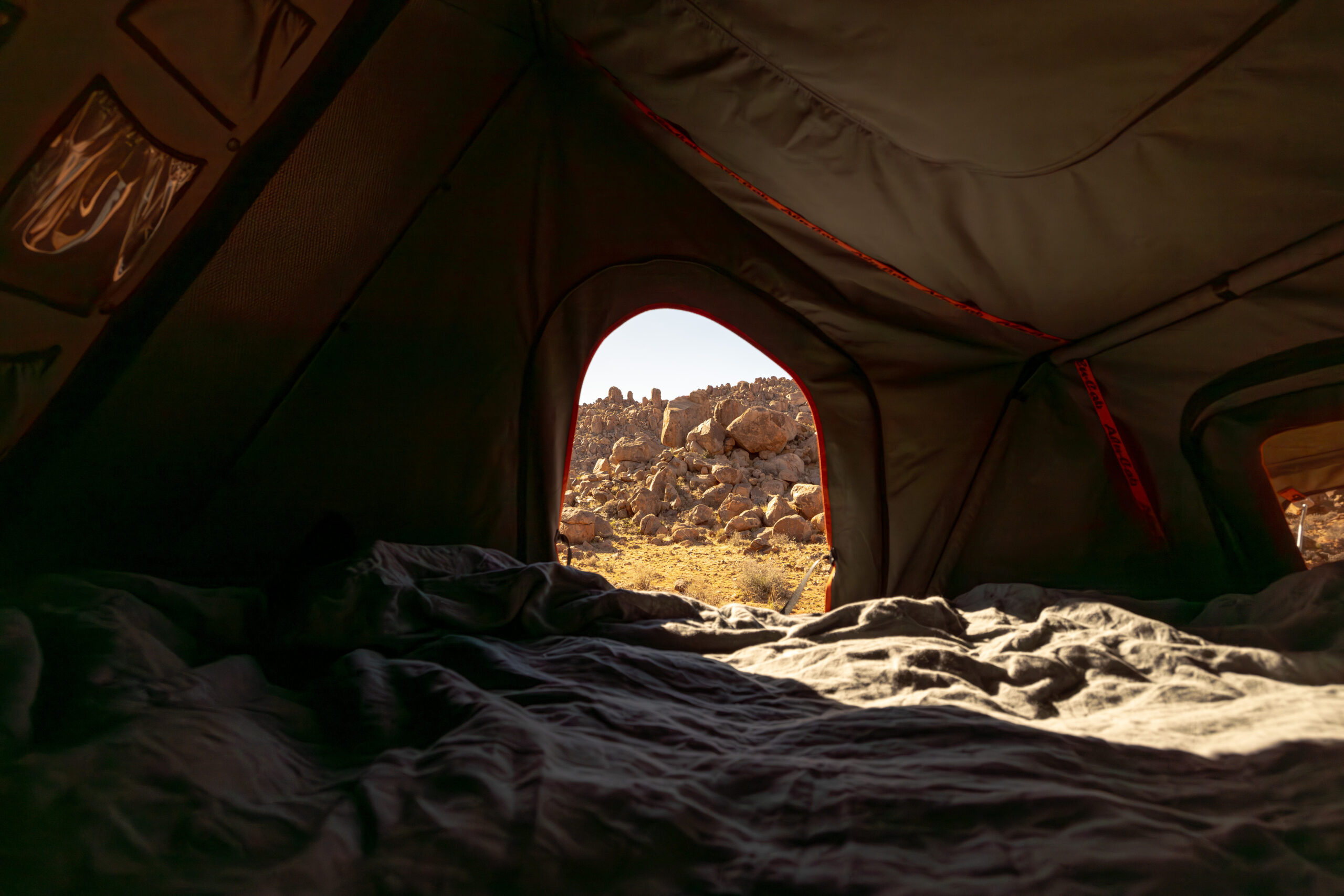
We didn’t book every campsite in advance, which really added to the sense of adventure. Some nights we pushed well off-track and ended up discovering incredible, lesser-known spots that I’d highly recommend to anyone overlanding through Namibia. Camp highlights included: Klein Aus, Namtib, Gamchab, Quiver Tree, and De Hoop Campsite.
What was the most important lesson you took away from the trip?
Take less stuff. Just a little more than the basics is enough. You don’t need half of Safari Centre in the bush. Future trips will involve much more deliberate packing.
Did you encounter much wildlife?
No major encounters, but seeing ostriches running through the desert was unforgettable. We avoided driving at night for safety reasons.
What advice would you give someone preparing for a similar overland journey?
Plan a route, but allow room for flexibility. Carry plenty of water. Be prepared for the worst, punctures, breakdowns, and delays are all part of remote travel.
Where to next for your Hilux?
Botswana in May, followed by Zimbabwe in October. Both trips will be heavily focused on capturing cinematic stories across Africa, pushing further into remote locations and documenting them properly. I’m actively building an overlanding portfolio with the long-term goal of producing more high-end, remote film work for brands in the future.
Working with Alu-Cab has always been a dream, and this build is just the beginning of documenting the African dream. There’s much more to come. Stay tuned.