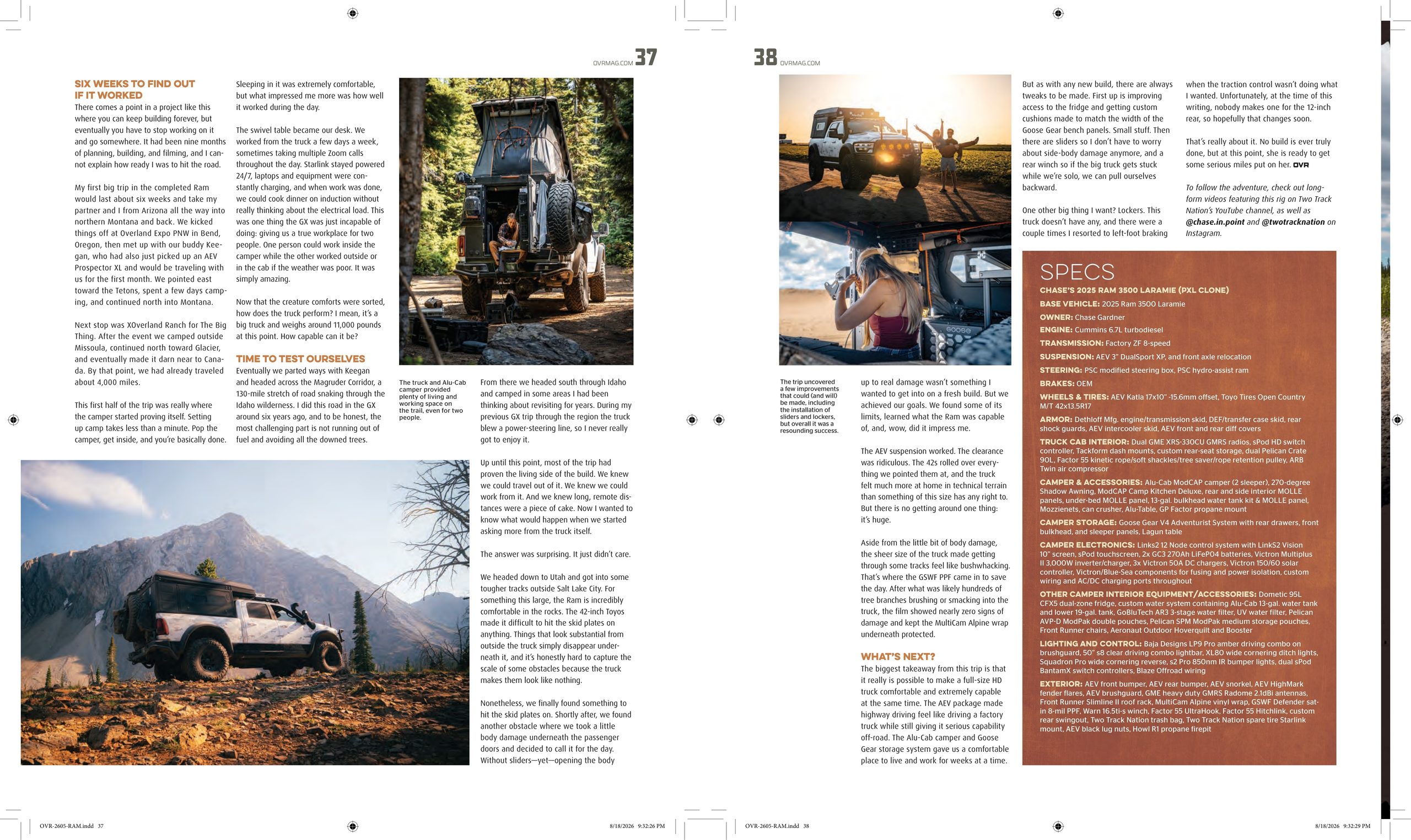
The new issue of OVR Magazine is on newsstands and Alu-Cab ambassador Chase Gardner has got it covered. The seven-page feature inside documents the build and shakedown of his new 2025 Ram 3500 Laramie. Chase wrote the piece and shot every photo himself. The best part? An Alu-Cab ModCAP camper sits at the center of the story.
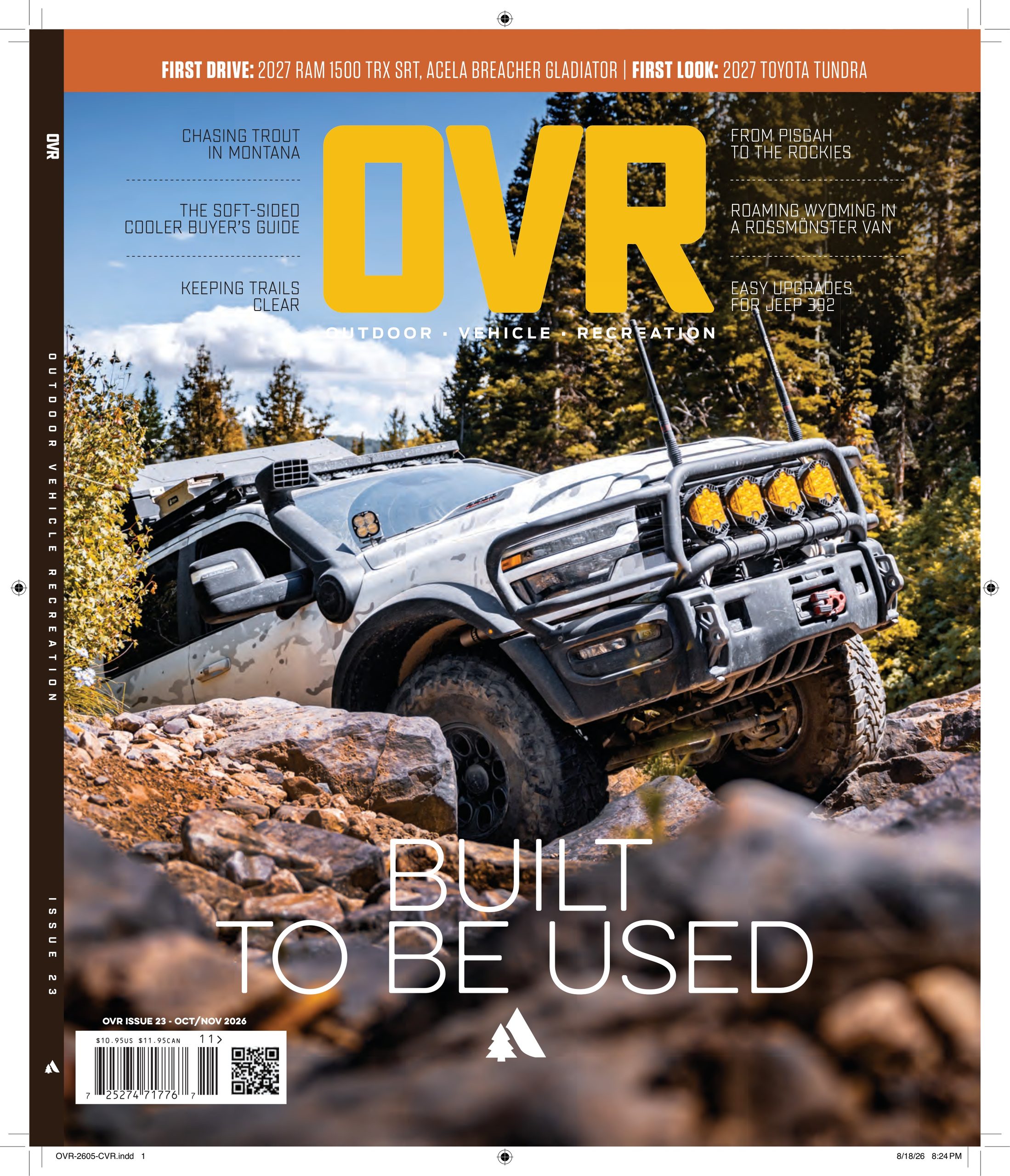
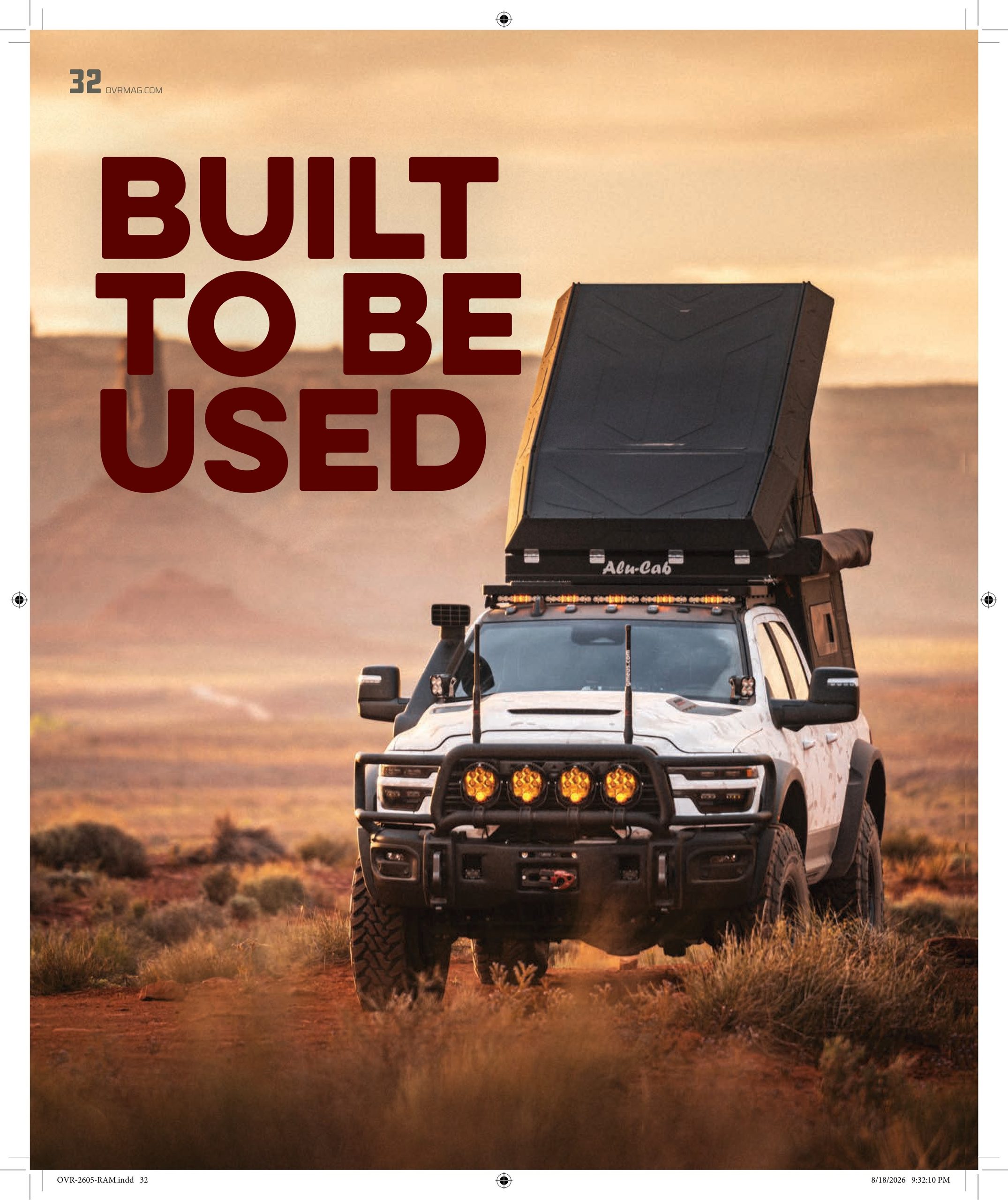
The Short Version
After eight years and a GX 470 build, Chase set out to put everything he’d learned into a full size rig. He wanted something with more room and capability. Something he could actually live and work out of for weeks or months, not just camp out of on weekends. Nine months of planning, building, and filming later, he and his partner put it to the test. Their six-week, 6,000-mile loop took them from Arizona up into northern Montana and back. By way of Overland Expo PNW, the Tetons, Glacier, and some genuinely technical tracks outside Salt Lake City.
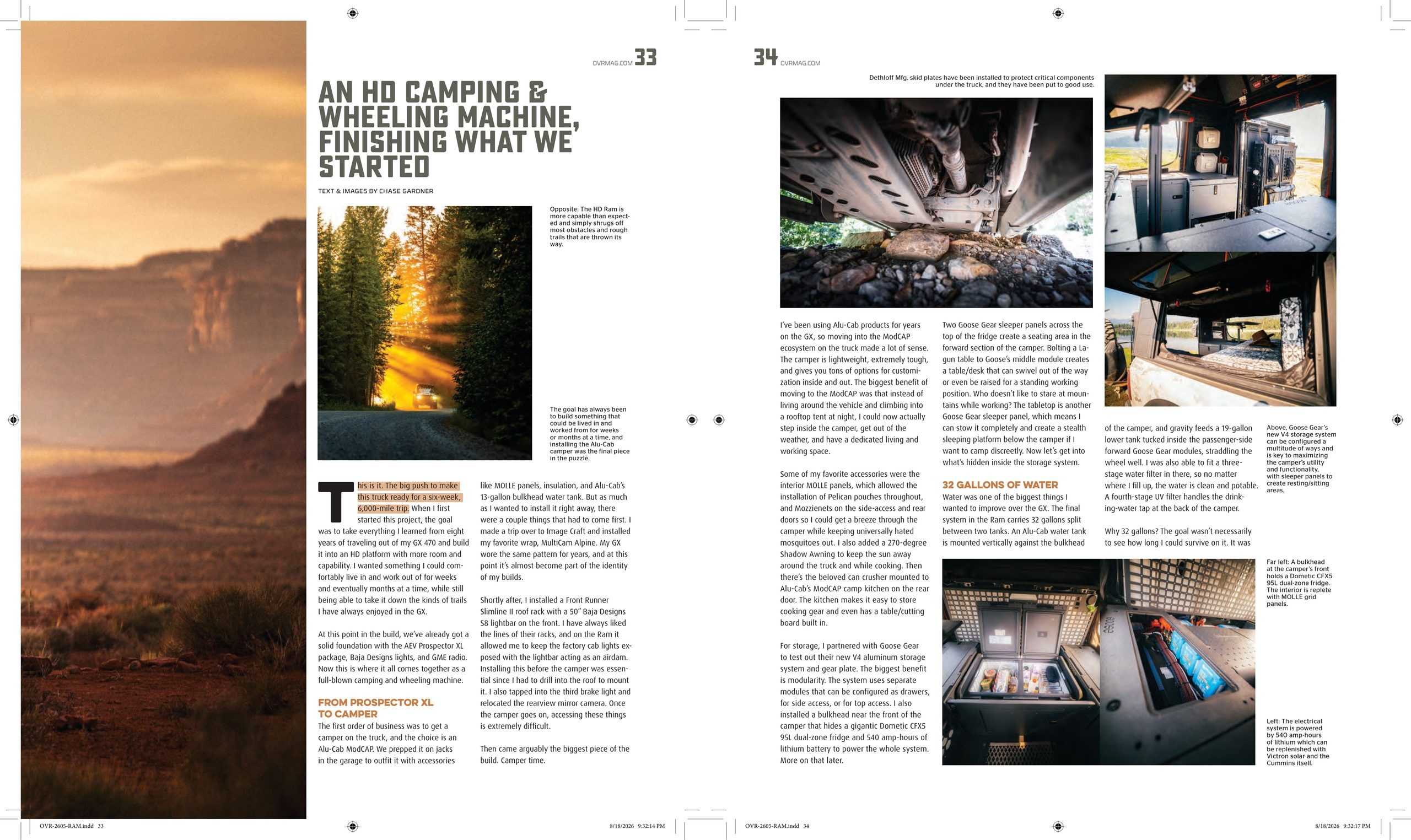
Where We Come In
The ModCAP is what turned the Ram from a place to climb into at night into a place to live. Stepping inside out of the weather instead of living around the vehicle and climbing a ladder into a rooftop tent, as Chase puts it. He built it out with interior MOLLE panels, mosquito nets on the side and rear doors, a 270° Shadow Awning, and Alu-Cab’s ModCAP Rear Door Kitchen. The water system runs through a 13-gallon Alu-Cab bulkhead tank feeding a 19-gallon lower tank for 32 gallons total, and an Alu-Table swivels off the Goose Gear storage to double as a working desk — Starlink and laptops running off 540Ah of lithium while he took Zoom calls from the middle of Idaho.
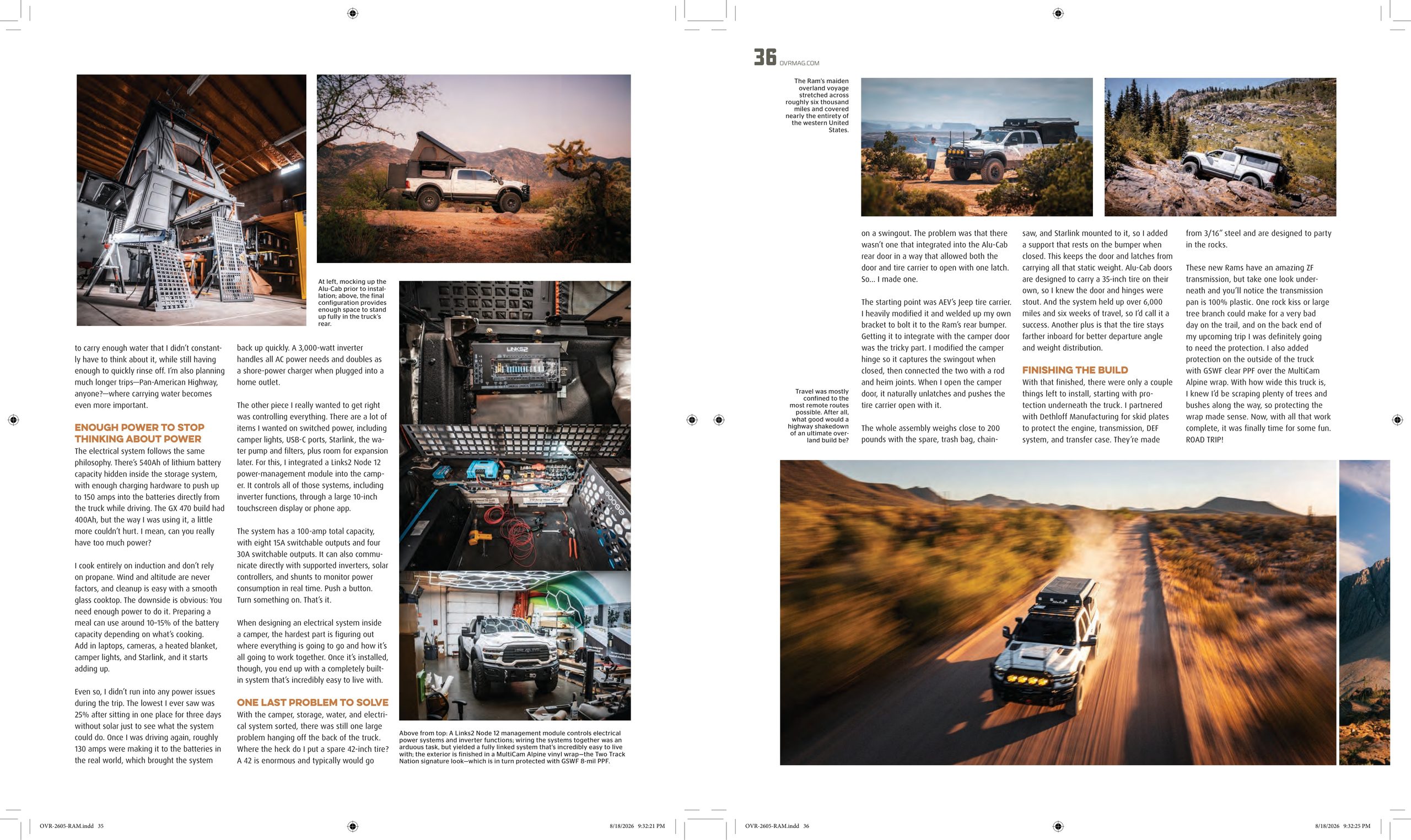
Get It!
It’s a genuinely good read. Real trail damage, a 42-inch spare tire problem Chase had to fabricate his own solution for, and a product story built entirely around six weeks of actually living in the thing. Worth pointing the community to.
Grab the new issue of OVR Magazine to read the full feature, and follow Chase’s builds at @chase.in.point and @twotracknation on Instagram.
“Built to Be Used: An HD Camping & Wheeling Machine, Finishing What We Started” — text and images by Chase Gardner. OVR Magazine, pp. 32–38.
OVR is available at bookstores nationwide. But if you prefer swiping over flipping pages, you can read OVR in digital format anytime, available at OVRmag.com.