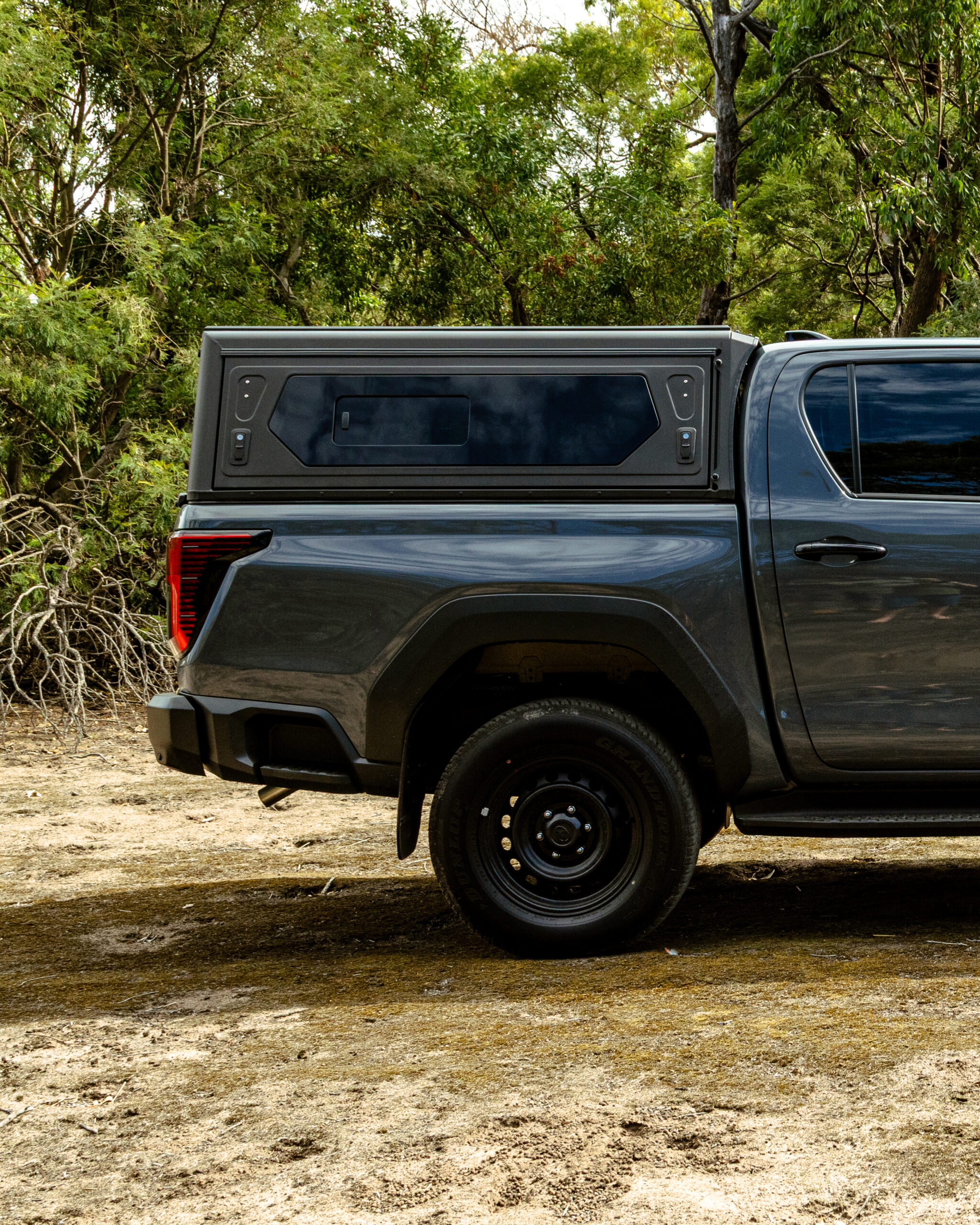
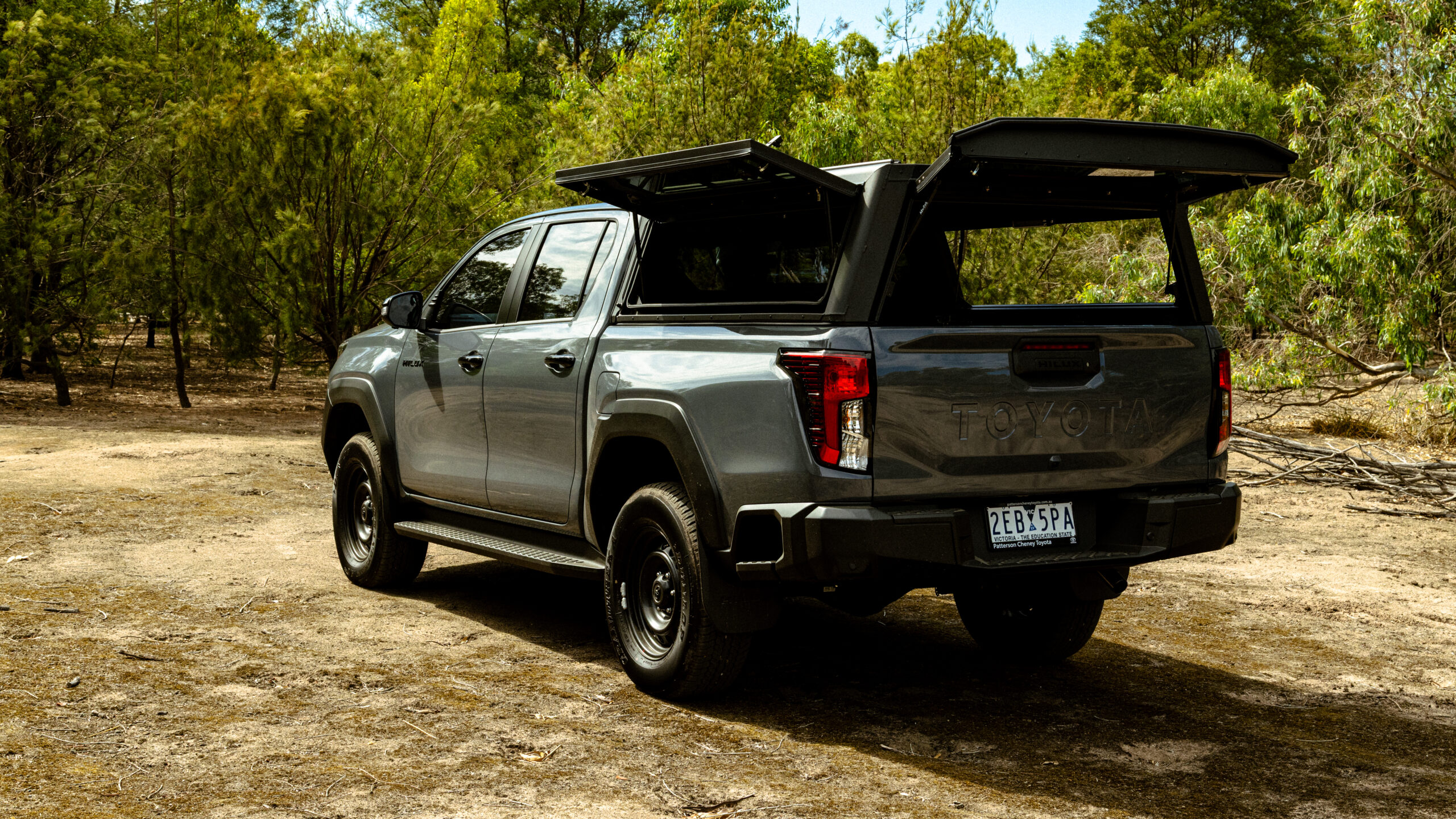
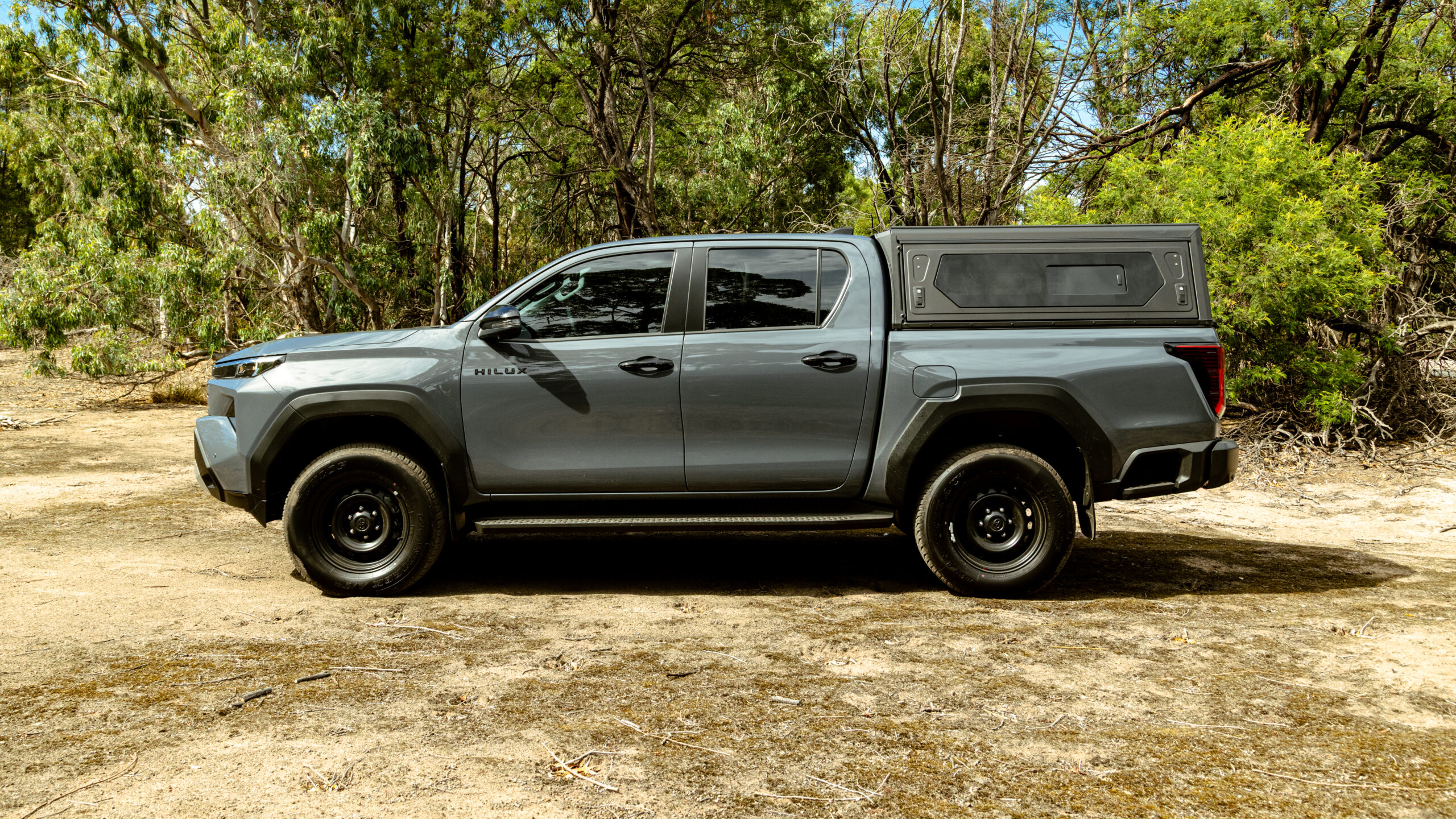
While the world speculated about the next-generation Toyota Hilux, Eduan Kruyswijk and his engineering team were busy creating a Contour Canopy for the 2026 Toyota Hilux Travo.
Recently launched in Australia, we immediately purchased a brand new 2026 Toyota Hilux for our Australian fleet. As you can see, there’s still a lot to be done so watch this space to see how the build develops. However, because of Ed and the engineering team, we were able to immediately add on a purpose-built Contour Canopy.
We sat down with Ed to pull back the curtain on the project and discover the obsessive engineering that defined the result.
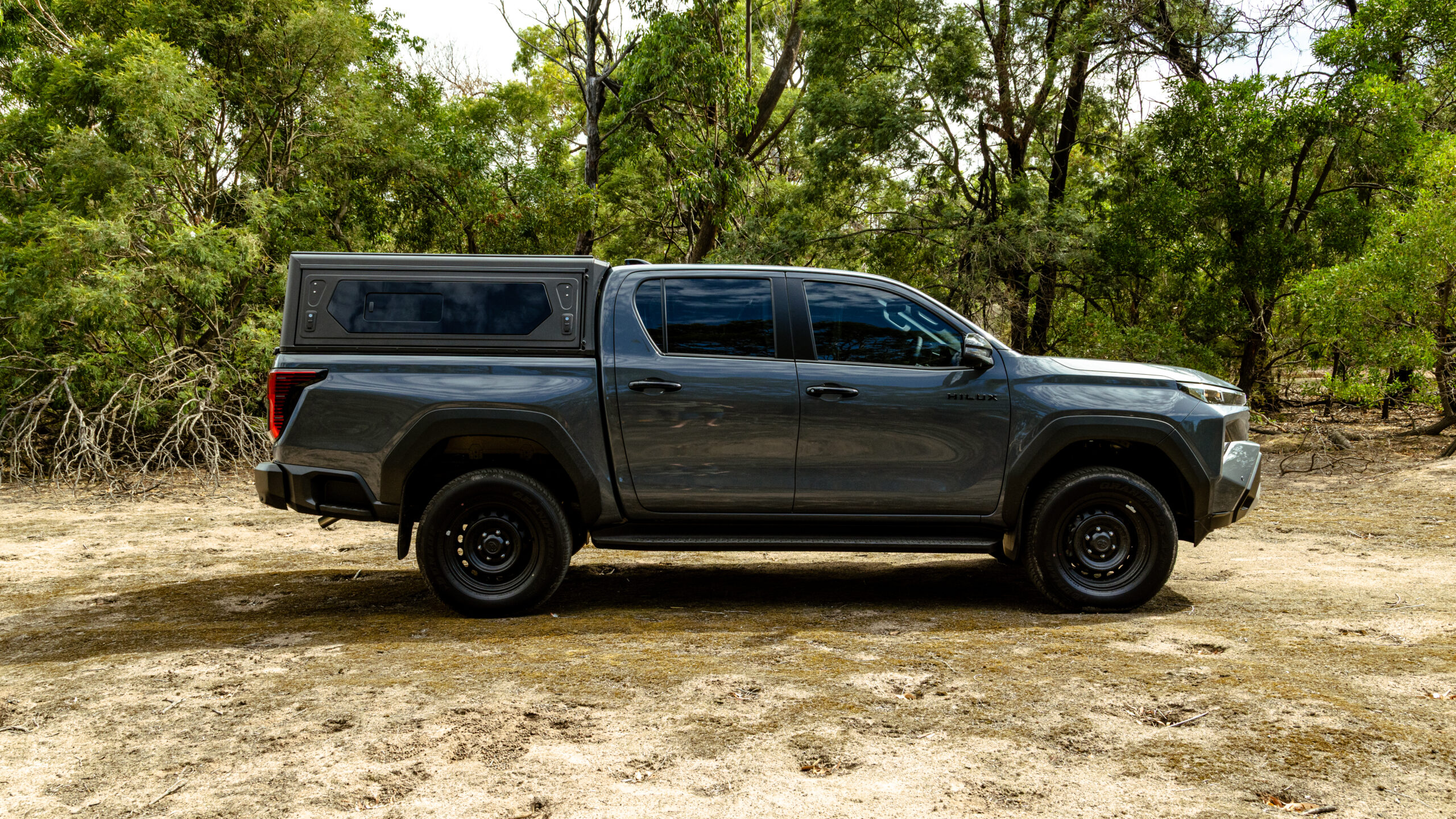
A Collaboration Built on Trust and Data
Q: How did this project come about?
Ed: It’s quite an interesting one. Typically, we know a vehicle is coming and we do our best to gather information. That usually means either getting scan data from an overseas portal called SEMA, or if it’s a local vehicle, trying to get our hands on one as early as possible. But for the new Hilux, we had access to CAD data.
The difference between CAD data and scan data is night and day. Scan data is rough, like a hazy polygon model where surfaces are stitched together. It’s very difficult to get concise measurements, and you always have to over-exaggerate your tolerances to account for the faults. With CAD data, you’re working with the raw, clean information they use to produce the vehicle. You can trust it’s accurate, which meant we could develop with the confidence that the Contour Canopy for the 2026 Toyota Hilux Travo would fit like a glove.
Marrying “Cyber Sumo” with Contour DNA
Q: The new Hilux has a bold design language. What was the biggest challenge in creating a canopy that fits both the new architecture and this aggressive new aesthetic?
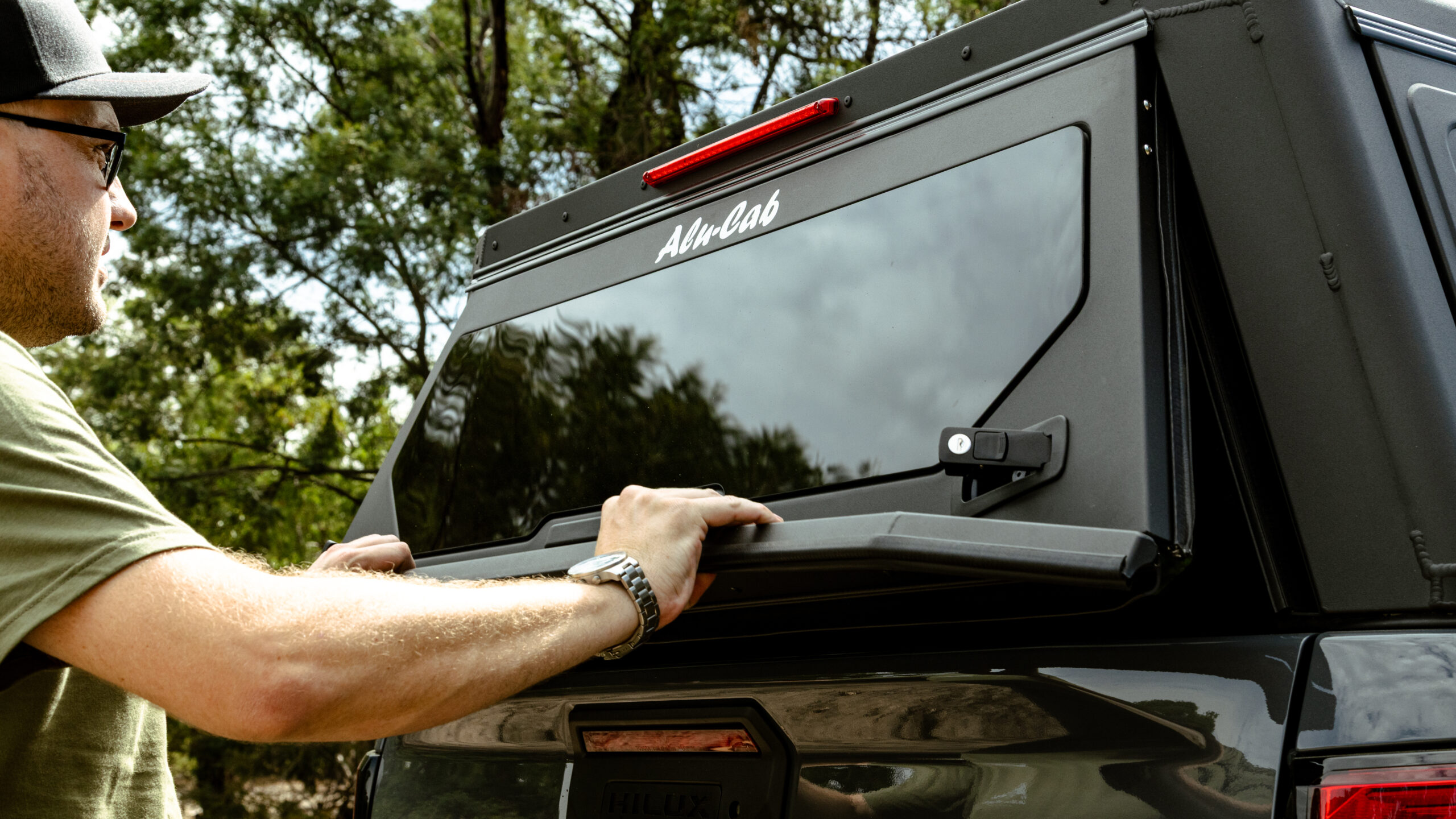
Ed: Because our Contour Canopy has a set design language that gets communicated across every vehicle, there’s usually no real distinguishing factor. But from the start, we wanted something that was going to be unique and stand out.
We found a few ways to implement this. Some more subtle than others. For instance, we developed a custom front filler panel that closes the gap between the cabin and the canopy, creating a much more elegant, streamlined flow that reduces the amount of air that gets trapped there and improves aerodynamics.
Beyond that, we paid attention to small nuances, like the way we route the cables. All cables are fire-protected, and we’ve worked fuses into the system. These small details are really good fits for the brand.
Why Flat-Pack Is For Furniture And Built-Solid Is Better
Q: While most canopy manufacturers use a flat-pack design, why have we always opted for a fully-welded construction. Why?
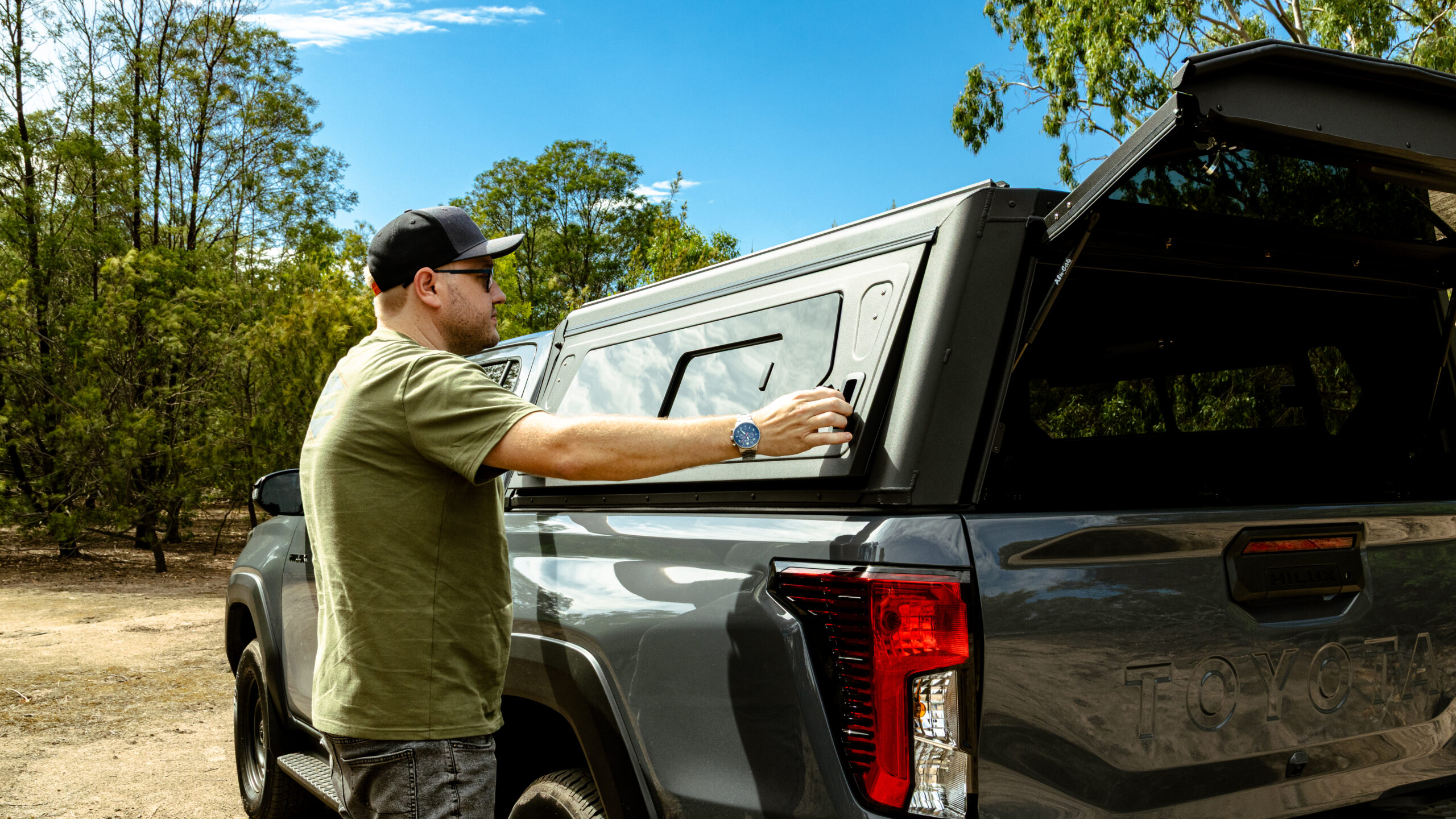
Ed: With a flat-pack, the biggest advantage is probably shipping, and honestly, that’s where the benefits end. Because you rely primarily on fasteners for structural strength, you end up with very localised stress concentrations in key areas.
With our method, we’re able to distribute the fastening surface over the entire area of the canopy. Where a flat-pack might use four or five bolts to keep panels together, we’ve got welded seams, bonded areas and fastened sections. This becomes incredibly important when you consider the loads you’re putting on top of the canopy. And even more so for overlanding where the terrain is so unpredictable. One minute you’re cruising, the next you’re on a rocky section twisting the canopy in all sorts of directions. This construction is superior because the canopy acts as a uniform body, not a collection of parts held together by fasteners. It’s able to deal with all those forces far better.
Keeping the Elements Out
Q: Talk to us about the systems we’ve engineered like the double seal, the positive pressure vent and the Centaflex hinge that keep out weather.
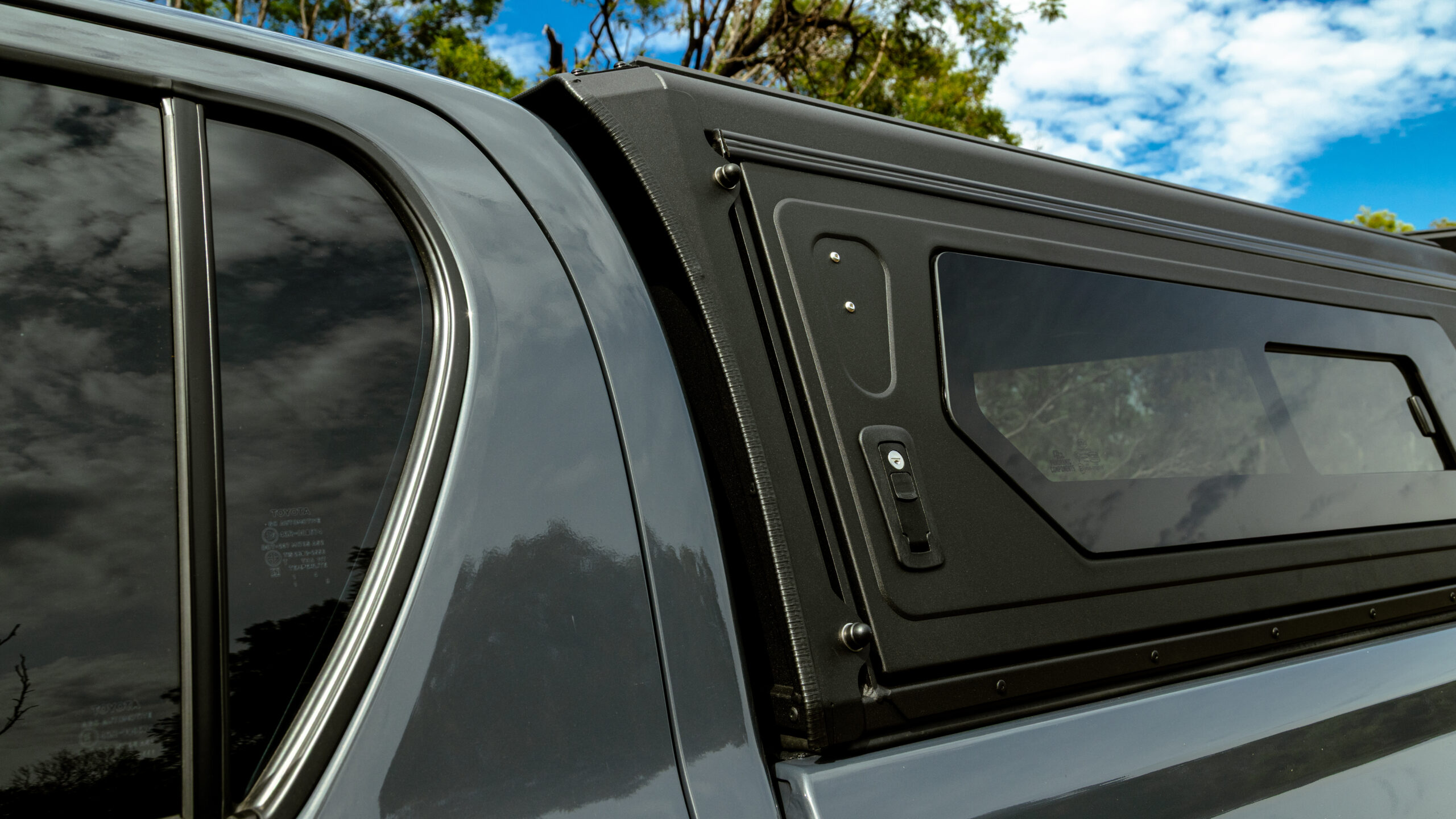
Ed: There are quite a few layers of protection. As you mentioned, we’ve got the double door seal. This means there are two sections of rubber ensuring a seal. The first is located on the rebate of the canopy frame itself, pressing against the door. Then, on the door’s rebate, there’s a cavity that the door rubber presses into. For any dust or moisture to get inside the canopy, it has to cross two separate barriers.
The positive pressure vent is a fascinating system. As you travel, a vacuum naturally forms inside the canopy. The air rushing over it creates a negative pressure relative to the stationary air inside, and that negative pressure actually tends to suck dust in. The positive pressure vent flips this on its head. It creates positive pressure inside, meaning air rushes out of the canopy. It actively repels dust.
And then the Centaflex hinge is a very effective sealing system in itself. With traditional hinges distributed along the length of the door, there’s always a gap between the top of the frame and the top of the door. That’s a potential point for ingress. The Centaflex hinge is one continuous stroke, so it eliminates that top cavity completely. On top of that, the fastening between the door and the frame is both bonded and riveted, so that becomes another seal instead of a potential weak point.
An Engineer’s Pride
Q: Is there one feature on this canopy that you’re particularly proud of?
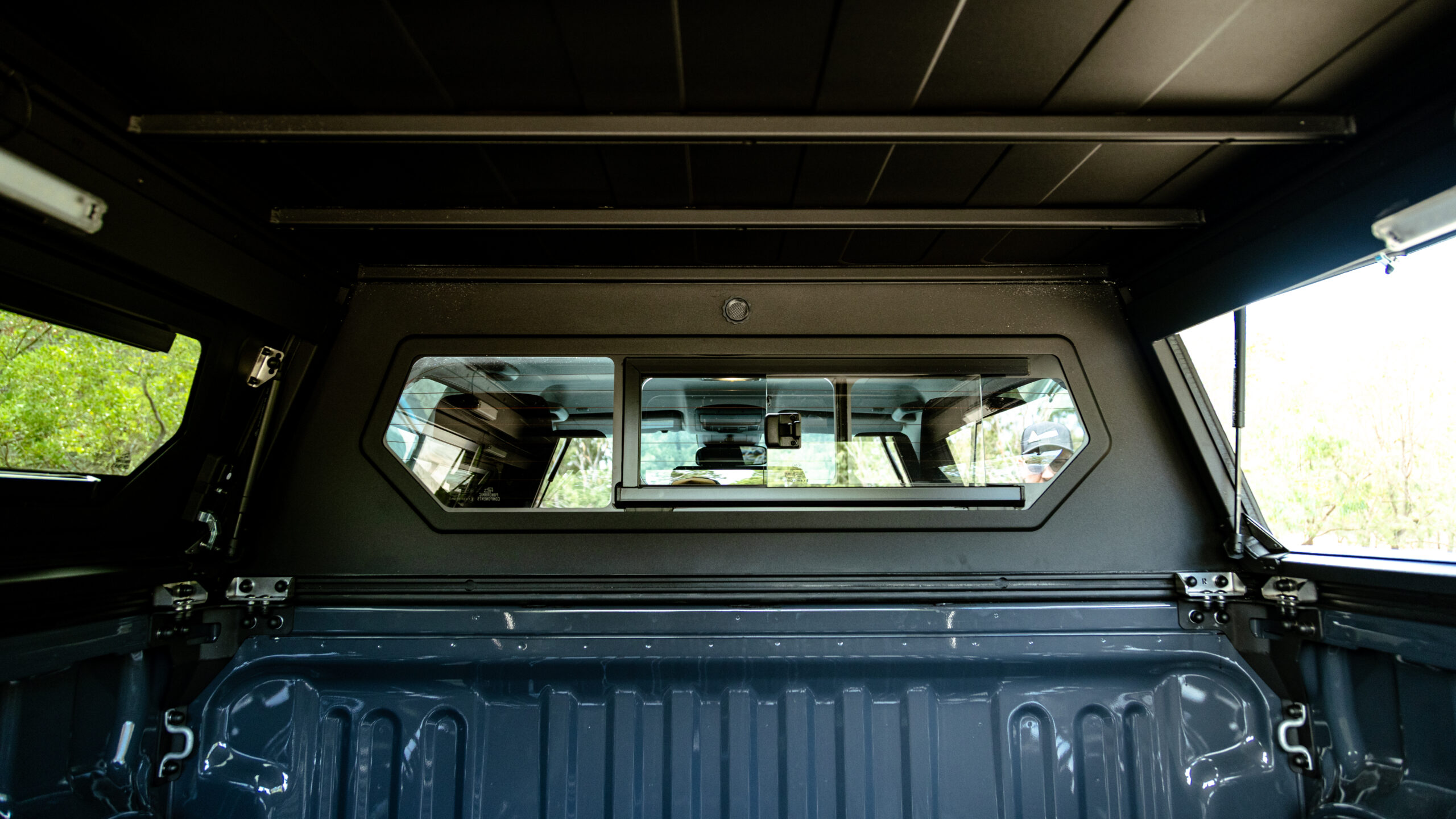
Ed: It might not seem like much, but I’m really proud of how we designed the LED light fittings. In a conventional canopy, you’d have hardwired light fittings. If a customer ever blew an LED, which is unlikely because they have a substantial lifetime, or if it got damaged, you’d have to cut wires or replace the whole loom. It can be a really time-consuming and expensive exercise.
For this canopy, we made the lights a replaceable, plug-and-play component. There’s a connector located right at the light. If a customer does damage it or it exceeds its lifecycle, they can simply disconnect it, undo two bolts, and pop in a new one. We’re thinking about the customer long-term, how the canopy is serviced and what it’s going to cost to maintain it. It’s those details that make it better.
Your Starting Point for Adventure
Q: The canopy is a customer’s starting point for adventure. How so?
Ed: There’s a prerequisite for when we make canopies that our existing accessory lineup has to be compatible. And that’s true of this canopy, and it’ll be true of any other Contour Canopy a consumer buys.
Whether you’re a weekend warrior or full-time overlander, someone can fit an LT-50 for a spur-of-the-moment breakaway, or adding a Gen 3-R and Shadow Awning for a bit more long-term comfort. For a family, even an RT-4S has the potential to go on top of this canopy. Or they could mount a pair of RT-2S RTTs for more privacy. The possibilities really are endless. Your imagination is probably the limit.
The Journey
Q: Can you tell us about the process and what it means for Alu-Cab’s future?
Ed: This has been in development since around August 2024. It’s been a long time, and we’ve learned a huge amount. It was a great chance to benchmark where we lie on the automotive spectrum.
I’m proud to say we were on point about 95% of the time. For the other 5%, we had to make small adjustments to be in alignment. But we’re agile, and were able to make any required changes and implement them effectively. There were some great learnings we took forward, not just in the product, but in the process.
It was an honour creating a Contour Canopy for the 2026 Toyota Hilux. Knowing the value of this project for our company made it easy to just put my head down and work towards it. The trust from all the stakeholders and shareholders to give me this project is a big honour as well. I really do appreciate it.