We pride ourselves on engineering gear that stands up to the world’s toughest overlanding conditions. But even the best products need to evolve to meet the changing needs of our community. For years, overlanders faced a frustrating trade-off. Mount a full-size rooftop tent and lose valuable cargo space, or choose the gear, leave the tent behind and sleep on the ground. We heard you. The result is the all-new RT-2S compact rooftop tent. The RT-2S makes RTTs more accessible.
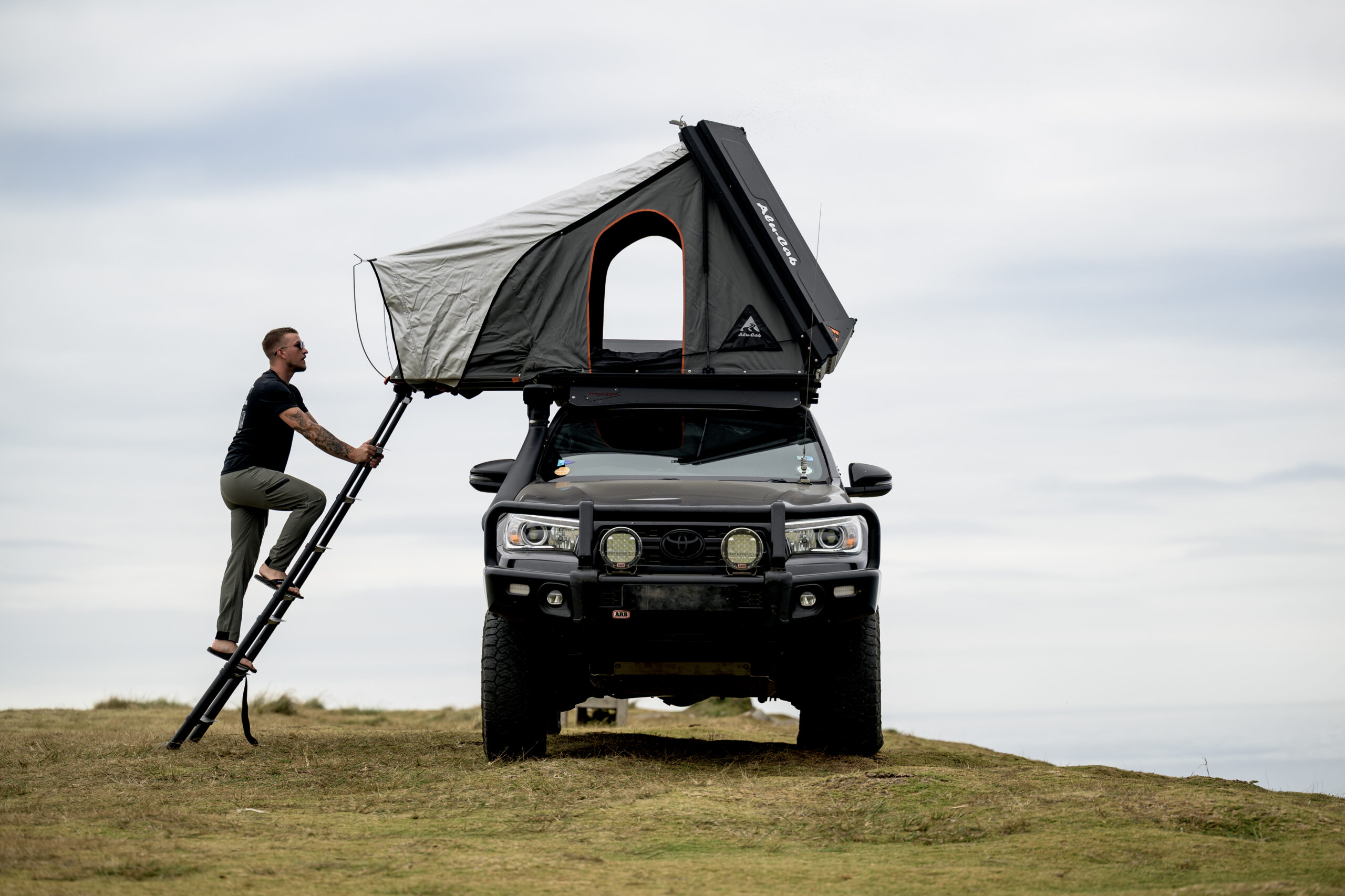
The new compact hard-shell rooftop tent is designed to deliver the same premium, all-season adventure we’re known for, but in a space-saving footprint that opens up a world of new possibilities.
We sat down with the lead engineer driving the project, Waseem Chothia, to discuss the design philosophy, the engineering challenges and how the RT-2S fits into the Alu-Cab ecosystem.
The Wishlist Becomes Reality
While the RT-2S feels like a brand-new direction, the concept has been on our wishlist for years. The idea was always to create a smaller, two-sleeper version of our popular RT-4S. But as Waseem explains, the development roadmap had to start with the full-size version first.
“It was always the idea of having the smaller version of the RT-4S. That was actually there from the start. We just had to start with the bigger four-sleeper version. Once that was done and in the market, we could then focus on the two-sleeper version.”
The project gained real momentum when a fleet order came in from Namibia. This pushed the team to fast-track development, condensing the usual timeline. “We broke all rules just to get this out,” Waseem admits. But because 90% of the foundational work was already solved with the RT-4S, the process was surprisingly smooth. “It wasn’t stressful because we’d already done a lot of the work with the RT-4S.”
Simplicity, Savings and Smart Choices
The RT-2S wasn’t just about scaling down a larger tent. The engineering team saw an opportunity to refine the design, making it more user-friendly and accessible without compromising on the rugged durability Alu-Cab is known for. This involved making several intentional decisions to manage cost and weight.
Waseem and his team looked at every component. “We made some changes in terms of keeping that cost down,” he notes. This led to simplifying the interior lighting from swivel to static, and reducing the number of USB ports.
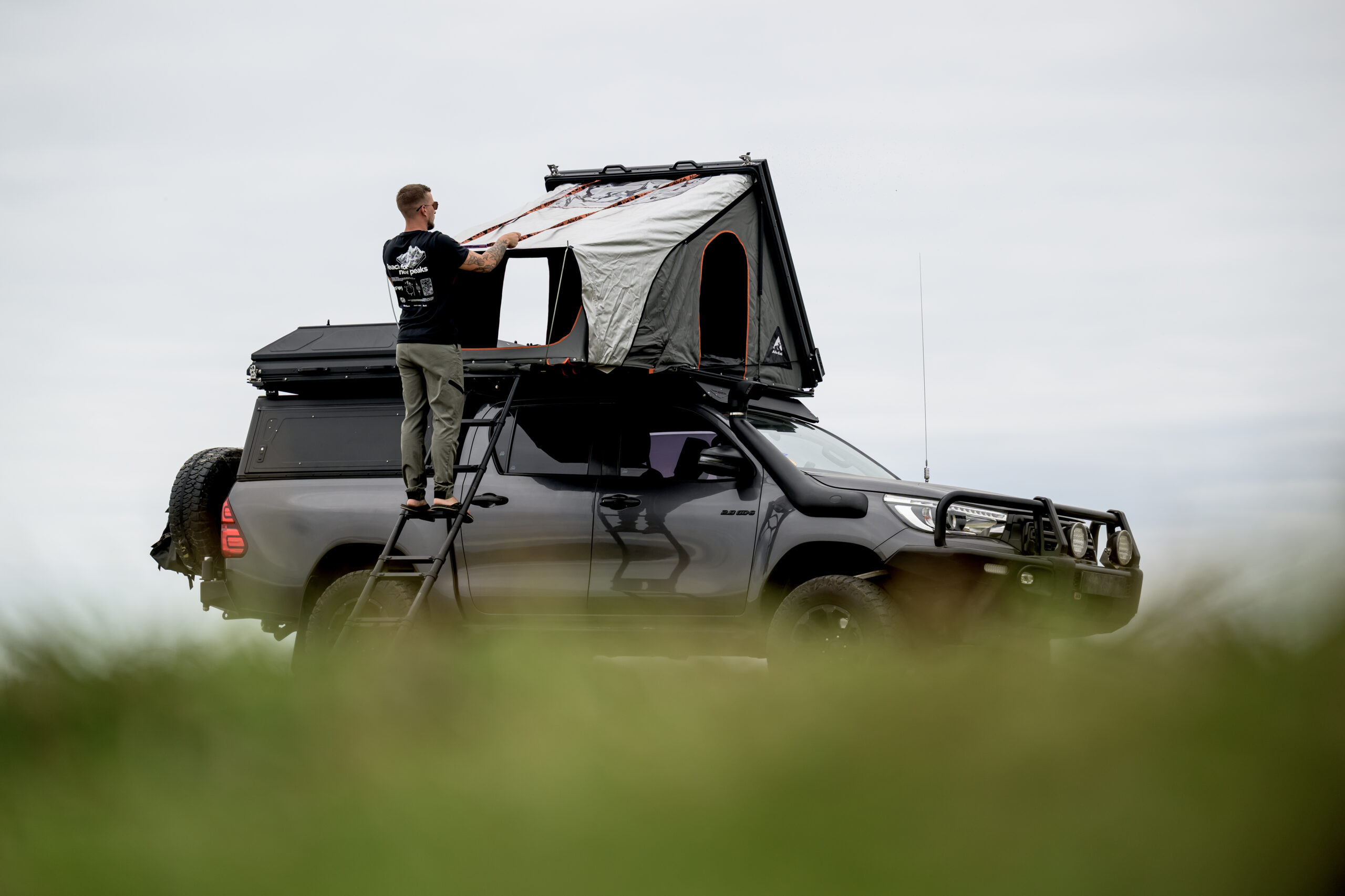
Another innovation addresses the common frustration of lost tent poles. The RT-2S features a permanently attached spring pole bag. “We decided to add it to the fold-out bed section, and have it permanently there. So it’s a visual reminder. You always see the bag hanging, so you remember to always put the poles back.”
Weight was a critical factor, but not at the expense of structure. The team found savings in the frame and sheet metal parts. A significant change was removing the insulation in the roof and replacing it with a liner. This was based on real-world testing. “We did a test with insulation in the ceiling and without, and temperatures only had a one degree difference. So we decided to leave it out to save on weight.”
Engineering Challenges
Despite the jokes in the workshop about simply “cutting the RT-4S in half,” the reality of digital design was far more complex. Shrinking a tent isn’t a simple matter of changing a dimension. It requires rebuilding the puzzle from the ground up.
Waseem explains the technical hurdle: “If you take the RT-4S and shrink it down, all the mates will go crazy in the software. I think that’s probably the most time-consuming part, because you’re gonna have to change one thing at a time and make sure everything is fitting together correctly.”
This meticulous process allowed for improvements. The RT-2S uses a more simplified roof structure, made of just three panels instead of five. This proves how a new product can benefit from the lessons learned from its predecessor.
Filling a Critical Gap
The RT-2S is a strategic addition to the Alu-Cab ecosystem. It’s designed to be the perfect solution for the fast-growing vehicle segment that includes crossovers, SUVs, station wagons and pickups with cab-mounted racks.
“This tent caters to people with smaller vehicles. Station wagons, midsize SUVs and crossovers. It really opens up a whole new market,” says Waseem.
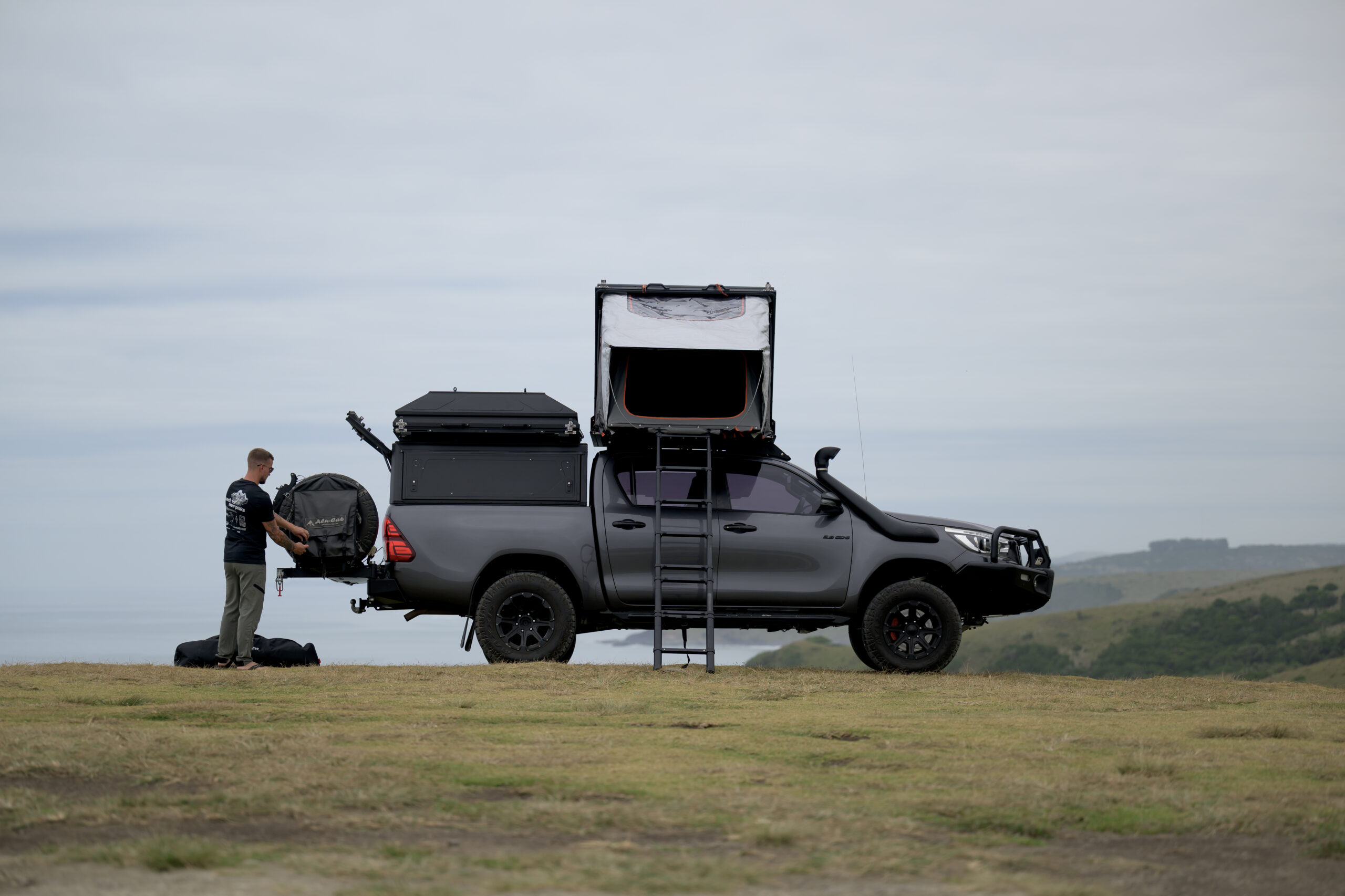
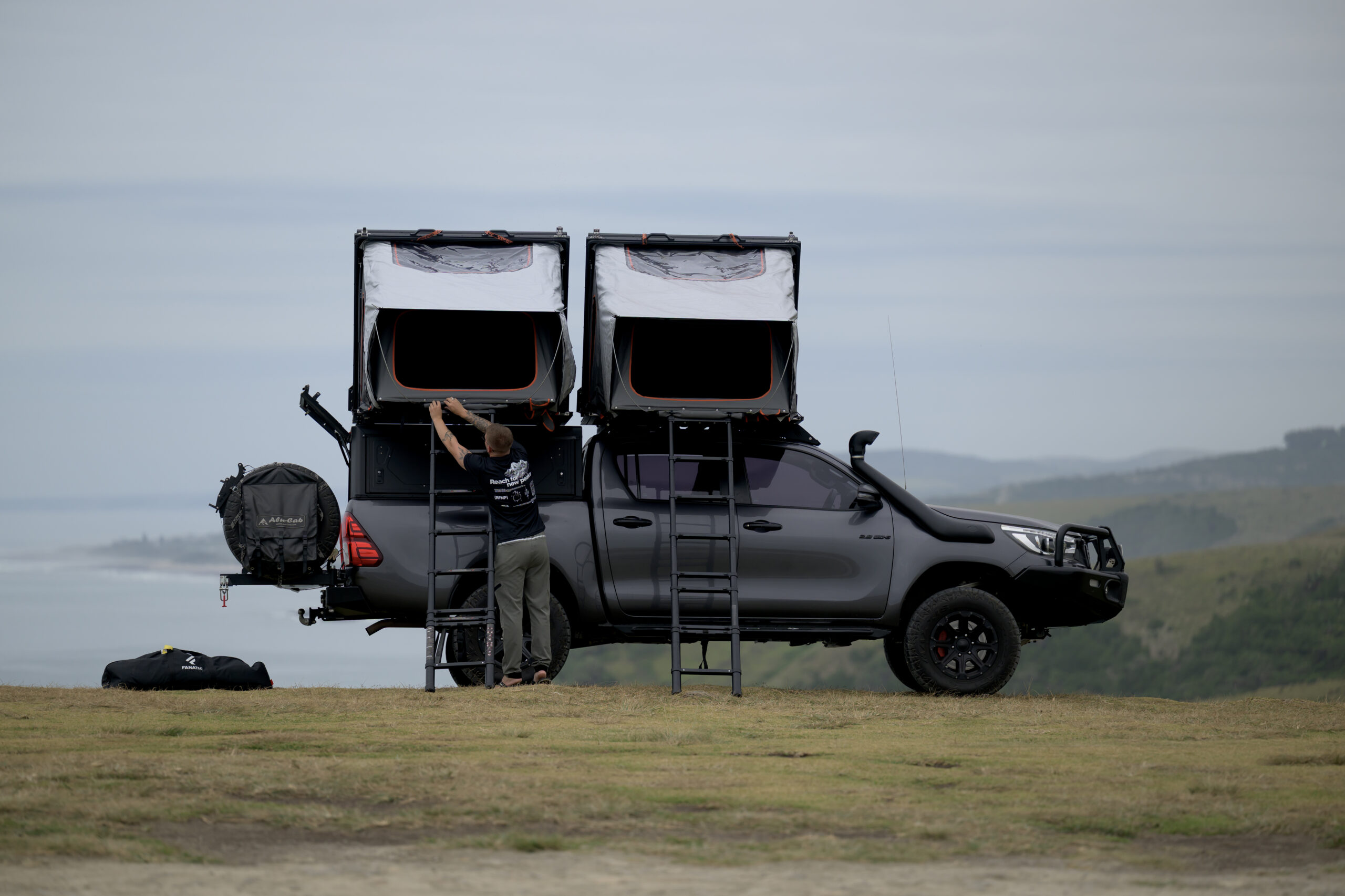
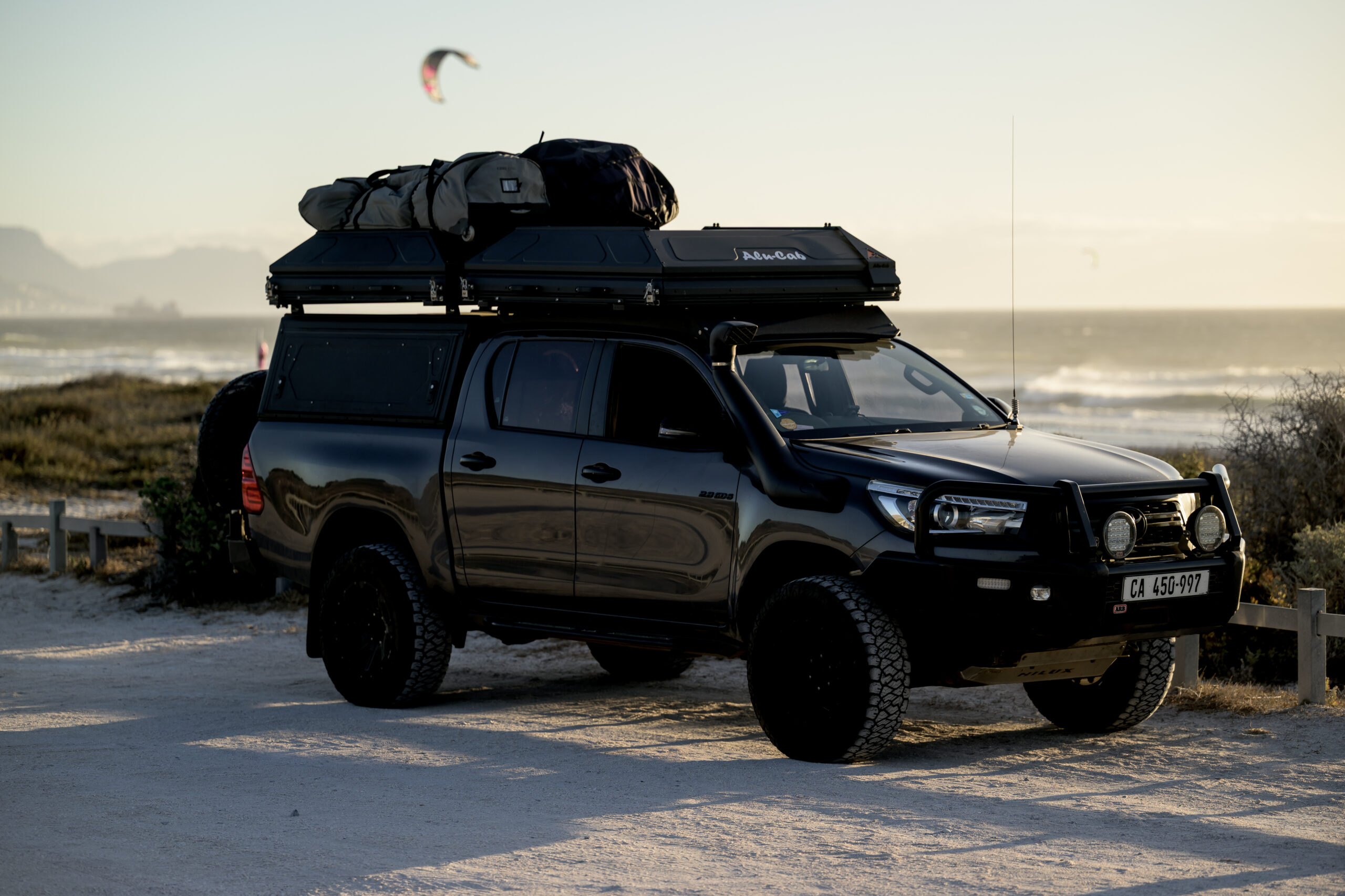
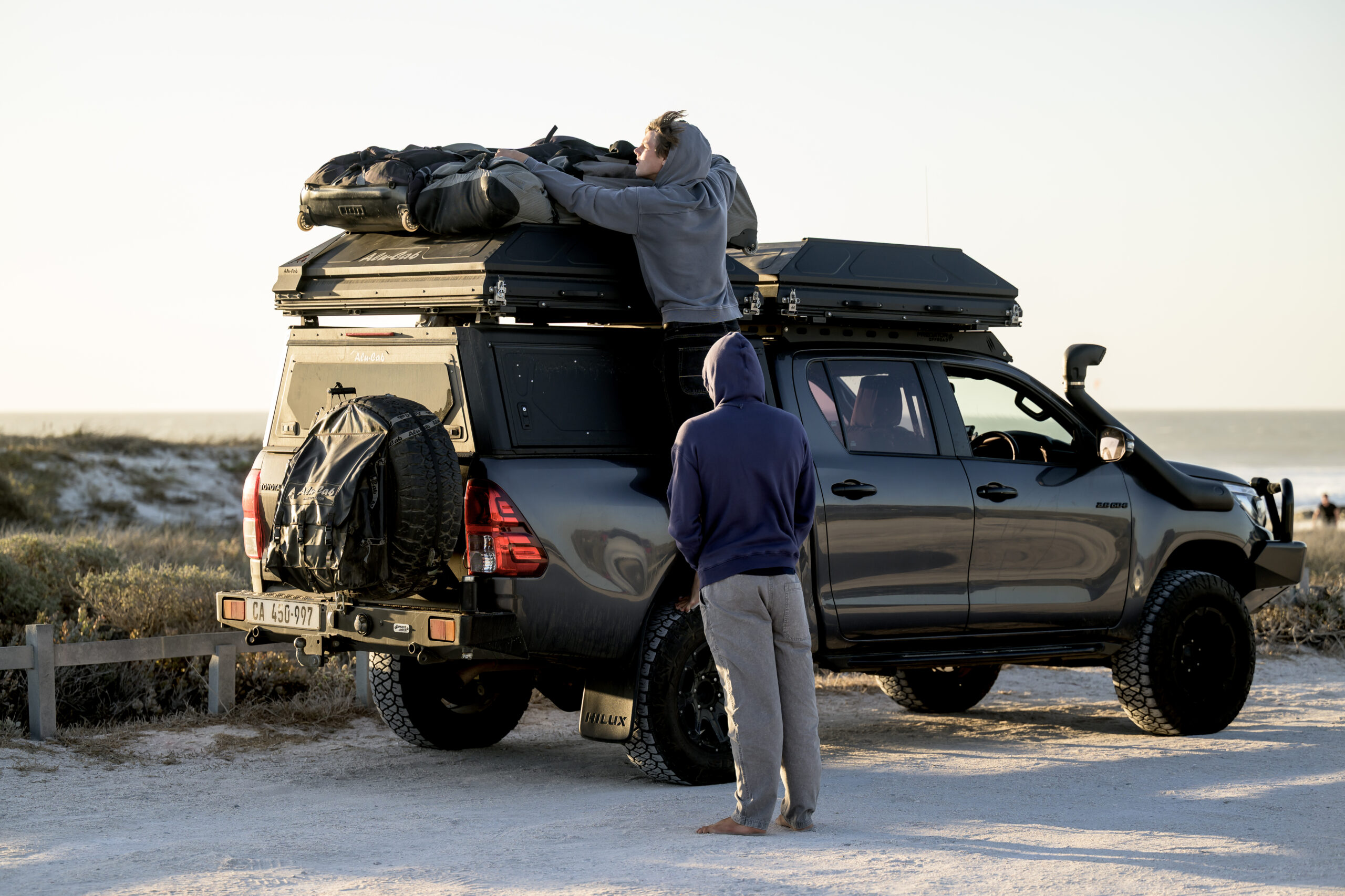
The tent’s compact, symmetrical design (1471mm W x 1560mm L) is its superpower. It mounts flush, leaving ample roof rack space for additional cargo like bikes, kayaks or a roof box. For full-size pickup owners, the slim profile enables a dual-setup configuration. Mounting two RT-2S rooftop tents on a single vehicle offers more privacy for families or groups without anyone having to sleep on the ground.
Perhaps most impressive is that despite its compact closed footprint, the RT-2S doesn’t compromise on sleeping space. It opens to reveal a spacious interior made more comfortable by a plush 60mm high-density foam mattress.
“Even though it’s got no overhang, it’s as spacious as the Gen 3-R. You get that same sleeping area, which actually feels roomier than the Gen 3-R because of the way the tent opens up.”
The Reaction
Perhaps the most telling part of the story is the market’s reaction before the tent was even officially launched. “Something I noticed,” Waseem shares, “without us doing any marketing, we haven’t even launched the tent yet, but everyone wants it.”
He admits he didn’t anticipate so much initial interest, attributing it to the success of the product design. For an engineer, this is the ultimate validation. “It keeps you going. It keeps you motivated and it keeps you wanting to make things better.”
A New Standard of Accessibility
The RT-2S proves Alu-Cab’s commitment to innovation. How we aren’t stuck on a single RTT design. Instead, we’re pushing boundaries and making our gear more accessible to more people and more types of vehicles. Without ever sacrificing the quality and durability our customers demand.
With its 60-second setup, pre-wired solar readiness, integrated lighting and USB ports, as well as the ability to store bedding and the ladder inside of the tent when closed, the RT-2S is the modern adventurer’s dream.
“The RT-2S proves we are innovating. We are not just sticking to our winning formula. We are pushing things. We’re trying new things. And most importantly we’re catering to new types of customers.”
With its compact footprint and sturdy overland-ready construction, the RT-2S is waiting for your next big adventure.