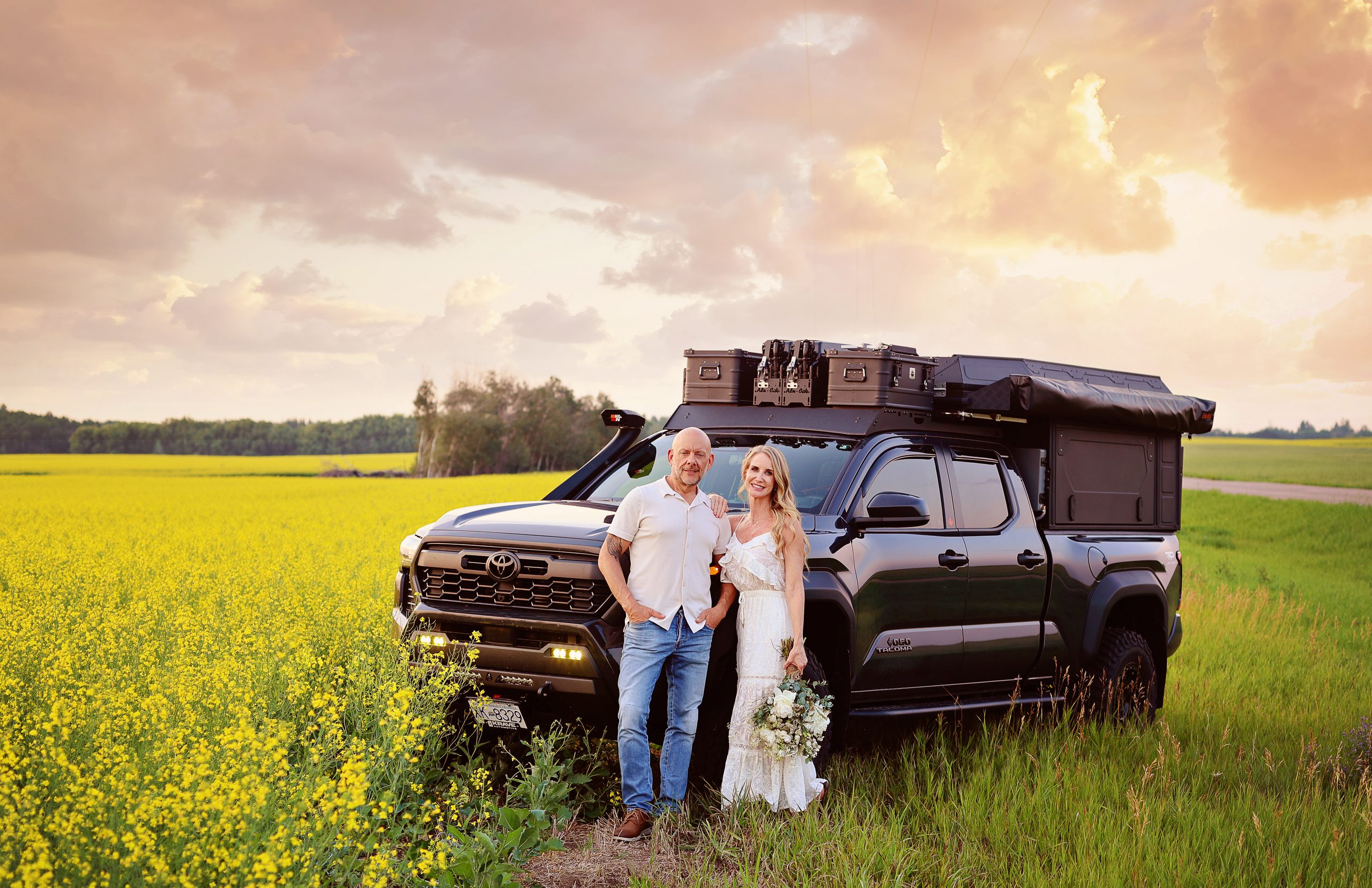
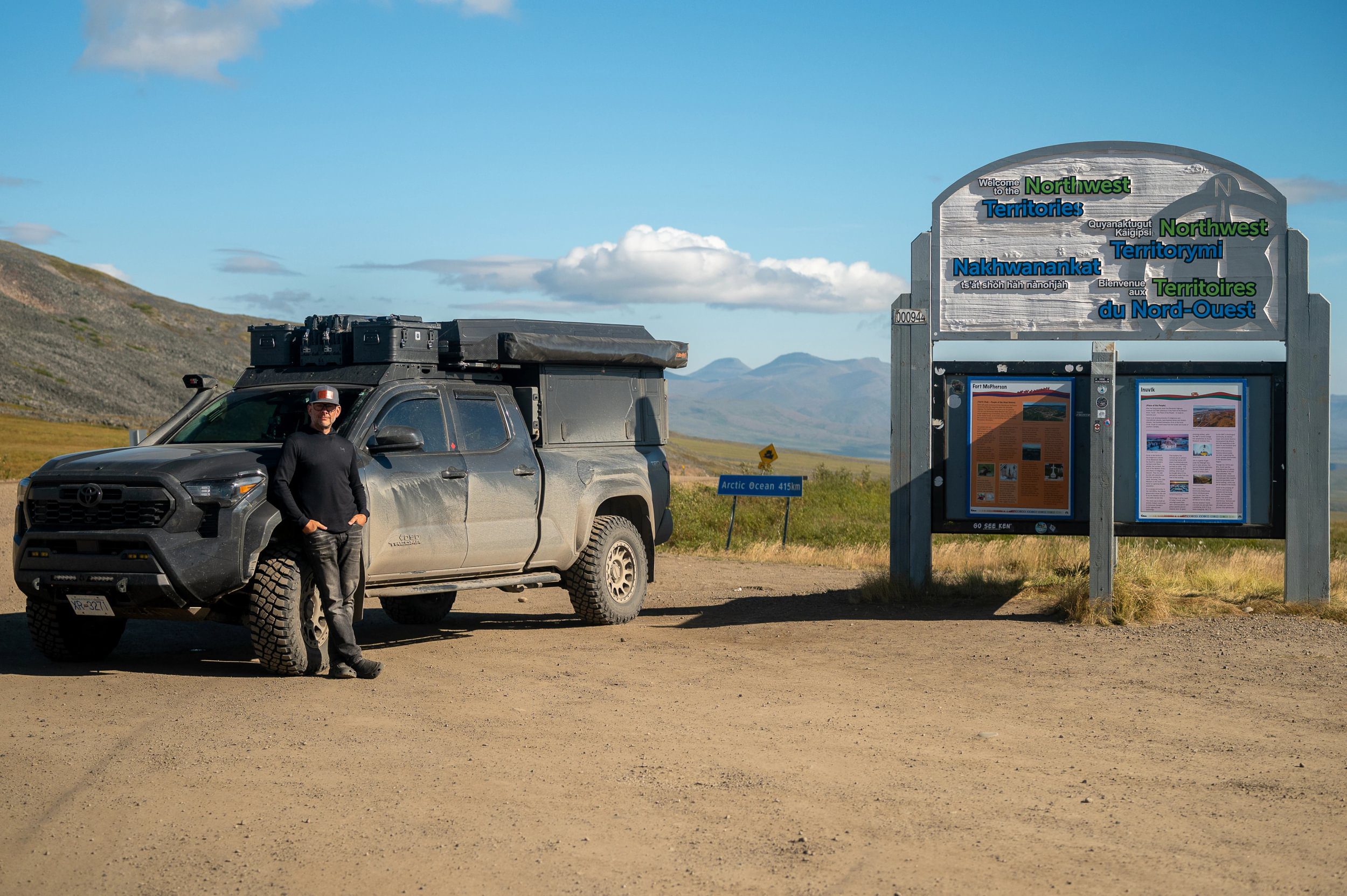
James and Jennifer met in Costa Rica in 2020, got married in Saskatchewan in July 2026, and have been on the longest, most epic honeymoon ever since. Driving Oso, their Alu-Cab ModCAP-equipped Tacoma, they’re currently making their way from the Arctic Ocean toward Argentina, sharing everything as the Lost & Found World Tour. Here’s how twenty years of talking about it finally turned into actually doing it.
James is from British Columbia. Jennifer is from Saskatchewan. Neither of them was living in Canada when they met — they’d each moved to Costa Rica separately and crossed paths there in 2020. Jennifer is a photographer, James is a videographer, and together they run a digital marketing company that lets them work from anywhere in the world. Creating, though, is what they both actually love doing.
For five years they lived together on a mountain in Costa Rica with their two dogs. Remote, off-grid and exactly the kind of life they wanted. “It was a pretty remote way of living, but we loved it,” they say. But after their dogs passed away, the house felt empty, and they were ready for something different.
The Dream, Realised
The Lost & Found World Tour wasn’t a new idea dreamed up to fill the quiet. James had been talking about driving around the world since before he and Jennifer had even met. He brought it up on their first date, sharing how he’d wanted to do it for over twenty years, going back to childhood evenings watching Land Cruisers and Defenders cross Africa on National Geographic.
What finally made it real wasn’t a single moment so much as a slow clearing of obligations. The dogs. Then the house. They put their Costa Rica home on the market expecting a quick sale and instead waited much longer than planned — it finally sold in March 2026. After that, everything moved fast. They bought the Tacoma in British Columbia that April while still living in Panama, had it built out by Krave in Calgary, and in July flew from Panama to Calgary, picked up the truck, and started the world tour.
Panama Was the Starting Point
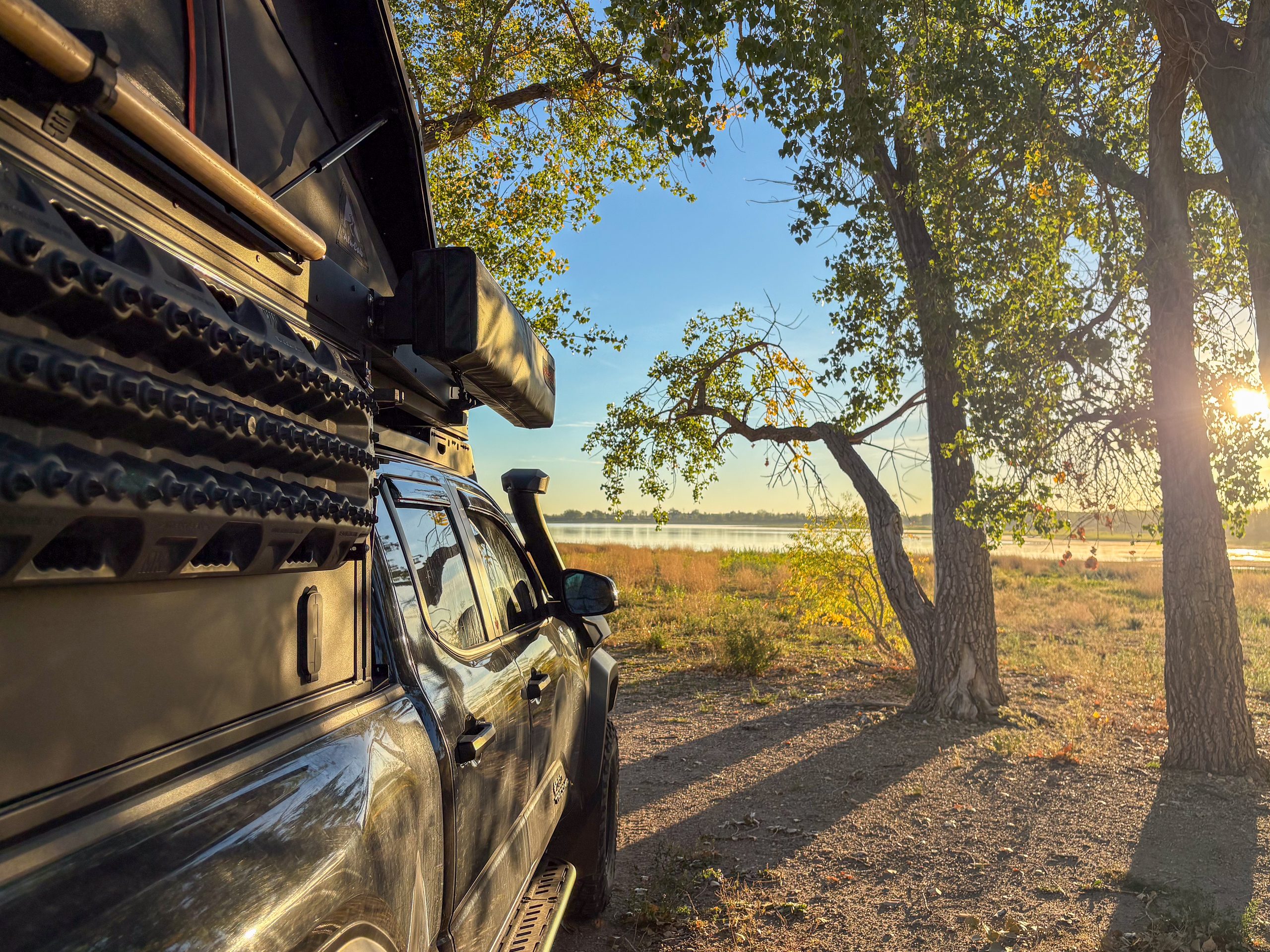
“We knew the world tour was coming at some point, so Panama became the starting point for what we wanted Lost & Found to develop into,” they say. They started filming unique properties around the region and working out how that idea could fold into the bigger trip.
The concept was never simply “drive around the world.” Oso is transportation, but it’s also home and that combination is the whole point. “We get to travel the world with our home on the back of the truck, discover unique properties along the way, and still have the freedom to get off the main roads and reach remote places that most people never get to see.” By the time they left Panama for the Arctic, they’d already filmed more than 40 properties and had a clear sense of what Lost & Found could become. The properties serve a second, more practical purpose too. A break from the truck every week or so, a bigger space for a few days, something different to film. “We love each other, but we also knew that living together in the truck every single night for five years wasn’t something either of us wanted to do.”
Meet Oso
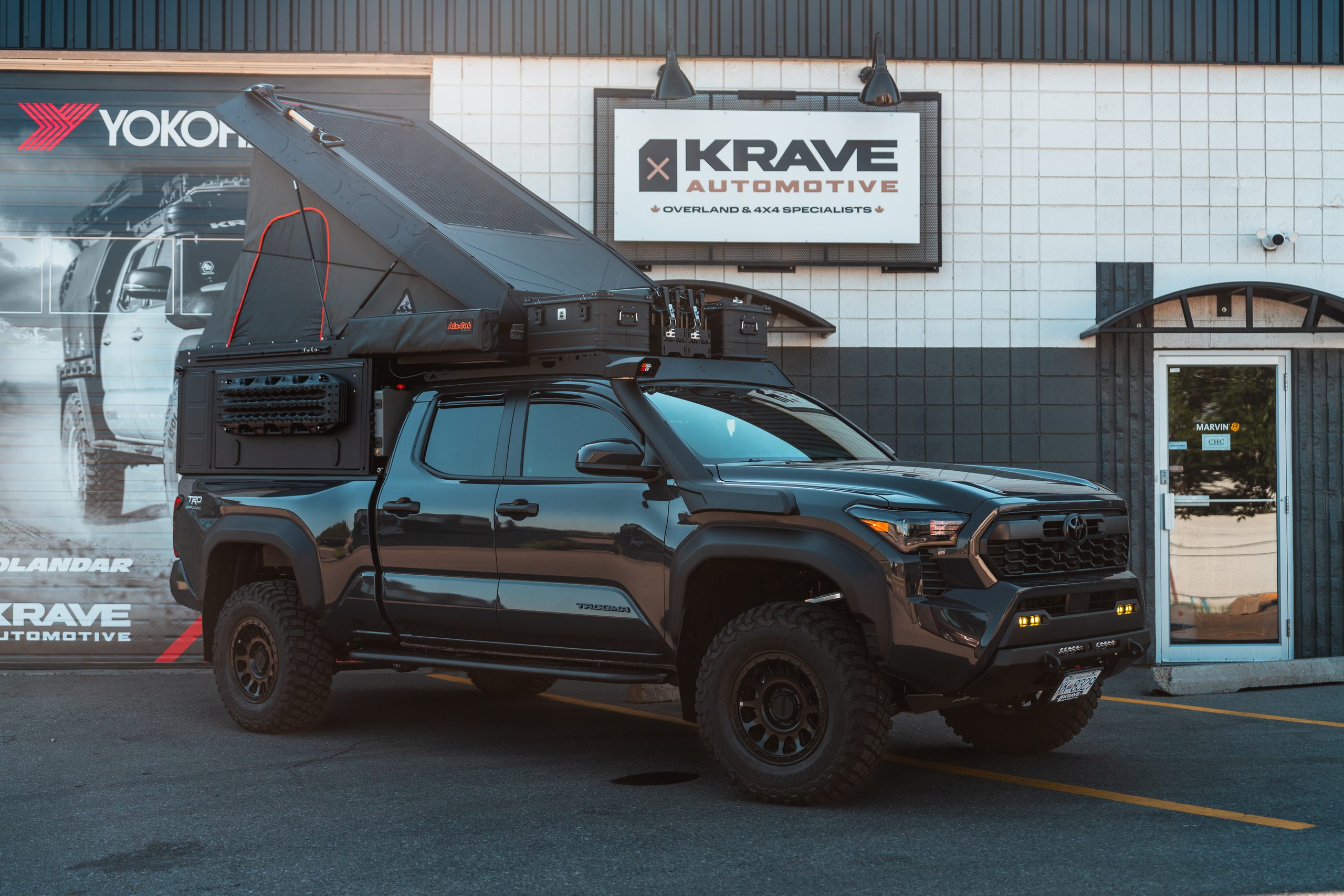
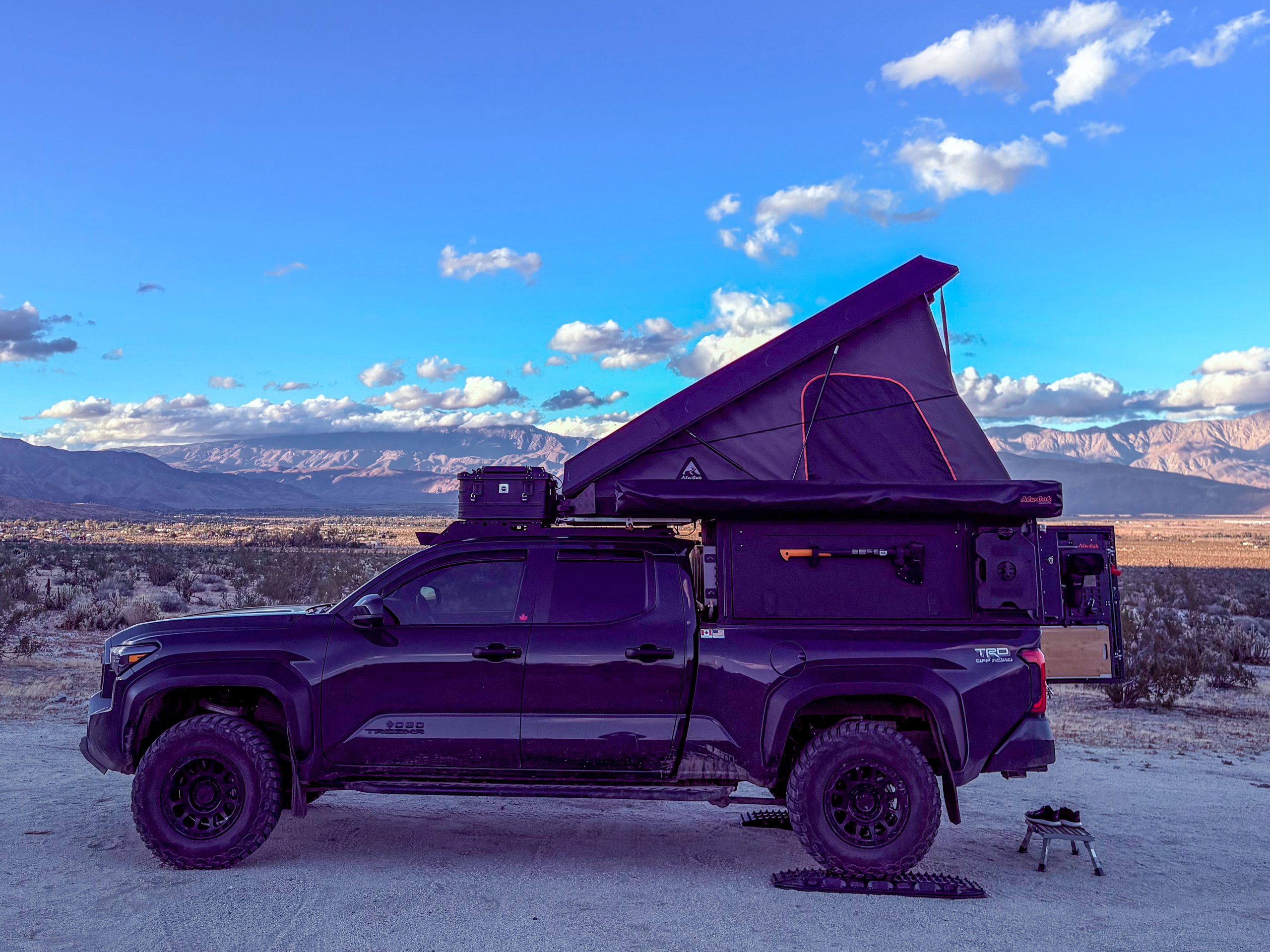
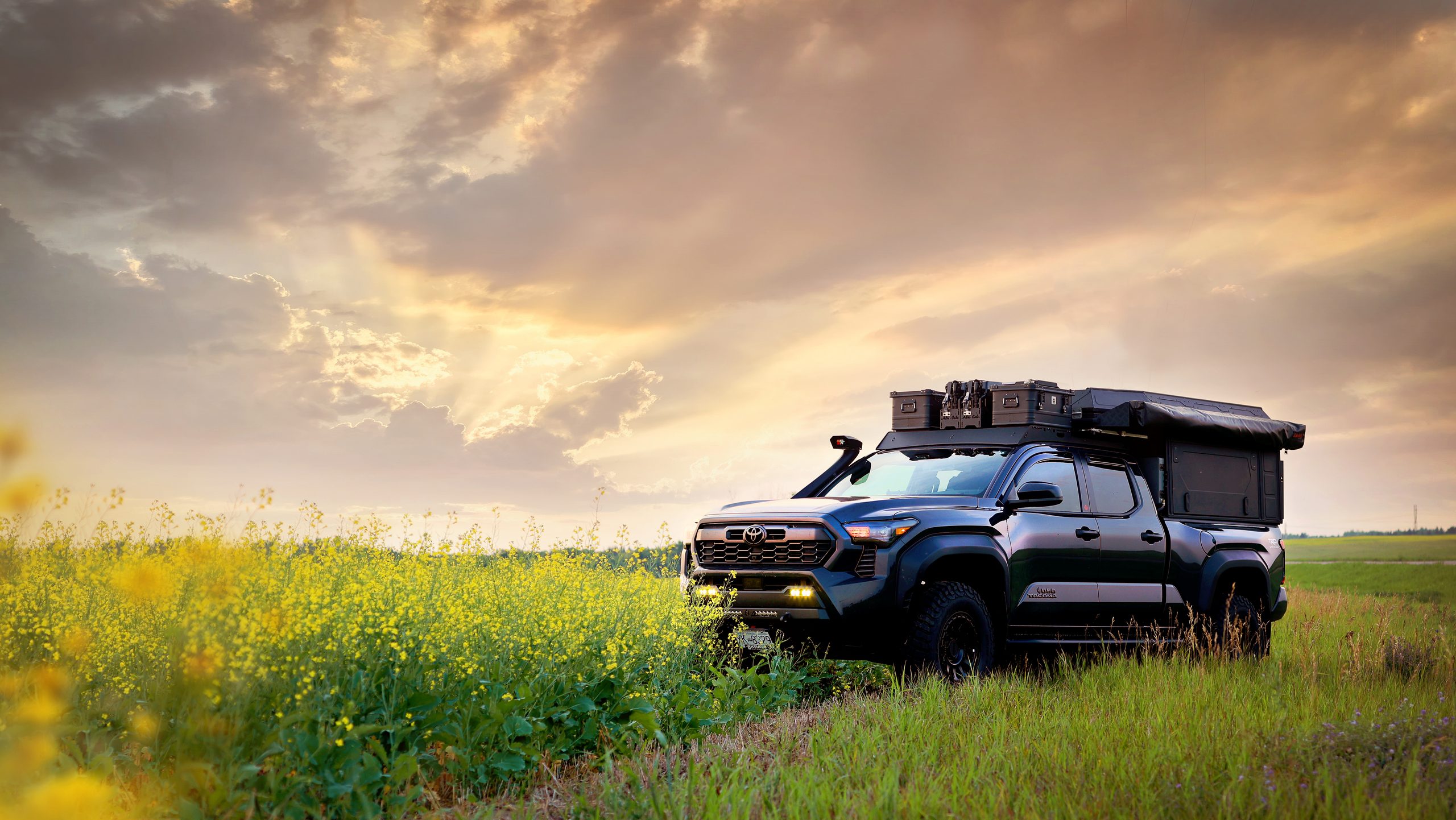
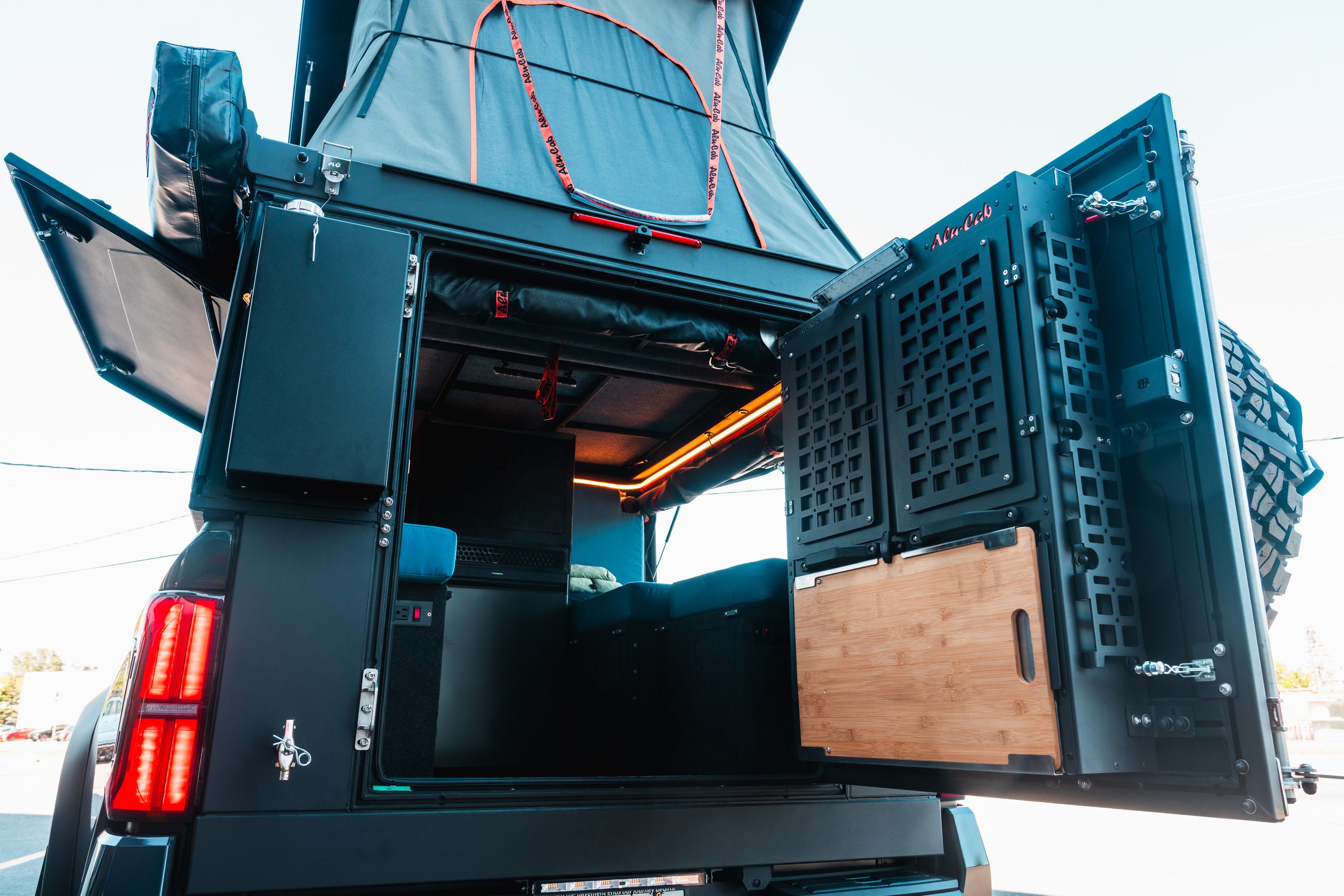
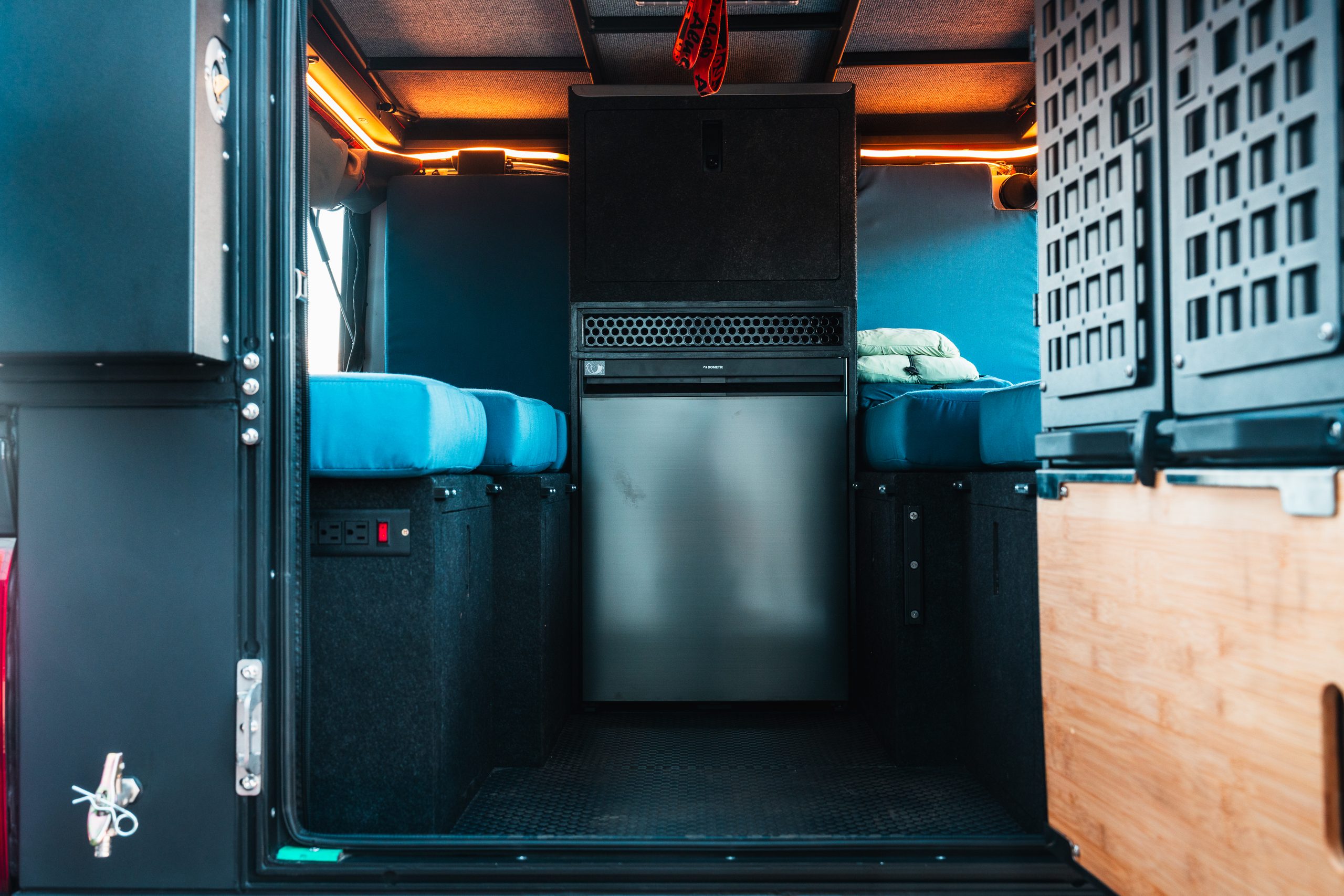
The truck is a brand-new 2026 Toyota Tacoma TRD Off-Road, built specifically for this trip and outfitted with an Alu-Cab ModCAP Camper, Shadow Awning, ModCAP Rear Door Kitchen, Shower Cube and Alu-Table. Inside, the fit-out is fully custom with a recessed sink, a UV and carbon-filtered water system, an upright Dometic fridge, induction cooking, temperature-controlled storage, Philips Hue lighting and security cameras. “We wanted the camper to feel like our tiny home while keeping the truck capable of taking us to remote places.”
The name comes from their late dog, Bear — “oso” is Spanish for bear. “He was always the protector of our family. Now he’s still with us, protecting us on the road.”
Their non-negotiables are water processing, an extra water tank and an extra fuel tank. This buys them real freedom in remote country. Their trip to the Arctic doubled as the test run for the whole build, and it told them exactly what was missing. They came back and added a second fuel tank and a heated water shower system. If they were starting from zero again, the one thing they’d still change is adding a front bull bar for better protection. Everything else, they say, they got right the first time.
Living Off-Grid
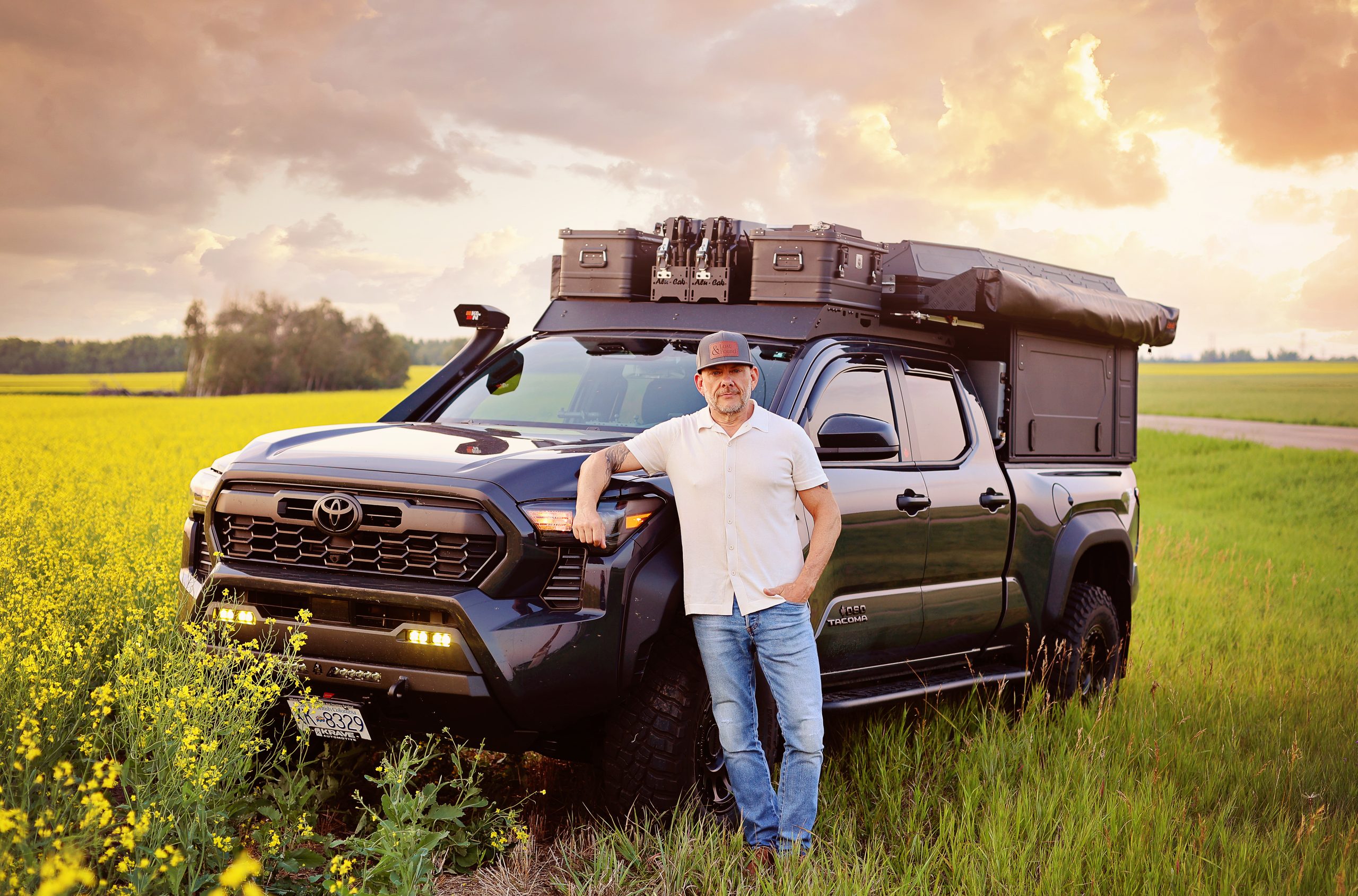
They’re still calibrating exactly how long they can stretch their resources, but right now they’re comfortable going three to four nights fully off-grid. Longer if they conserve power, pack smart and ration water carefully. They can push further when the destination is worth it. “We both aren’t fans of having to compromise days without showering, but will do when there is somewhere epic we want to go to.” Given the choice, though, they’d rather restock more often and not have to think about every drop.
The truck is built so they can do almost everything inside if the weather forces it. A pull-down bed, a sink with UV filtration, induction cooking, an interior table with bench seating on both sides for eating and working. They got a real test of that in their first 30 days on the road, which were cold and full of bears, so they spent most of their time inside. They call that stretch “the true test” — proof they could live inside the truck when they needed to, and proof they didn’t want to do it as a default. Now that they’re in Mexico, life has opened back up. Cooking, eating, working and doing dishes outside. How they originally pictured it.
The Gear
One piece of gear quietly earned MVP status early on was the diesel heater. “We didn’t realize how much we would end up using it,” they say of the cold first weeks. It’s also quiet and dry. Details that matter a lot more at 2 a.m. in a truck than they do on a spec sheet.
Storage was always going to be the fight on a build like this. They pulled the back seat for extra space, use Velcro bags from Flat Iron under the bed platform for toiletries (“a lifesaver for space”), and split what’s left between clothes, production equipment, their power system, and a Trellino. They’d hoped to fit an AC system in for the drive through Central America but simply don’t have the room. At this point, they don’t think another item could fit if they tried.
The toughest terrain so far was the Dempster Highway on the way to the Arctic. Canada’s roughest road has travelers crawling along at 40 km/h. Oso did it comfortably at 90. “The truck handled the rough sections incredibly well and the Dempster ended up feeling pretty easy to us. It gave us a lot of confidence in the truck and the build.”
The Route, Loosely Held
The tour started at the Arctic Ocean, then went back through Saskatoon to see family, a week in Calgary for modifications, and south through Montana, Wyoming, Colorado, Utah, Nevada and California before reaching Baja. Dangerous weather systems cost them some of the Southwest and they skipped Arizona entirely dodging flash flood warnings.
They planned the first stretch more tightly than they’d like, working around a shop booking in Calgary and their U.S. health insurance window. From here, they’re letting property bookings set the pace through Baja — shorter drives, more nights in one spot. The only fixed points ahead are a family visit in Puerto Vallarta in mid-December and a shipping date from Panama to Colombia, likely around mid-March. Past that, nothing is locked in, and that’s deliberate. “We aren’t tied to an exact route or timeline, which we like best.”
Filming Life Without Faking It
James and Jennifer shoot, direct and produce every episode themselves. They say that they’re still finding the right balance between living the trip and capturing it. They recently took a two-week break specifically to think it through. This deliberate pause went against the instinct to film everything or post on a schedule just to keep up. “We want to enjoy the adventure, but we also want to be proud of what we put out.”
Their line on authenticity is firm: no manufactured drama. “We both have a hard time with creating fake drama just for views, and that’s not a direction either of us wants to go or the audience we want to build.” If something chaotic happens and they catch it, it’s in the episode. That’s real life on the road. But they won’t stage a moment or inflate it for the algorithm. “We’d rather tell the story of what actually happened and make it cinematic and entertaining without making it fake.”
Destination and brand partnerships slot into that same rhythm rather than interrupting it. Filming a property is still work, but it functions almost like a break from life in the truck, and it gives Lost & Found a different story to tell. This is part of what makes their version of this trip distinct from everyone else attempting something similar. “It’s really a part of the world tour rather than something separate from it.”
The People Along the Way
They’ve met more people in three months on the road than in an entire year living in Panama. One encounter that’s stuck with them was meeting Patrick and Orla from Lewie and the Rover, who told them not to feel pressured to always be creating. Wait until there’s actually something to say, something worth sharing. “That was something we really needed to hear, especially this early in the trip.” Now in Mexico, they’re looking forward to getting further off the beaten path and getting to know locals properly. A big part of why they chose to travel this way in the first place.
The adjustment nobody fully warns you about, they say, is how mentally exhausting the early stretch can be. Not from any one dramatic event, but from the accumulation of constant small decisions. Where’s the next water? Where are we sleeping tonight? Before the second fuel tank went in, it was always “where’s the next gas station?” Add in learning every system in a brand-new truck, and it adds up fast. The good news is it’s already getting easier. “The longer we are on the road, the easier it’s getting and the less we have to think about every little thing we do.”
Their working partnership draws directly on five years of running a business from home together in Costa Rica, plus another year in Panama. Being around each other constantly isn’t new. What is new is the lack of personal space, which is exactly where the properties come back in. A chance to recharge so neither of them burns out.
Get Lost. Find Your Happy Place.
The tagline is the philosophy. “It’s really just about getting lost in everything the world has to offer and finding what makes you happy in life, whatever that might be.” Right now, for them, that’s travel, new places, new people, new experiences. But they’re clear that the “happy place” doesn’t have to be a place at all. It’s permission to figure out what actually makes you happy, and then do more of it.
To any couple sitting on the fence about doing something like this there answer is “Just do it. Whatever your dream is, find a way to make it happen. Life is short and there’s never going to be a perfect time. You have to make the time right and be courageous enough to go for it, whatever ‘it’ is for you.”
They’re a few months into what they expect to be a five-year tour, with the Dempster behind them and Argentina still ahead.
Follow the Lost & Found World Tour on YouTube and Instagram at @lostandfoundworldtour.