Hamad Al Awadhi is a videographer, photographer, drone pilot and content creator from Kuwait. His rig is a 2017 Toyota FJ Cruiser built around an Alu-Cab Gen 3-R rooftop tent. His idea of home has nothing to do with an address.
The mud had him. Hamad Al Awadhi had pushed deep into a stretch of terrain between the mountains, further from his friends than he realised, when his FJ Cruiser sank and stopped. He got a call out on the radio, but the distance made it a broken, half-understood conversation. By the time his friends found their way to him, the ground around them was too tight for their vehicles to line up a pull.
There was only one answer left. They ran a line to a large rock nearby, and the winch that Hamad had always carried more out of habit than conviction dragged the FJ Cruiser back out of the mud.
“Before that day I always thought having a winch was useful, but not something I would need often,” he says. “That experience completely changed my mind.” He walked away with two rules he still travels by: never explore difficult terrain completely alone, and never underestimate the value of the right recovery equipment.
It’s a fitting scene for a man who has spent his whole life discovering, one trip at a time, exactly what the outdoors actually require of you. And who started learning that lesson long before he ever touched a steering wheel.
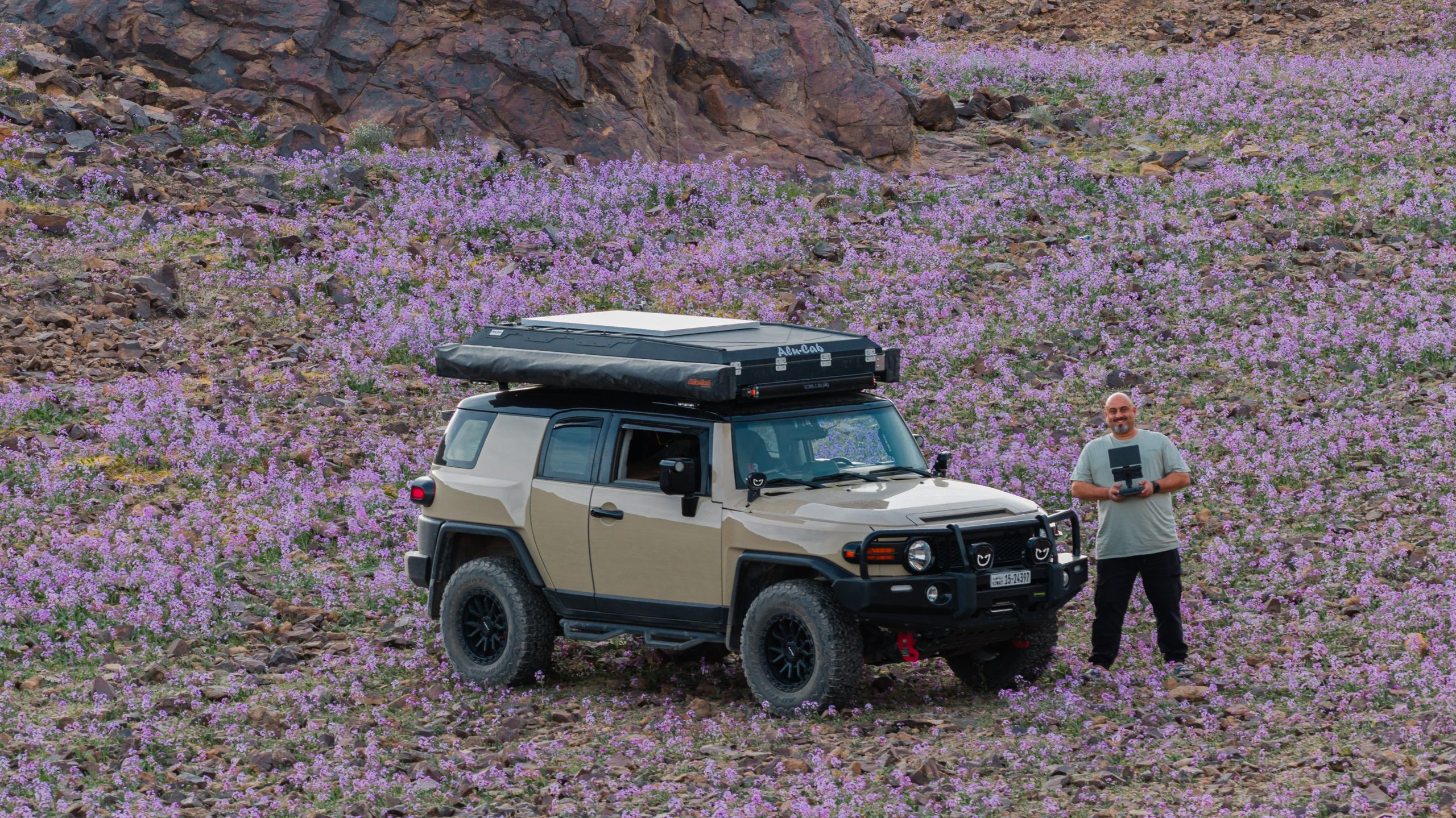
Where It Started
Hamad’s connection to the outdoors traces back to his father, who used to load him into the car for camping trips into the desert. “Those trips became some of my favourite memories,” he says. The moment he had his own driving licence, he was doing the same thing with his friends. Heading out, exploring, camping. What began as weekend trips slowly became, in his words, “a big part of my life.”
Photography and filmmaking came next. Less as a separate pursuit than as a way of holding on to what he was already doing. “Over time, I combined that passion with photography and filmmaking,” he says. “Now, I enjoy documenting the places I explore and sharing those experiences with others.” Camping turned into travelling further. Travelling further turned into a camera permanently in hand. Eventually the whole thing became a lifestyle.
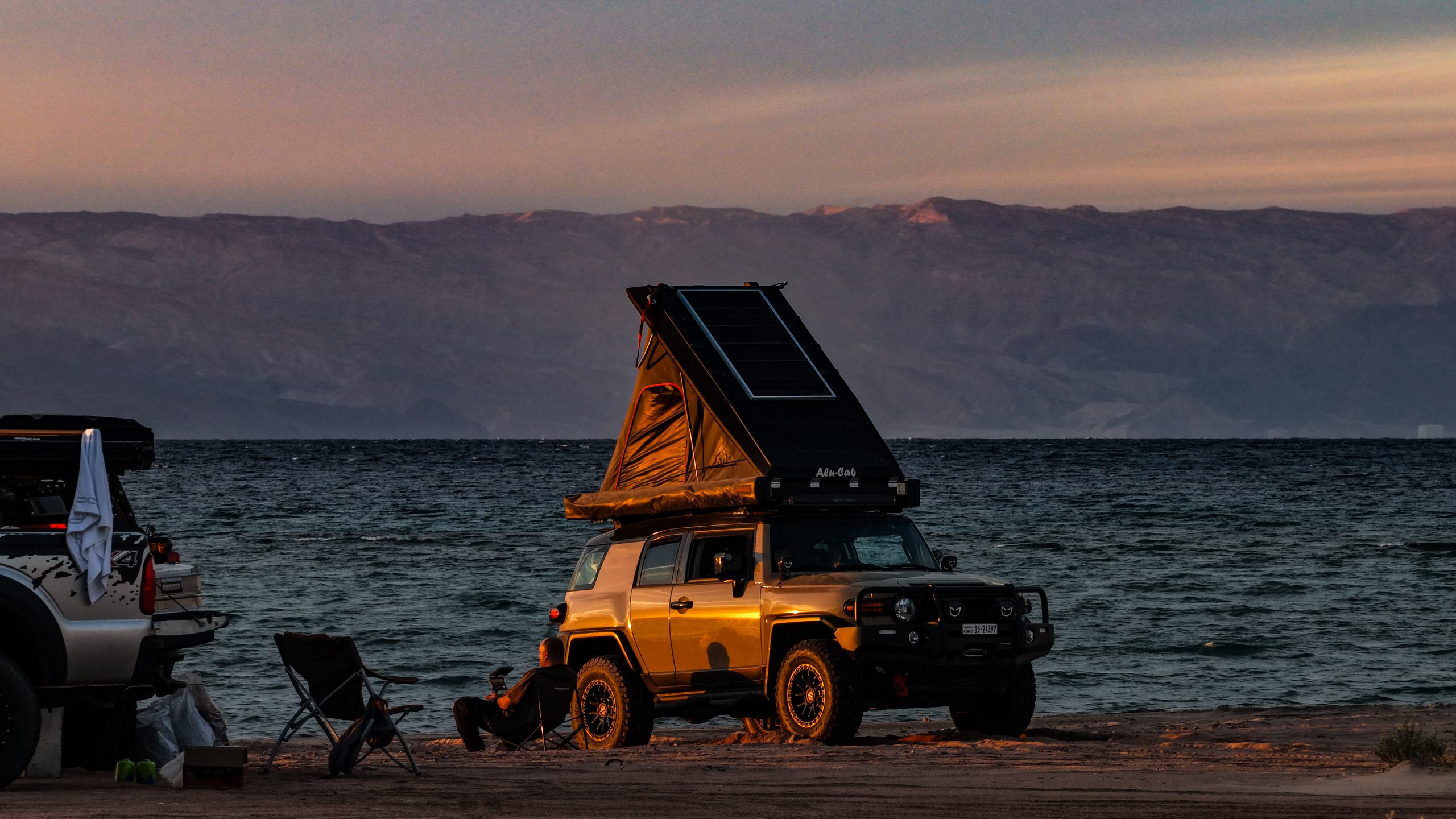
Home Is Where You Park It
Ask Hamad what that phrase actually means to him and the answer has nothing to do with distance from Kuwait City.
“It means freedom,” he says. “It doesn’t really matter where I am. If I’m somewhere I enjoy, surrounded by nature, with my rig set up, I feel at home.” He’s slept in deserts, mountains and places with no name he knows of. The appeal of overlanding, for him, comes down to exactly that: “You can park somewhere beautiful, open your tent, and that’s home for the night.”
It’s also the answer to anyone still waiting for the perfect setup before they start. “I think a lot of people overthink it,” he says. “People feel like they need the perfect vehicle and every piece of gear before they can start. I don’t think that’s necessary. I started simply by going camping with friends and learning as I went.” His advice hasn’t changed from the day he got his licence. Start with what you have, and build from there.
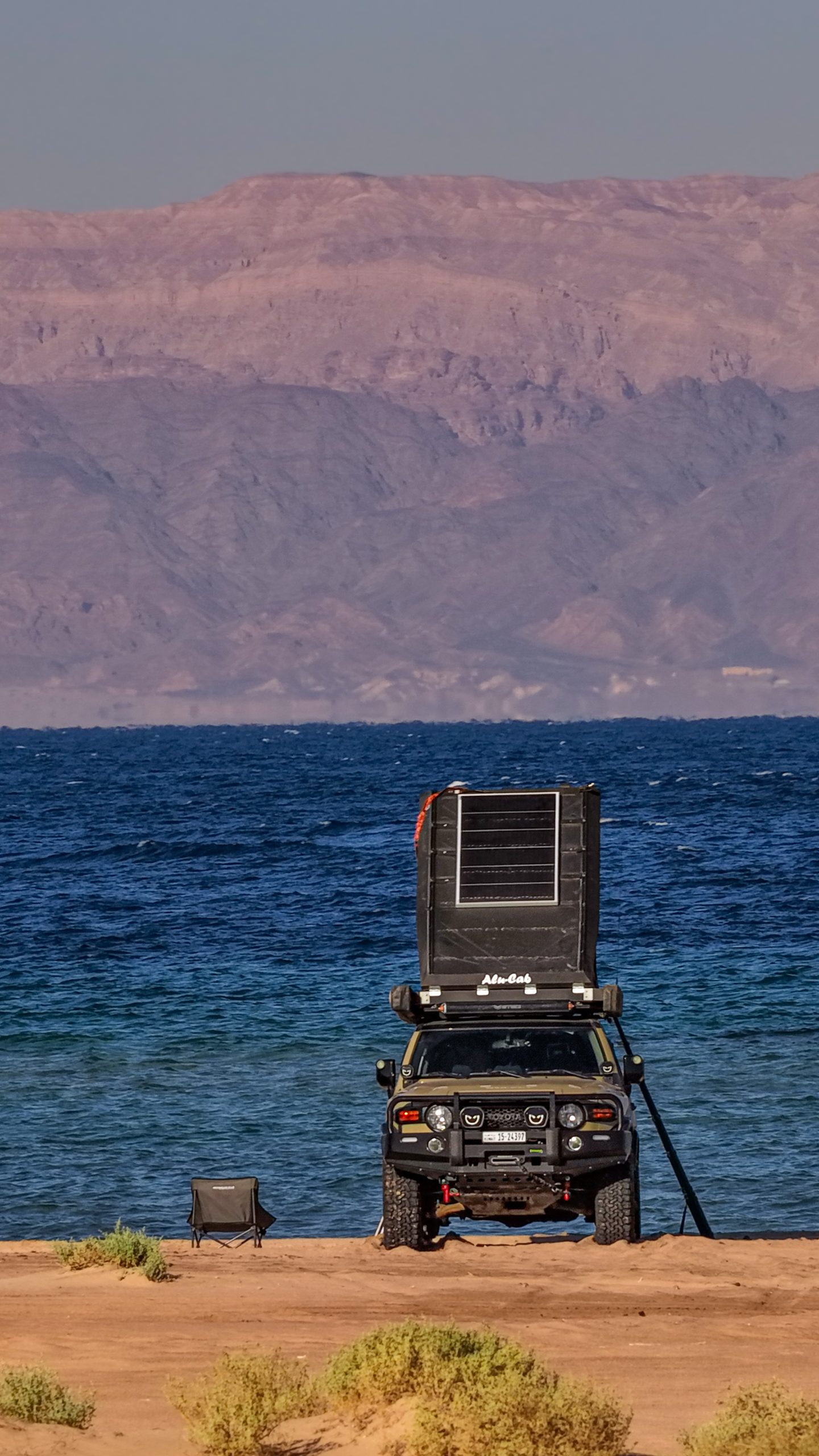
The FJ Cruiser, Built Around How He Actually Travels
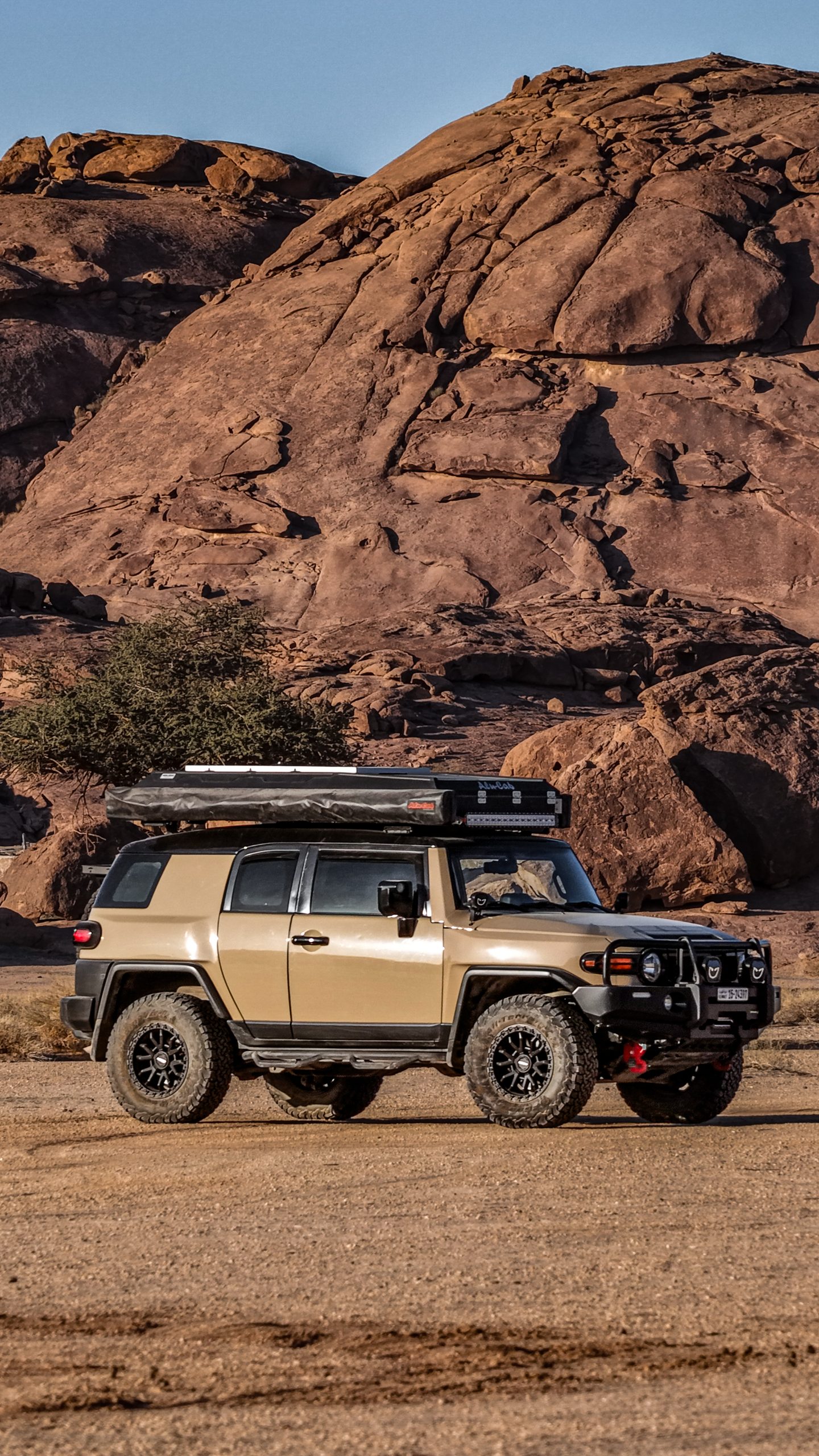
The rig doing all this work is a 2017 Toyota FJ Cruiser. “I’ve always loved the FJ Cruiser,” Hamad says. “It has a lot of character, it’s capable off-road and, most importantly for me, it’s a vehicle I trust when travelling to remote places.” Over the years he’s shaped it around his own habits on the road rather than bolting things on for their own sake.
The two changes that reshaped his actual camping experience were the rooftop tent and the awning. He’s currently running an Alu-Cab Gen 3-R rooftop tent. “I can’t imagine going back to camping without one,” he says. “It’s incredibly easy to open and close, which makes a big difference when you’re tired after a long day of driving or exploring. And it’s extremely comfortable. The biggest thing for me is that it makes camping simple. I can arrive somewhere, set up quickly and just enjoy the location.”
Suspension and recovery equipment round out the off-road side of the build. The winch chief among them, for reasons the mud made very clear. And because Hamad travels everywhere with cameras, drones and the equipment that keeps them charged, his electrical system carries as much weight in the build as anything mechanical.
Not everything he’s added has earned its keep, and he’s candid about it. “When you’re building a rig, it’s easy to think you need everything. Sometimes you see something online and convince yourself it’s essential,” he says. “Over time, I’ve learned that the best way to know what you really need is to actually use your vehicle.” His filter these days is a single question before anything gets added. Do I actually need it? Weight gets watched too. Every addition affects how the vehicle behaves, and he’d rather keep the FJ Cruiser capable on serious tracks and genuinely liveable everywhere else than max it out with extras.
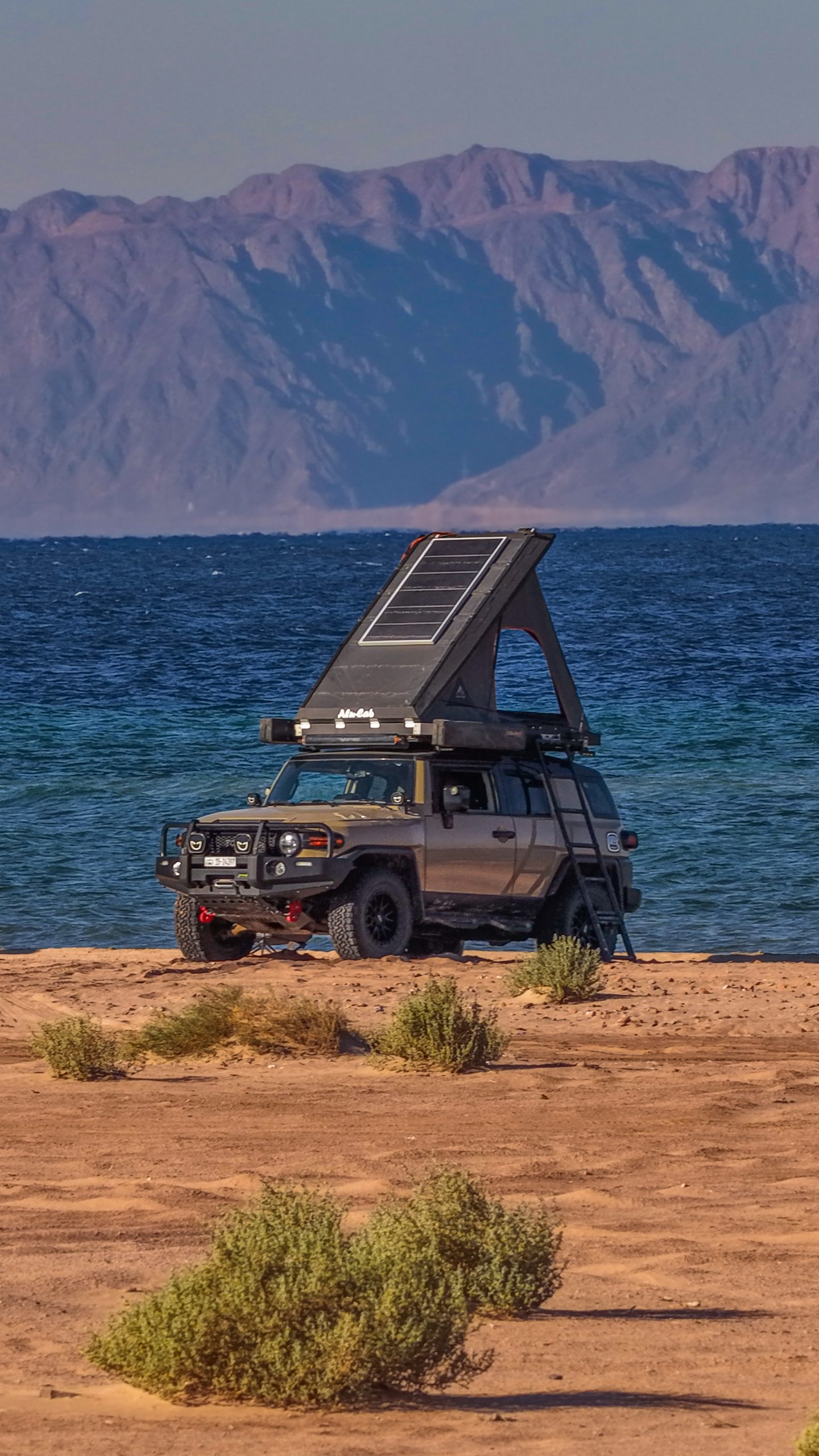
A Day With No Fixed Shape
Out in a good location, Hamad’s day tends to start before the sun does. “If the location is good, sunrise is the first thing I’m thinking about because I always have my camera with me,” he says. Breakfast, then exploring, then a day that could go almost anywhere. Driving, scouting new angles, flying the drone, chasing frames he hasn’t shot before. “There isn’t really a fixed routine,” he says. “Sometimes you have a plan, and sometimes you find somewhere completely unexpected and spend the whole day there.”
Staying out there for extended stretches is mostly a planning problem. Hamad always carries more food and water than he expects to need, because conditions off-road can shift quickly, and his battery system is sized around keeping cameras and drones running as much as the fridge. Waste gets treated as deliberately as everything else on the trip. “We try to keep it to a minimum by using reusable plates, cups and other items that can be washed and used again instead of disposable ones,” he says. “Of course, we always take our waste with us when we leave. I always try to leave a place exactly as I found it. These places are there for all of us to enjoy, so it’s important to take care of them.”
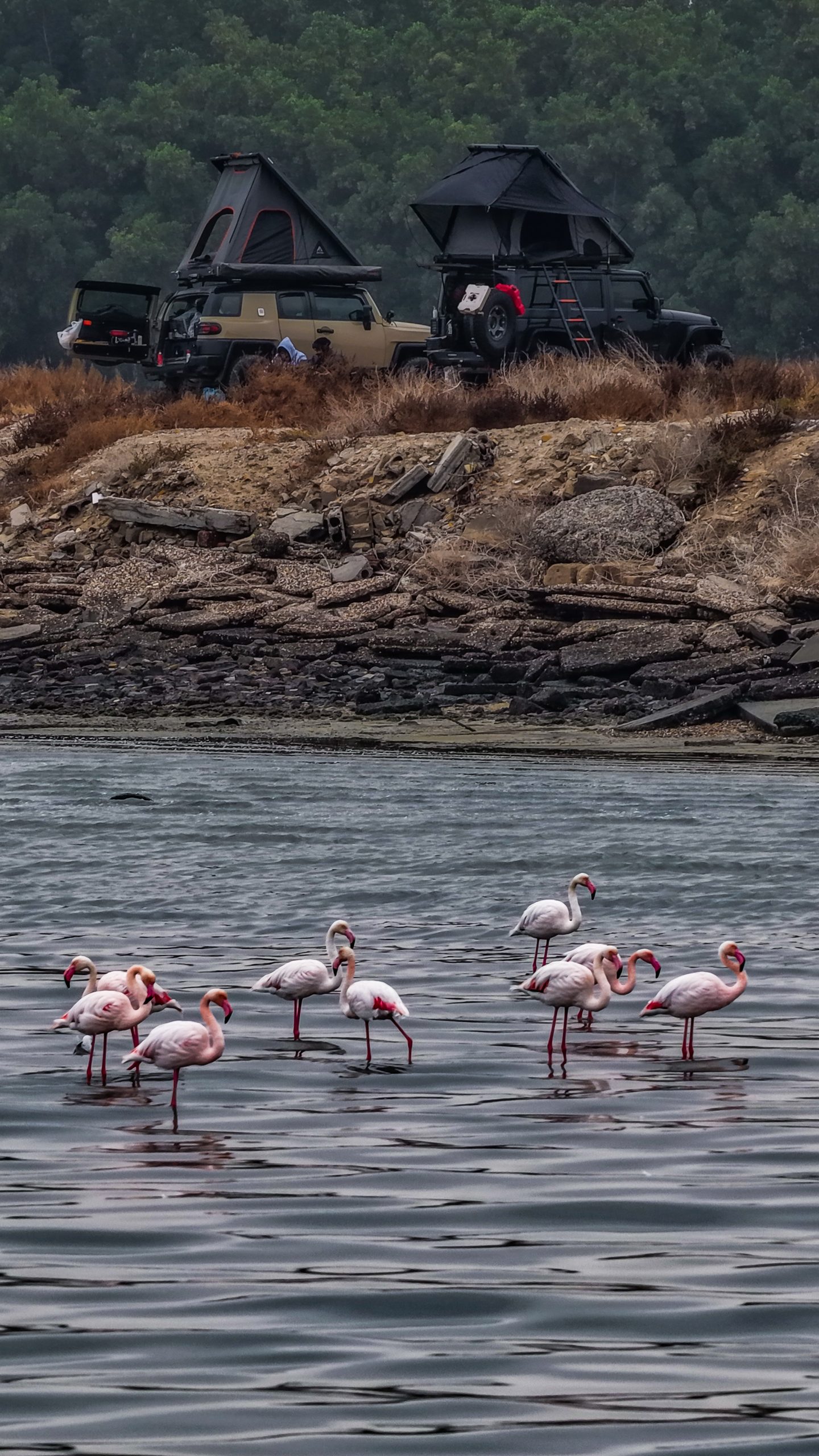
Chasing Light, Not the Landscape
Years of camping and travelling have shaped Hamad’s photography more than any single influence he can name. “You’re constantly surrounded by different landscapes and changing conditions,” he says. “You start paying much more attention to light, weather and timing.” Patience came with it. Arrive somewhere and the light isn’t right, and the answer is to wait, or come back another day, rather than force the shot.
Sunrise and sunset remain his favourite hours, the times when a desert or a mountain range can look like a completely different place than it did an hour before. He researches locations before a trip but deliberately avoids over-planning them, because some of his best frames have come from places he wasn’t expecting. Positioning the FJ Cruiser in a shot can take minutes or it can eat up hours, depending on the light, the background, and even which direction the vehicle happens to be facing. “What looks like a simple photo actually involved quite a bit of driving around first,” he says.
The through-line in all of it is what he’s actually trying to capture. “The best photos aren’t always about the location itself,” he says. “I like capturing how it felt to actually be there.”
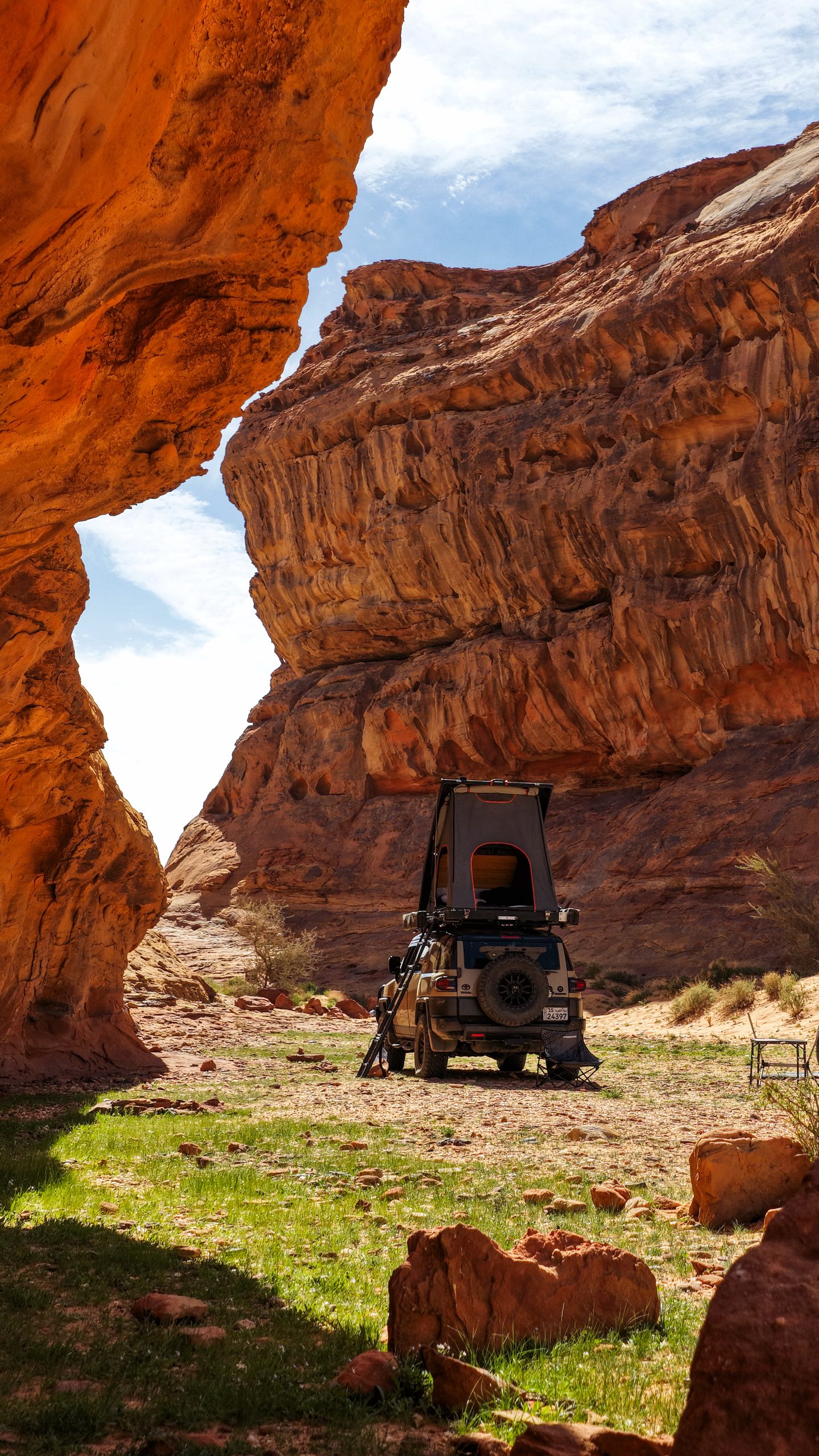
Why He Shares It
Hamad isn’t trying to sell anyone on a destination halfway around the world. “I hope people feel inspired to get outside and explore,” he says. “You don’t need to travel to the other side of the world to have an adventure. Sometimes there are amazing places much closer than people realise.” The budget doesn’t need to be big either, in his view the setup just needs to work for the trip in front of you.
What actually lands, for him, are the messages that come back. “Whenever someone tells me that one of my videos or photos inspired them to go camping, travel somewhere new or start their own adventure, that’s probably the most rewarding part,” he says. “It’s a great feeling knowing that something you created encouraged someone to get outside.”
Al Zulfi, and the Trip That Never Really Ends
Of everywhere Hamad has parked the FJ Cruiser, one place keeps pulling him back. Saudi Arabia and specifically Al Zulfi. “I’ve visited many places, but there is something about that area that always makes me want to go back,” he says. “The landscapes, the open space and the feeling of being away from everything make it a special place for me.”
He’s already thinking about the next trip before this one is finished. More places around the region and beyond. More ideas for how to document them. And the FJ Cruiser itself is never really done. “I don’t think an overland build is ever really finished,” he says.
For anyone still standing at the edge of it, wondering if they’re ready, Hamad’s answer is the same one that got him started as a teenager with a fresh driving licence. “Don’t wait until everything is perfect. You don’t need to have the perfect vehicle or every piece of gear before you start. Start with what you have, go somewhere, learn from the experience and improve your setup over time. The best way to learn about overlanding is to actually go overlanding.”
It’s not really about the equipment, in the end, or what the vehicle cost. “It’s about getting away from the routine, exploring places you haven’t seen before and creating memories along the way,” he says. Some of his favourite moments have been the simplest ones. Sitting around camp with friends, stumbling onto somewhere new by accident, waking up somewhere beautiful. All of it traces back to a father who used to drive his son into the desert, just to camp. “I’m grateful that something I grew up doing with my father has become such a big part of my life today.”