Alexander Pilditch spent thirteen years living on Svalbard. When he moved to Tromsø, he finally got to do the thing he’d been thinking of since 2019. An Alu-Cab Gen 3-R Rooftop Tent bolted to the deck of a boat that can shrug off an iceberg. Here’s how a lifelong Land Rover fan put a Gen 3-R RTT on the nautical equivalent of a classic Defender.
Alexander Pilditch is originally from the UK, but has spent years as an Arctic guide teaching survival courses. With years of expedition skiing and glacier and sea ice travel behind him. Ask him to sum himself up in a sentence, he says he’s enthusiastic about the great outdoors and all the ways it can be experienced.
That enthusiasm now runs through two very different machines. A 2003 Defender 110 and a Norwegian-built workboat called a Polarcirkle 860. There’s a Gen 3-R rooftop tent that moves between them.
A Boat Built Like a Jerry Can
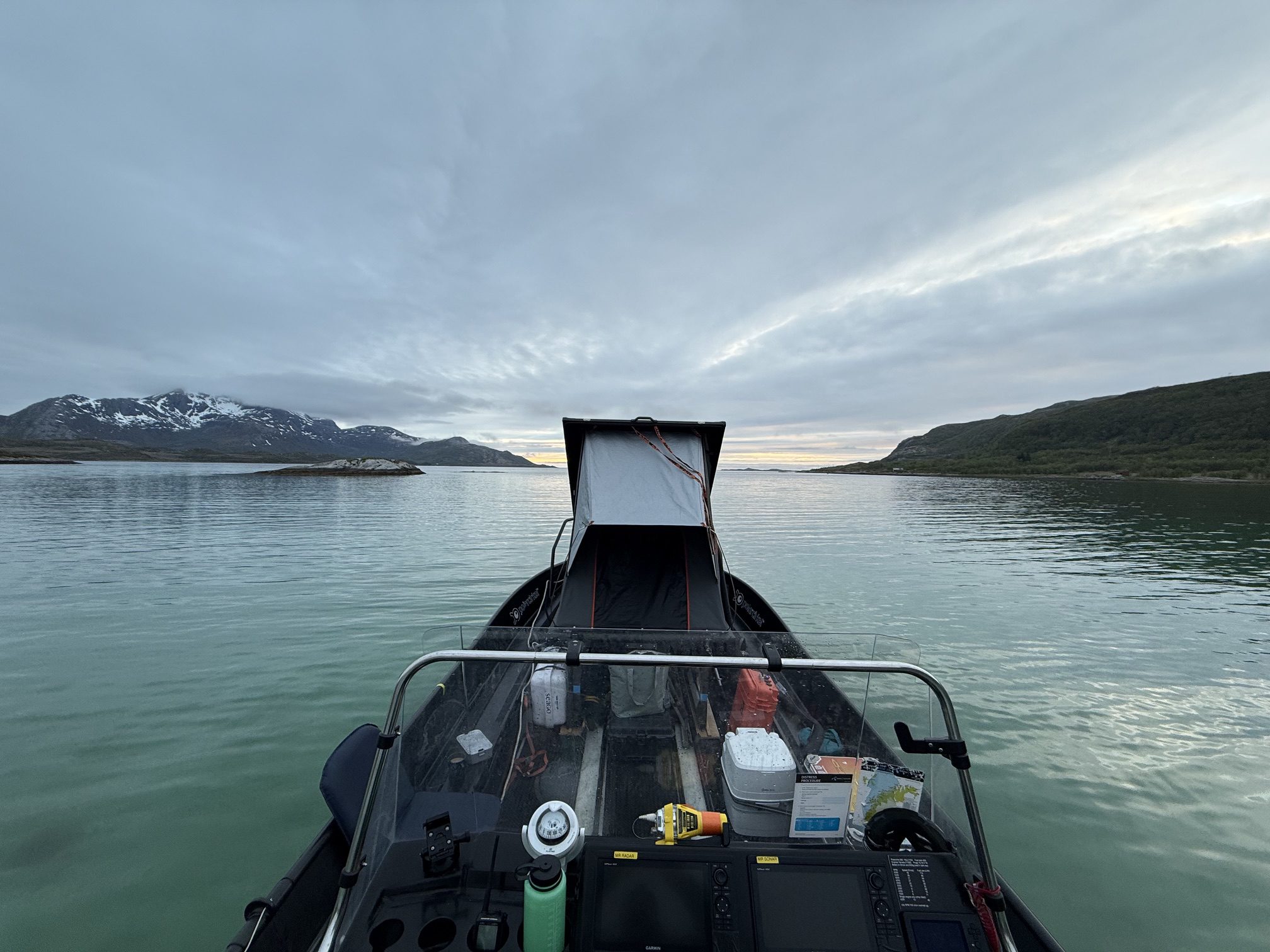
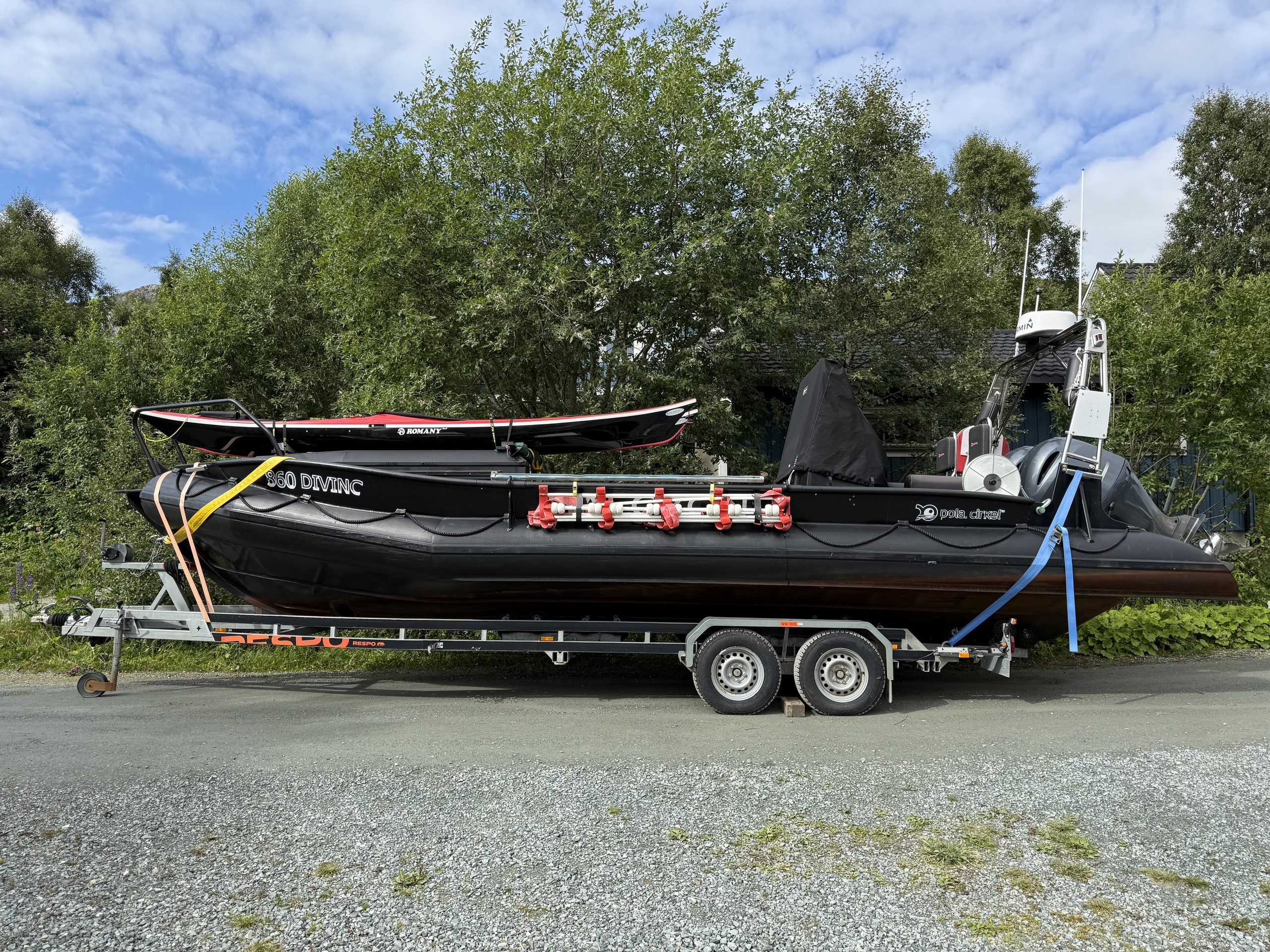
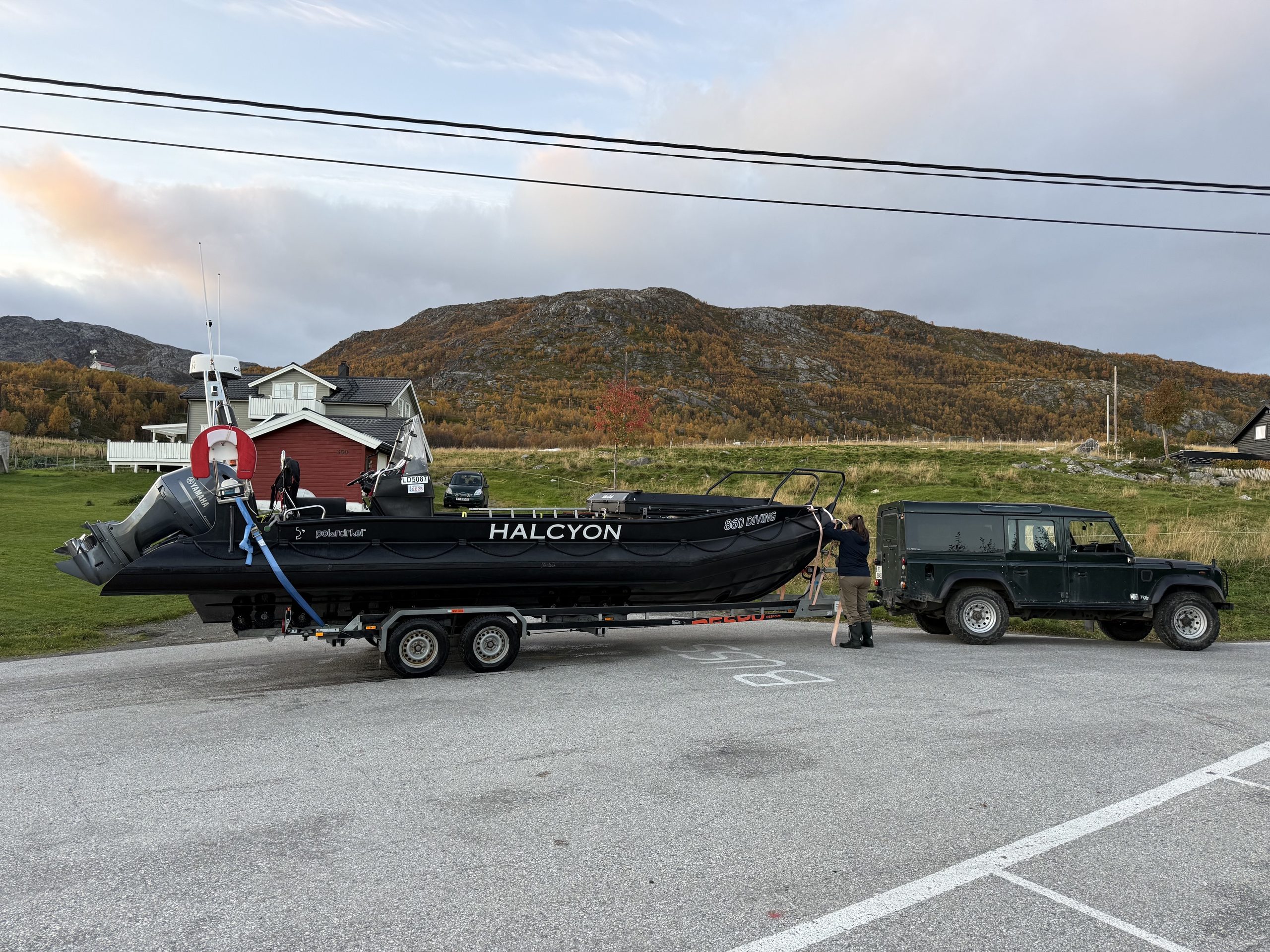
The boat itself is worth explaining before anything else makes sense. Built by the Norwegian company Helgeland Plast under the Polarcirkle brand, the 860 is named for its hull length. The same high-density polyethylene used in plastic fuel cans. It’s an unusual choice of material for a boat, and a deliberate one.
“HDPE has some really good properties when it comes to use in a boat,” Alexander says. “Firstly it does not rot, rust or corrode in any way. It can be easily repaired with a heat gun and a spoon. In black it is also UV stable and very slow to fade or discolour.”
The hull looks like a rigid inflatable from a distance, but the side tubes are HDPE tube filled with closed-cell foam. This means it can’t be punctured in any traditional sense. HDPE is buoyant on its own, so the only way the boat sinks is if it burns. “Having had several years up on Svalbard bumping into icebergs,” Alexander says, “I can attest to its rugged construction!”
Twin 150hp outboards push her to a 25-knot cruise. 40 knots flat out. Drinking 42 litres an hour at cruise and up to 110 litres an hour wide open, from a 420-litre tank.
Alexander bought the boat while still living on Svalbard, running day trips and the occasional charter to help pay it off. Covid interrupted this plan more than once. It wasn’t until he and his wife moved to the mainland that the idea of extended trips, and the shelter that would require, became real.
Why a Rooftop Tent, Not a Cabin
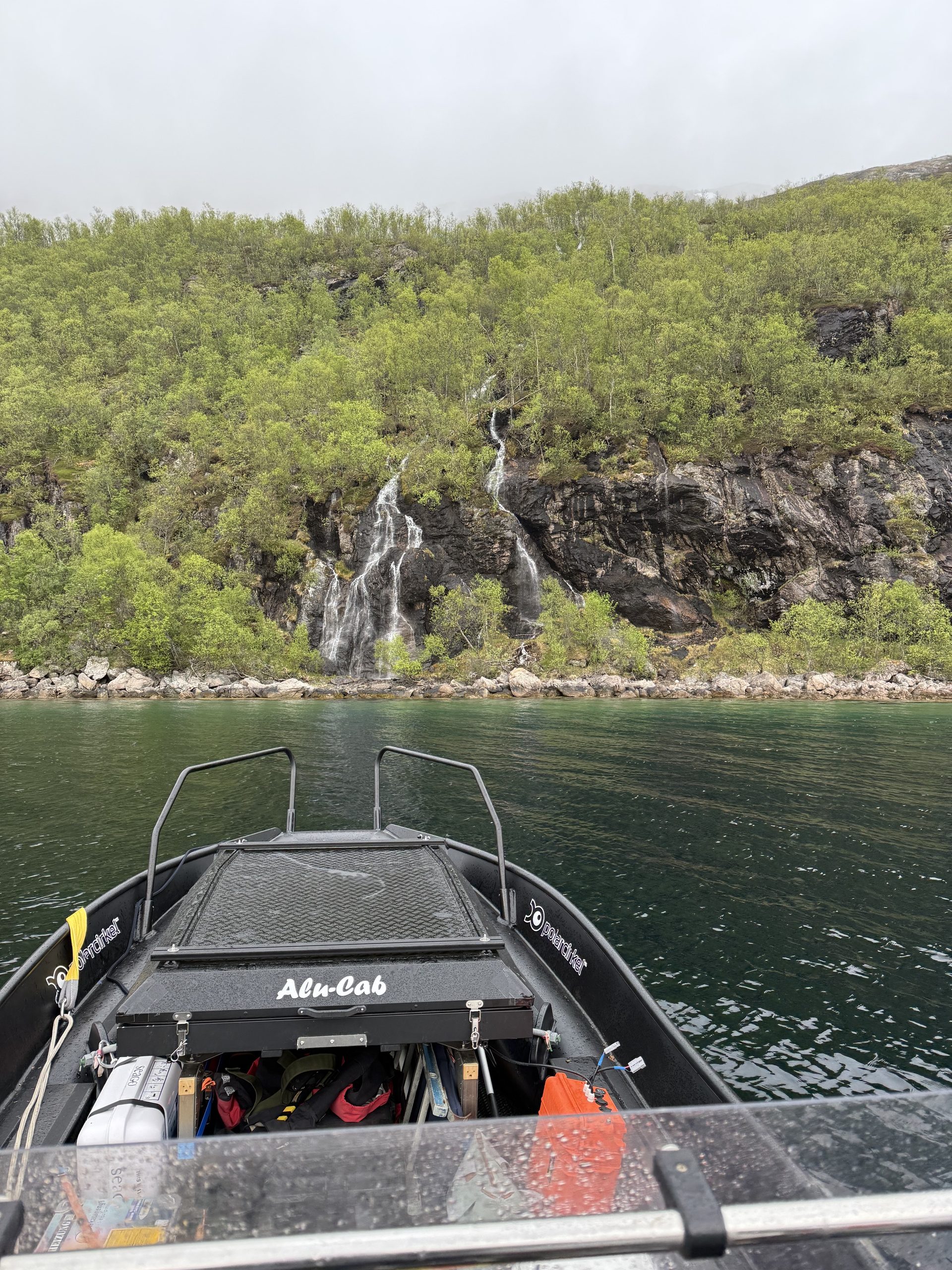
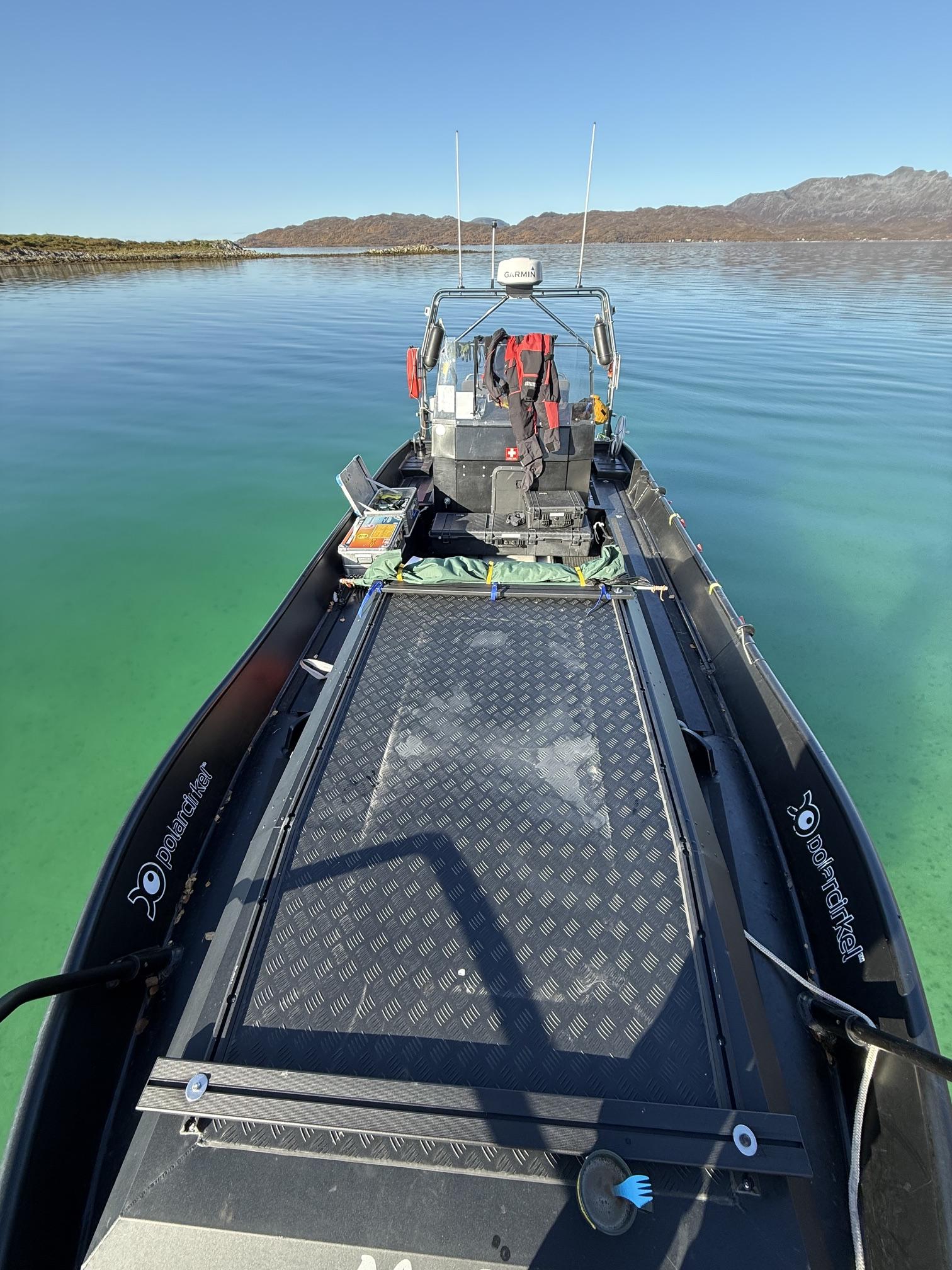
The Polarcirkle 860 is an open boat with a rear driving position. This ruled out most of the obvious options from the start. “I wished to retain flexibility of being able to remove the sleeping arrangements to make space for other duties,” Alexander explains. “In addition, because of the driving position, it would be difficult to have anything other than a roof tent due to visibility issues.”
The Defender Connection
Alexander tows his boat with a 2003 Defender 110. It’s one of three Land Rovers he owns in various states of roadworthiness. “Yes dear reader, I am a masochist,” he admits. He’s a lifelong Land Rover enthusiast, and somewhere along the way he started thinking of the boat and the Defender as two versions of the same idea. “This boat is the nautical equivalent of a classic Defender, in my view.”
The thought of putting a rooftop tent on the boat had been there from the start. “A polar bear will make short work of getting onto an open boat,” he says. It wasn’t until the move to Tromsø, and the chance to buy a Gen 3.1 rooftop tent, that the idea got its first real test. He mounted it straight onto the Defender and took it out to some of the classic locations in northern Norway. “We had a lot of fun doing that.”
When it came time to choose a tent for the boat, the criteria were specific. “I was specifically looking for the Alu-Cab Gen 3-R Rooftop Tent because of the construction. Gas struts inside, heavy duty aluminium build that had enough space inside for bedding when closed. You don’t want to have to unload and reload everything each time you pitch and strike camp in a wet environment.”
He adds a note for anyone planning to bring a 4×4 to Norway. Off-roading beyond the handful of designated tracks is illegal, “but there are still very many beautiful places with fantastic scenery, so if you plan on coming to Norway with your 4×4, in my view it’s still very much worth it. Just don’t expect to leave the gravel road.”
Five Years in the Thinking
Alexander first considered a rooftop tent for the boat back when he ordered it in 2019. But Svalbard was never going to be the place for it. For years, he and his wife focused on cabin-based trips instead. He looked at fabricating a fully custom shelter, but it proved tricky to design and expensive to build.
What settled it, in the end, was the Gen 3-R’s biggest practical advantage: it could move. “Having a roof tent would mean that we could cross-deck the tent from the boat to the car and not have two separate systems to deal with.” One tent, two very different platforms. (“That being said,” he adds, “would I like an Icarus roof conversion for the Defender? Absolutely. I think they are a really elegant solution.”)
Designing the Frame
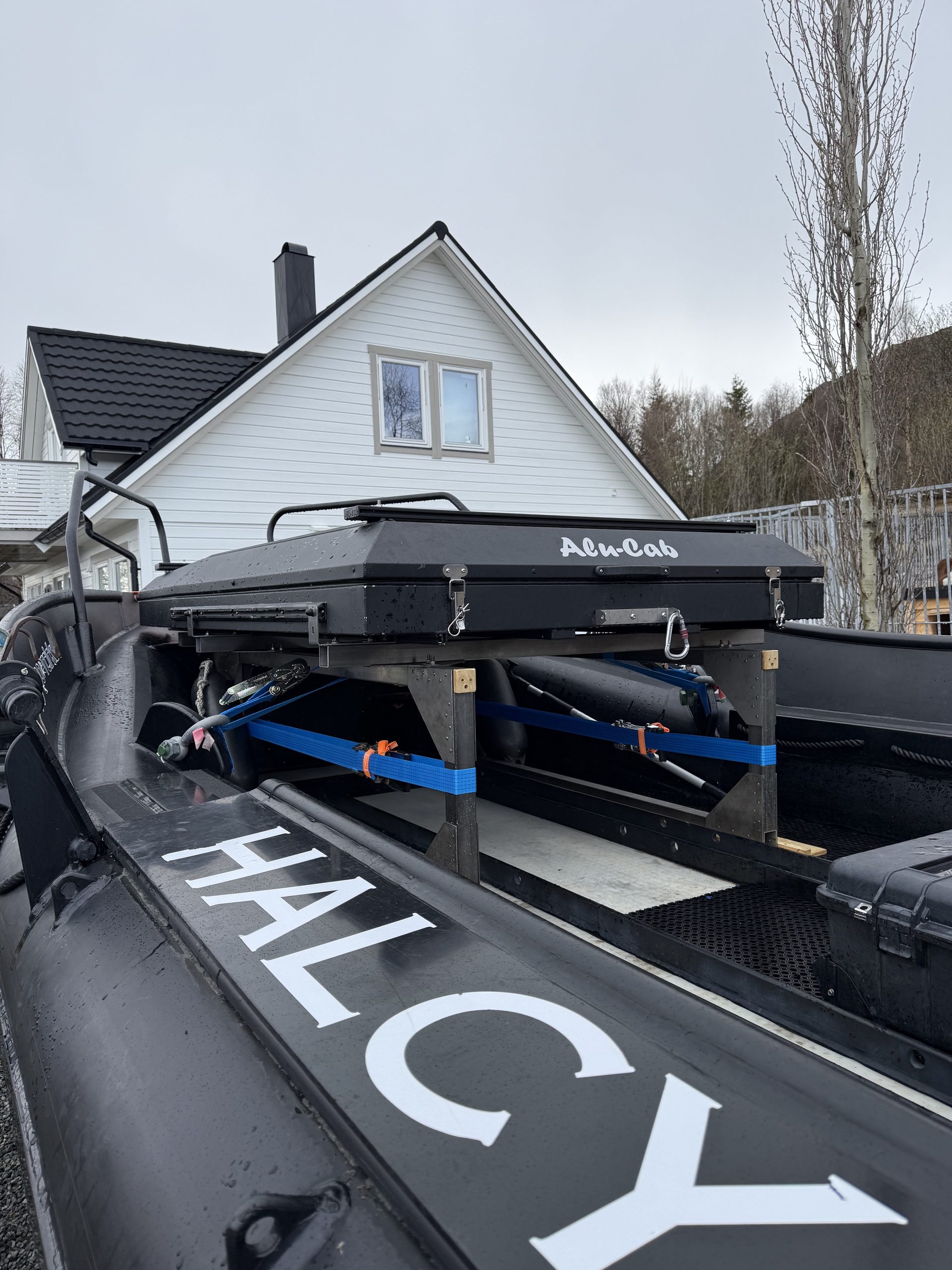
Alexander designed the mounting frame over the winter of 2025 and into early spring 2026, with one requirement driving the whole layout. The frame’s mounting-bolt spacing had to match the Defender’s roof rack exactly, so the Gen 3-R could move from boat to car without modification.
The design itself is a simple box frame, gusseted and riveted together, sitting on the boat’s deck and held down with heavy-duty ratchet straps. Three crossbars span the frame. Two carry the tent’s mounting bolts, the third is there purely for additional support. The whole assembly breaks down into five parts for storage. That’s two side sections and three crossbars.
With access to a local metal fabrication shop, Alexander could source the material and cut the gusset plates to shape on a plasma CNC cutter. Some of the box-section cutting he did himself, with a tool that clearly left an impression. “I did some cutting using a circular saw with a special Diablo brand blade attached to a 36-volt framing saw. It was frighteningly effective, cutting the box section in about 5 seconds per cut and leaving a clean finish that required little to no finishing.”
The part that actually ate the calendar was less glamorous. “There are about 300 rivets in this frame, and I am fairly certain at one point I managed to empty Tromsø of 4mm carbide drill bits.” Underneath the tent, a roller frame slides two Pelican cases and a 12-volt fridge into the space below.
For anyone who wants to build their own, it’s a 316 stainless steel box section, 50 x 50 x 3mm, with 3mm-thick 316 stainless gusset plates and stainless fixtures and rivets throughout. The finished frame weighs around 65kg. “The design is specific to the boat but could easily be adapted to others. Of course, if anyone has a Polarcirkle 860 with seat rails, I’m happy to share the design.”
Designing for Water, Not Just Weight
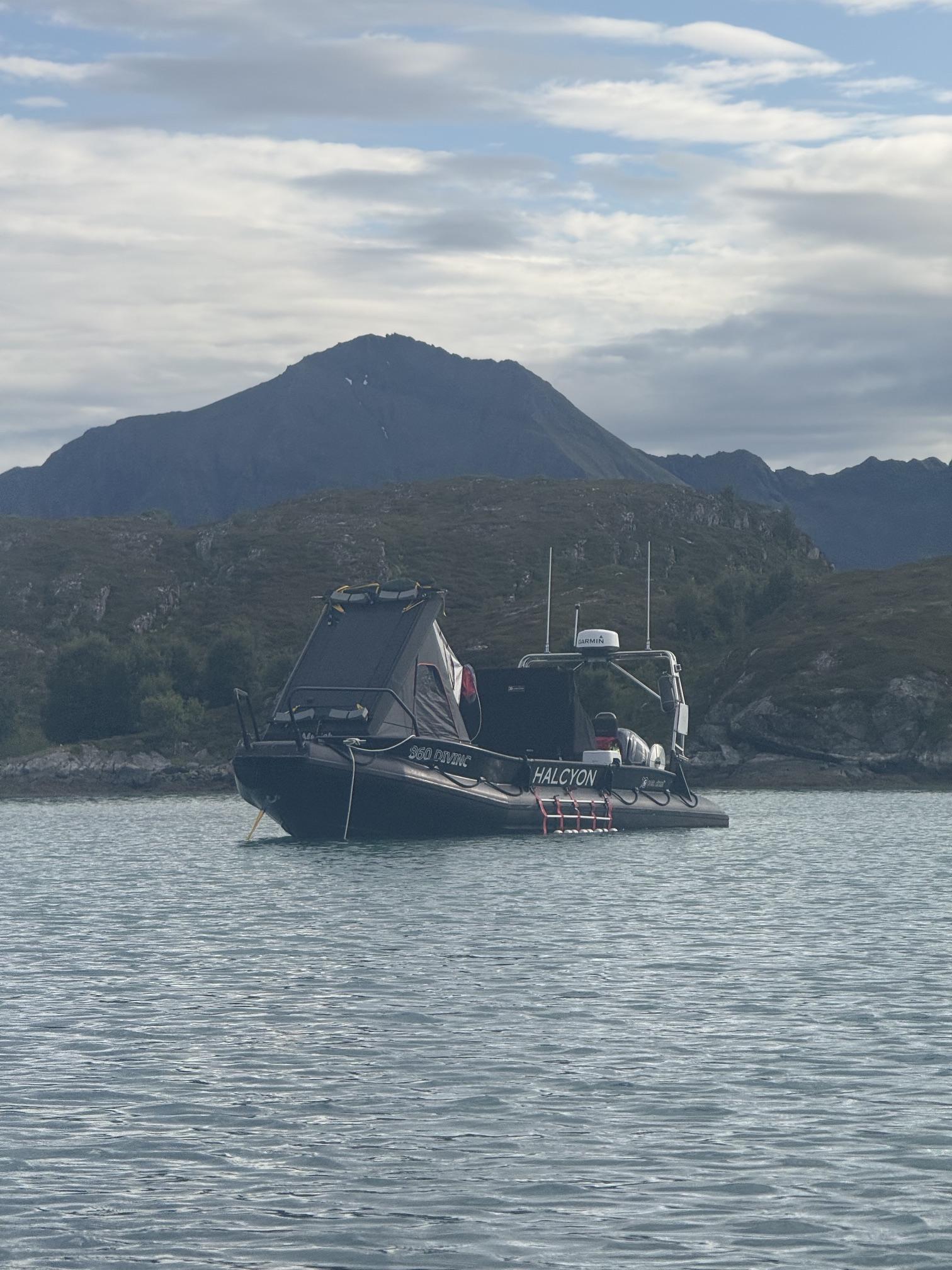
A vehicle has suspension to absorb the worst of the road — “being a Defender driver,” Alexander notes dryly, “I contest that somewhat” — but a boat has nothing between the hull and the sea. The forces it transmits depend entirely on sea state, hull shape and how the boat is driven through it. “One can’t pile through a heavy sea at 25+ knots and expect to come out rosy.”
The extra crossbar and the heavy-duty build of the frame both answer directly to that reality. Rubber matting under the frame and a purpose-built load-spreading foot help cut vibration at the deck. Because the frame is bolted rather than welded between crossmembers and sides, it’s allowed a small amount of flex, while the ratchet straps hold the whole assembly down and prevent movement. Even so, Alexander is already refining the system. Next season he plans to swap the ratchet straps for turnbuckles, to allow fine-tuned tension the ratchet mechanism can’t give him.
Saltwater Is Not a Kind Environment
Keeping the setup dry, mechanically sound and electrically safe in a marine environment is an ongoing routine.
The seals get the most attention. “The key to staying dry is to ensure that the seals are in and kept in good condition,” Alexander says. Refuelling stops with a freshwater hose on the dock double as wash-down opportunities, with close attention paid to the seals specifically. On dry days at anchor, he’ll open the tent and wipe the seals with a damp cloth before treating them with silicone spray to keep the material supple.
There’s been some bi-metallic corrosion where the aluminium tent meets the stainless frame, though it appears to be surface-level only. Next season’s fix is straightforward. Gorilla tape at every contact point, to stop direct metal-on-metal contact entirely. “Salt water accelerates corrosion very effectively — though this is dependent on temperature. The colder it is, the slower the galvanic reaction. I live in the Arctic, so bear my comments in mind.”
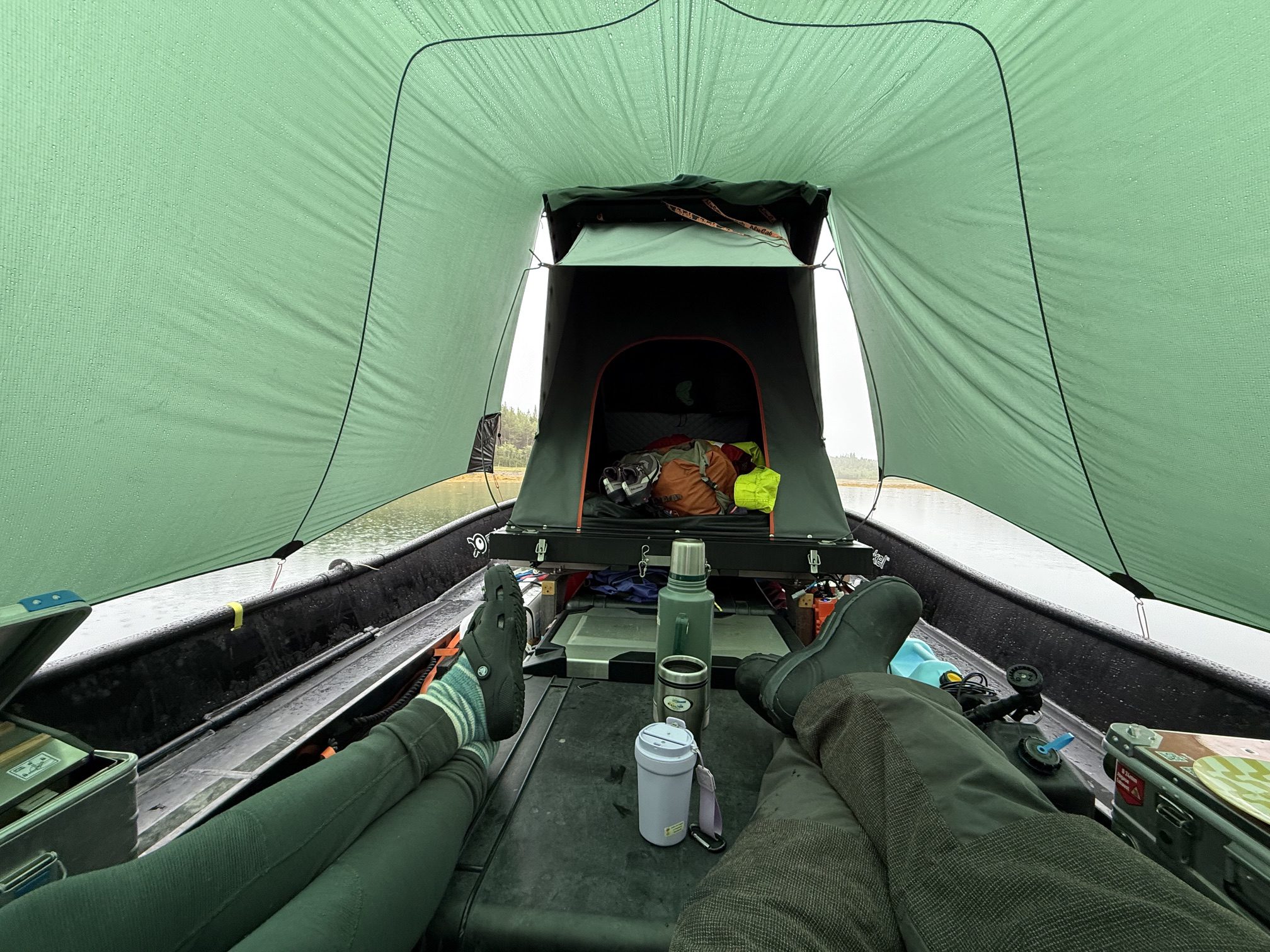
Mechanically, the tent itself has held up well. Kayaks ride on the roof underway and come off before the tent opens. In calm conditions, a lightweight tarpaulin stretched between the tent and the radar arch provides shade and light rain protection. The setup loads the gas struts slightly, so Alexander watches the forecast and strikes the tarp if wind is coming before turning in for the night.
Electrically, saltwater is far less forgiving than the mechanical side. “All circuits must be fully insulated from positive battery terminal to negative terminal — no chassis grounds anywhere. An electrical leak in a saltwater environment will destroy aluminium in a matter of hours.” Any cable left exposed gets a routine inspection for insulation damage.
At anchor, the boat naturally swings into the wind, which spares the tent from side loading, and Alexander chooses sheltered lagoons and bays specifically to limit spray exposure. In genuinely severe weather, the tent stays closed altogether and the boat makes for a safe harbour on land. There’s a geodesic expedition tent packed in one of the Pelican cases as the backup plan if they have to bail out entirely.
Twenty Nights In
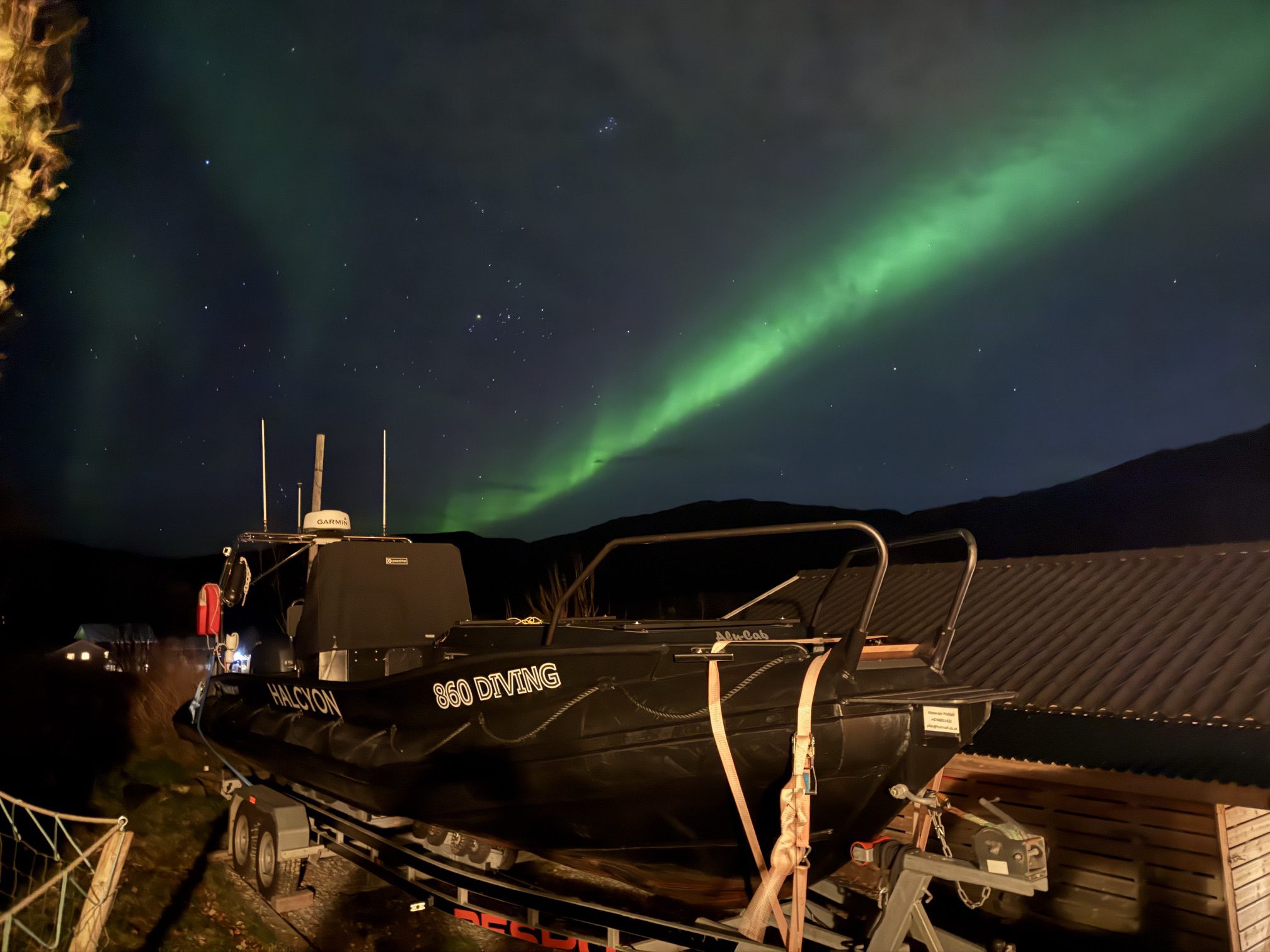
As of this season, the setup has logged 20 nights afloat. That’s two shakedown overnighters, a long voyage south from Tromsø to the Lofoten Islands, and a weekender in the islands northwest of home. Alexander hopes for more next year, weather and time allowing.
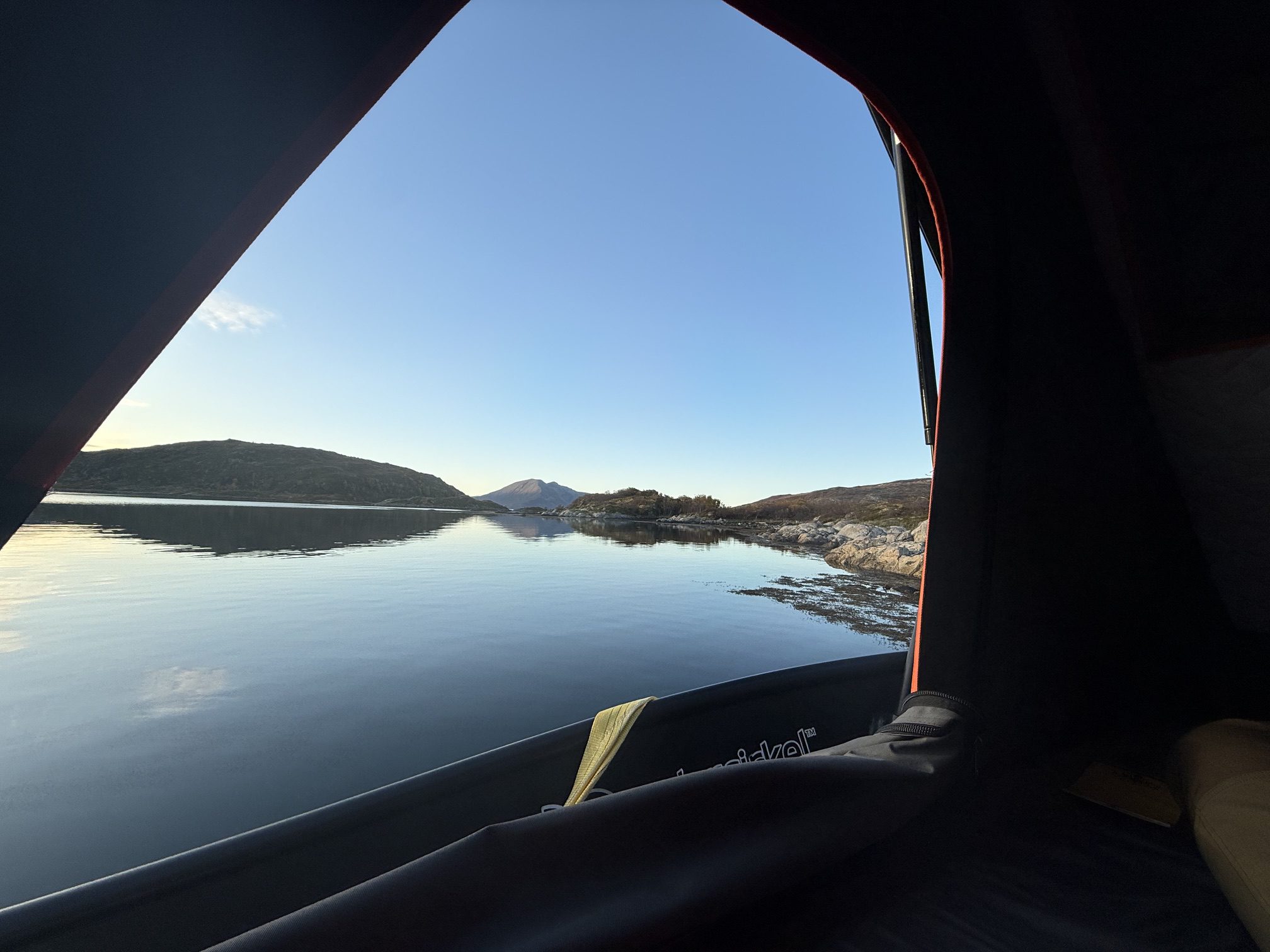
Sleeping on the water, mounted at waist height rather than car-roof height, turns out to be an easy adjustment. “When I know I’ve got a good anchorage, or I’m tied off at a steady mooring or dock, I sleep easy. The rocking that is always present on the water is something one gets used to. When on top of a vehicle there is movement too, and it’s not dissimilar to being on a boat.” Getting in and out is, if anything, easier than on the Defender, thanks to the lower mounting height.
What the setup has actually opened up is the real payoff. Norway’s coastline is among the longest in the world, laced with islands, bays and archipelagos reachable only by boat. “This setup allows me and my wife to explore places that would otherwise be out of reach if we were land based. You don’t need to go far by boat in Norway to find yourself alone with nature. Even in touristy areas like the Lofoten Islands, there are many quiet inlets and natural harbours that are completely quiet. In some places you can go for days without seeing another soul.”
The standout test came on the long trip south. Eight degrees and steady rain, the kind of weather that finds every weakness in a setup. “The tent stayed warm and dry. We have a diesel heater in a box that we can feed a hot air hose into the tent, which kept us as warm as we wanted and kept the condensation in check.” The modification list that’s grown since is mostly about convenience. In particular, making use of dead space inside the frame to free up more of the deck.
What He’d Tell Someone Thinking About the Same Thing
Alexander’s advice to anyone eyeing the same project starts with a straightforward yes. “Firstly, do it. You open a new world up.” But he’s equally clear that the tent is the easy part of a much bigger question. “When choosing to go boat camping, you need to consider more than just where the tent goes. You need to think about everything you do on land and how you can do that on an open boat, in a confined space.”
Some boats have a day cabin with a roof strong enough to carry a tent outright. In which case the real question becomes stability, not mounting. “You need to judge how stable your boat will be with 100kg or so of tent and mounting hardware in rough seas before going ahead.” For an open rib-style boat like his own, the defining constraint is different. Space to move and live once the tent is up. “If you are fortunate enough to have a suitable boat, then it’s about designing the mounting frame to fit the boat and the tent in a way that gives you as much of your wishes as possible… remember everything is a compromise.”
A Project That’s Never Finished
Alexander is candid that this isn’t a closed chapter. “These kinds of projects are never finished. I am fortunate to have hit on a good working design from the off, that works broadly as intended, with scope for improvement that doesn’t involve a complete return to the drawing board.”
His approach to adventure, and to waterborne adventure especially, traces straight back to his years on Svalbard. Build in a backup plan, and as much redundancy as sensibly possible. “This is something I carry from my time on Svalbard, where the consequences of a simple mechanical mishap can become extremely serious in a short amount of time. The ocean applies an extra rigour to an adventure. It moves beneath you and has a big say in your best laid plans.”
It’s that same rigour that shaped every decision in the frame now bolted to his deck. Heavier than it needed to be, built to flex rather than fight the sea, and designed from the outset to come apart and travel to a very different roof when the next trip calls for it.