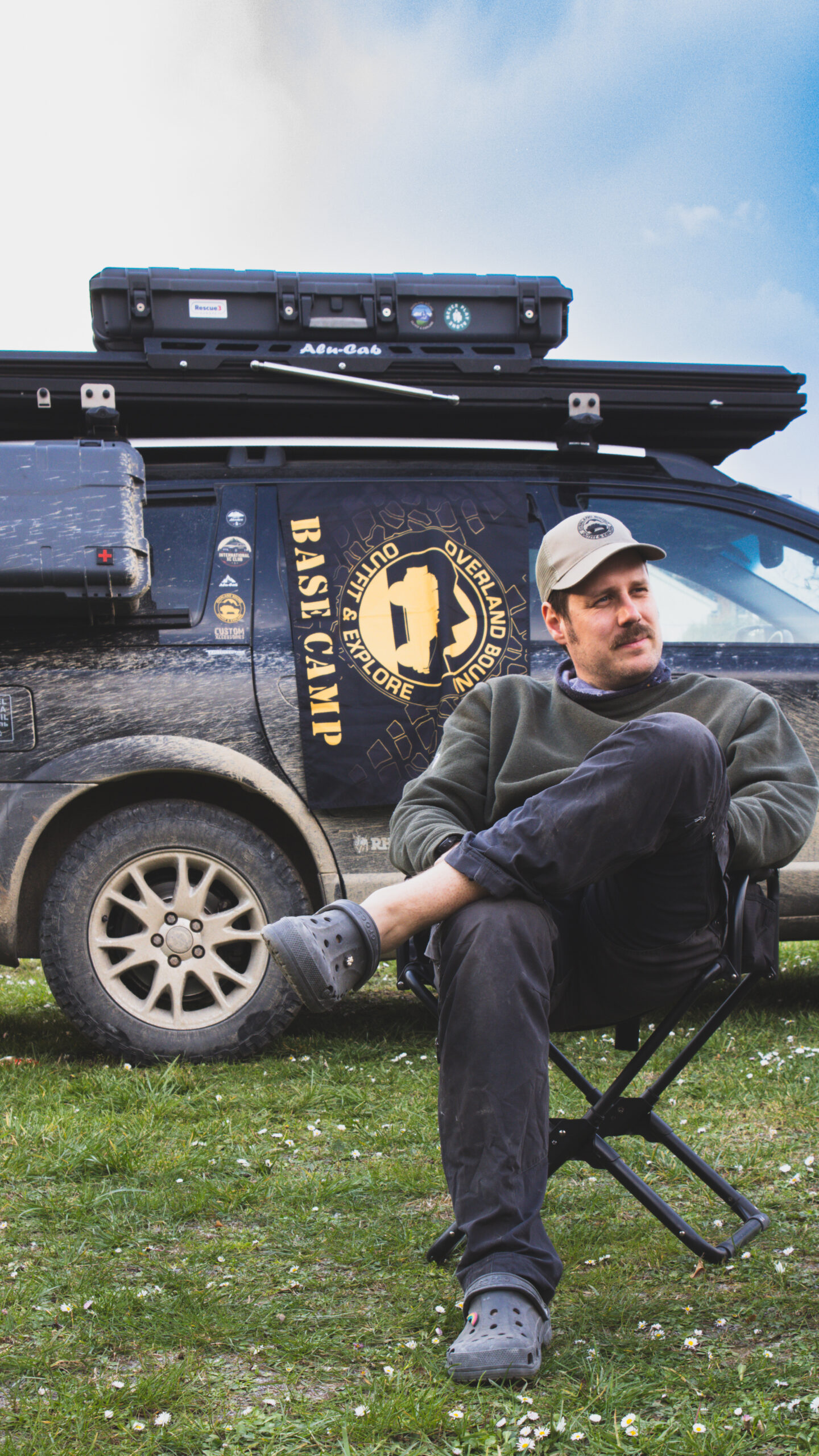
In the world of overlanding, where massive trucks with snorkels, roof-top tents and enough auxiliary lighting to land an aircraft have become the standard, Thore ‘Ove’ Fahrenbach stands as a refreshing contradiction. His vehicle of choice? A Volvo XC70 station wagon. His message? You don’t need a hulking expedition rig to see the world. He is the unconventional overlander.
Based in Hamburg, Germany, Ove spends his days as a teacher and his free time exploring new countries, cultures and people. “There’s a quote,” he shares. “‘If you want to know how bad the world is watch the news. But if you want to know how beautiful the world is go travel.’ Being outside is a good counterpart to working as a teacher.”
It’s a philosophy that has guided him from his earliest adventures starting with a ground tent and a 1992 Fiat Panda to his current setup. A meticulously modified XC70 topped with an LT-50 rooftop tent.
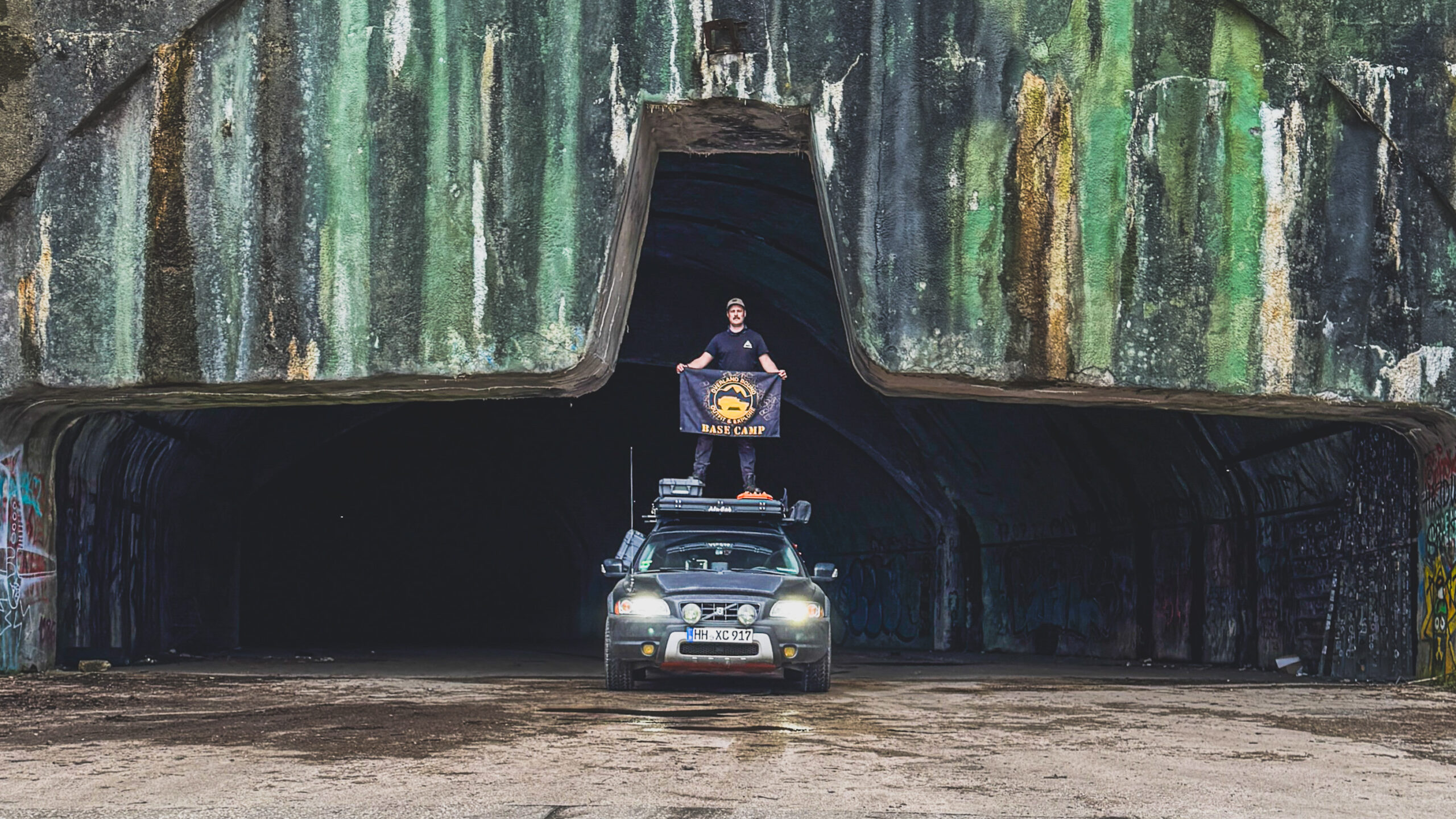
Why a Wagon?
For Ove, the choice was about practicality and authenticity. Growing up with a Volvo 245GL and maintaining a lifelong affection for the Nordic countries, the brand was always in his blood. But the decision to build a wagon came from a deeper place of honest self-assessment.
“Using the car not only as our adventure rig but also for daily business, we wanted a vehicle that fulfils multiple purposes,” Ove explains. “And with a challenge like that, you need to create a clear and solid picture of how you want to travel.”
His philosophy, which he calls “Jack of all trades,” is one that challenges the overlanding status quo. “The Jack of all trades is a master of none but oftentimes better than the master of one,” he says, noting that the term has evolved from a negative connotation to something far more practical. “When approaching a concept, it should work in most environments. In our case, it should work as a daily driver and as a comfortable car for longer journeys.”
This approach extends beyond the vehicle itself. For city-dwellers, the wagon makes undeniable sense. “Especially in bigger cities, space is limited. Slow city traffic makes it uneconomical to drive a heavy truck,” Ove points out. Meanwhile, his XC70 handles the school run, the grocery shopping and the remote mountain track with equal composure.
Modifying with Intention
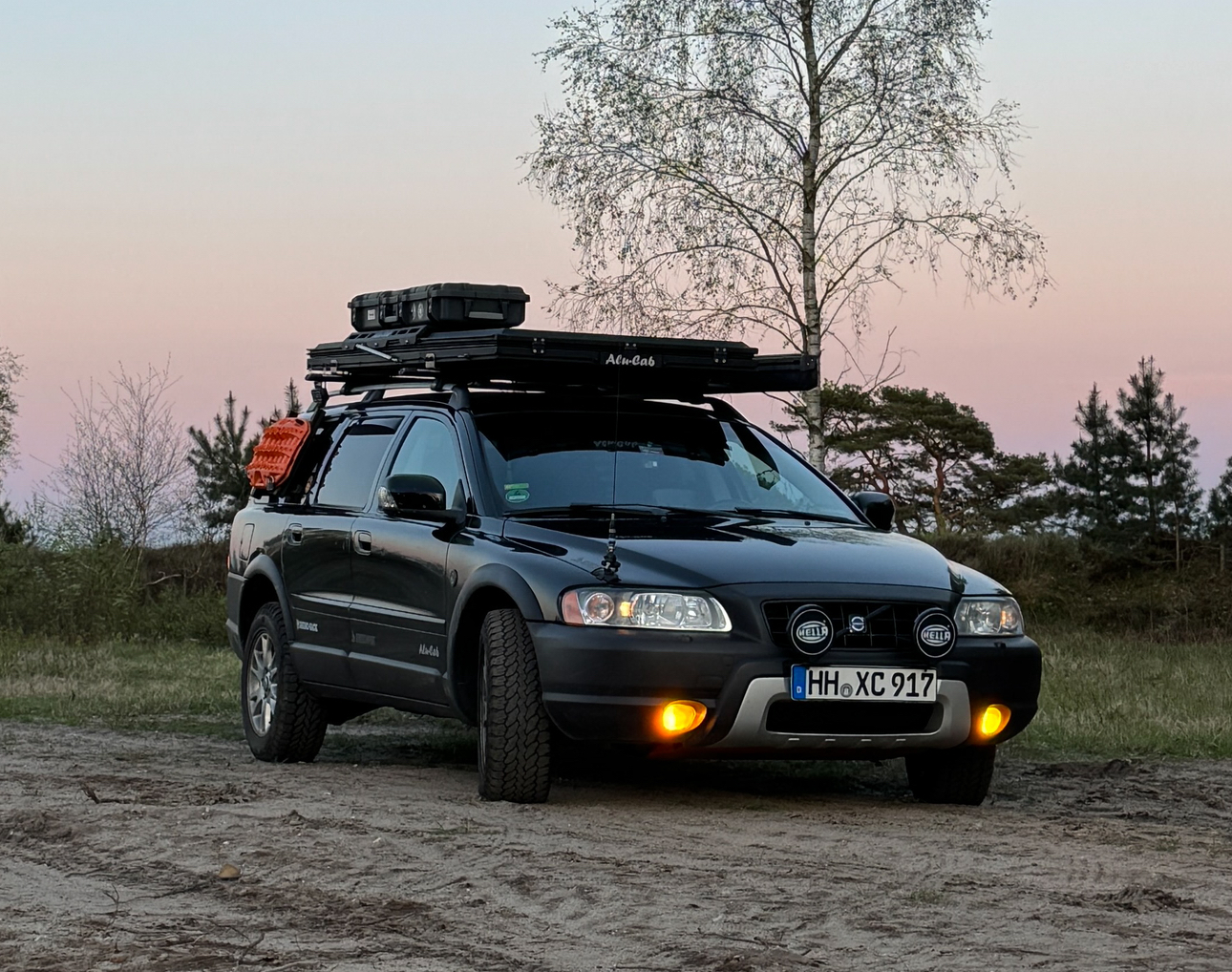
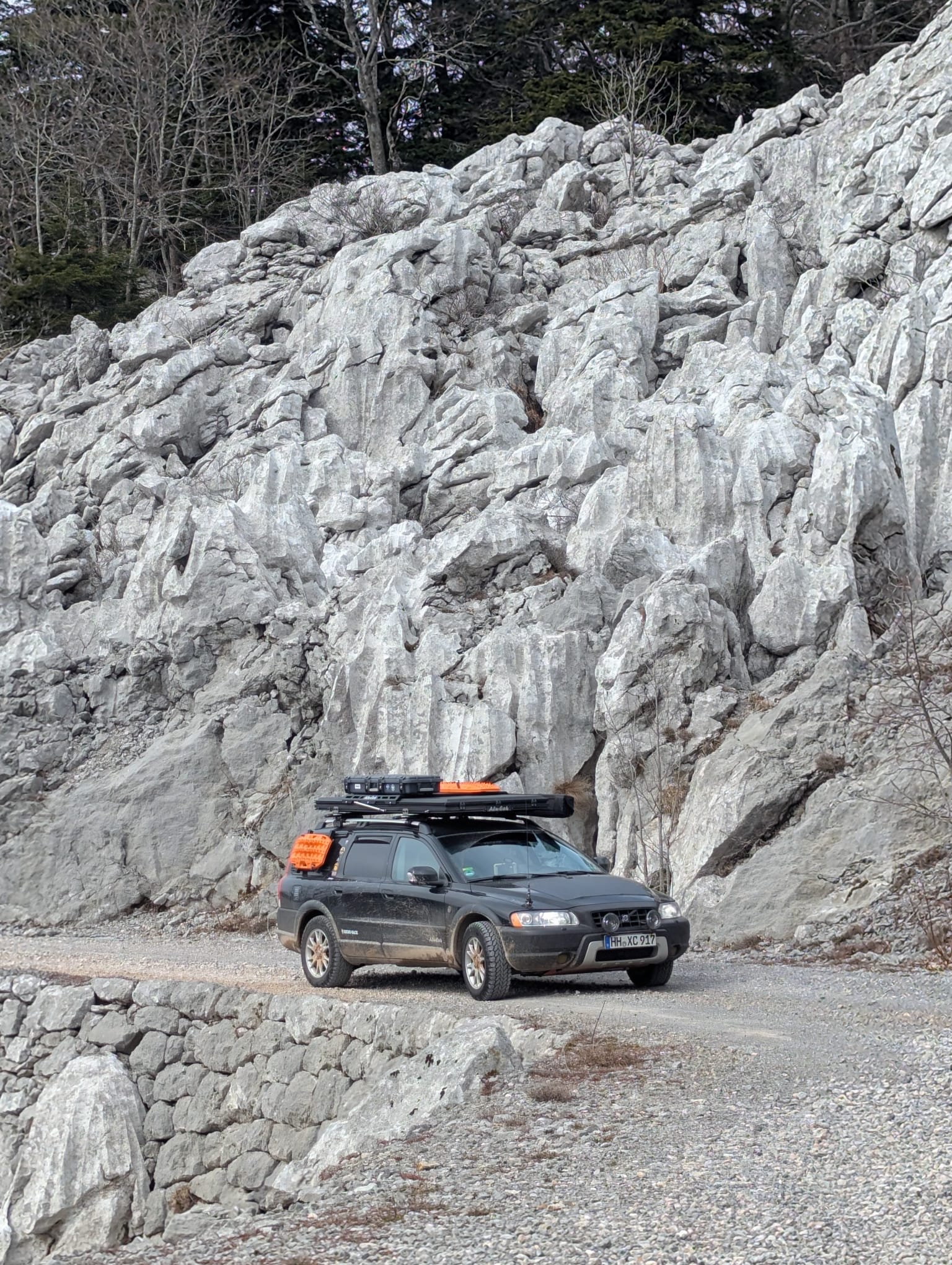
Ove’s XC70 is far from stock, but every modification tells a story of necessity rather than indulgence. All-terrain tyres provide better grip and durability. A modest one-inch lift delivers extra ground clearance without compromising the vehicle’s original character. Or running afoul of Germany’s strict MOT inspections.
“With all the modifications I’ve done, I wanted to keep the original spirit of the XC70 alive,” he says. “I always try to modify things that haven’t been done before.”
Take his side rails, for instance. There was no off-the-shelf solution, so Ove devised an ingenious method of bonding them directly to the window glass. A solution robust enough to pass Germany’s demanding TÜV inspection. The rear ladder came from an even more unlikely source. Staring at a friend’s Land Rover Discovery one day and realising the shape was perfect for an XC70.
“With social media, you will find inspiration en masse,” Ove says. “And don’t stop because people are saying there is no way. I just love to push the possibilities.”
The Lightweight Game-Changer
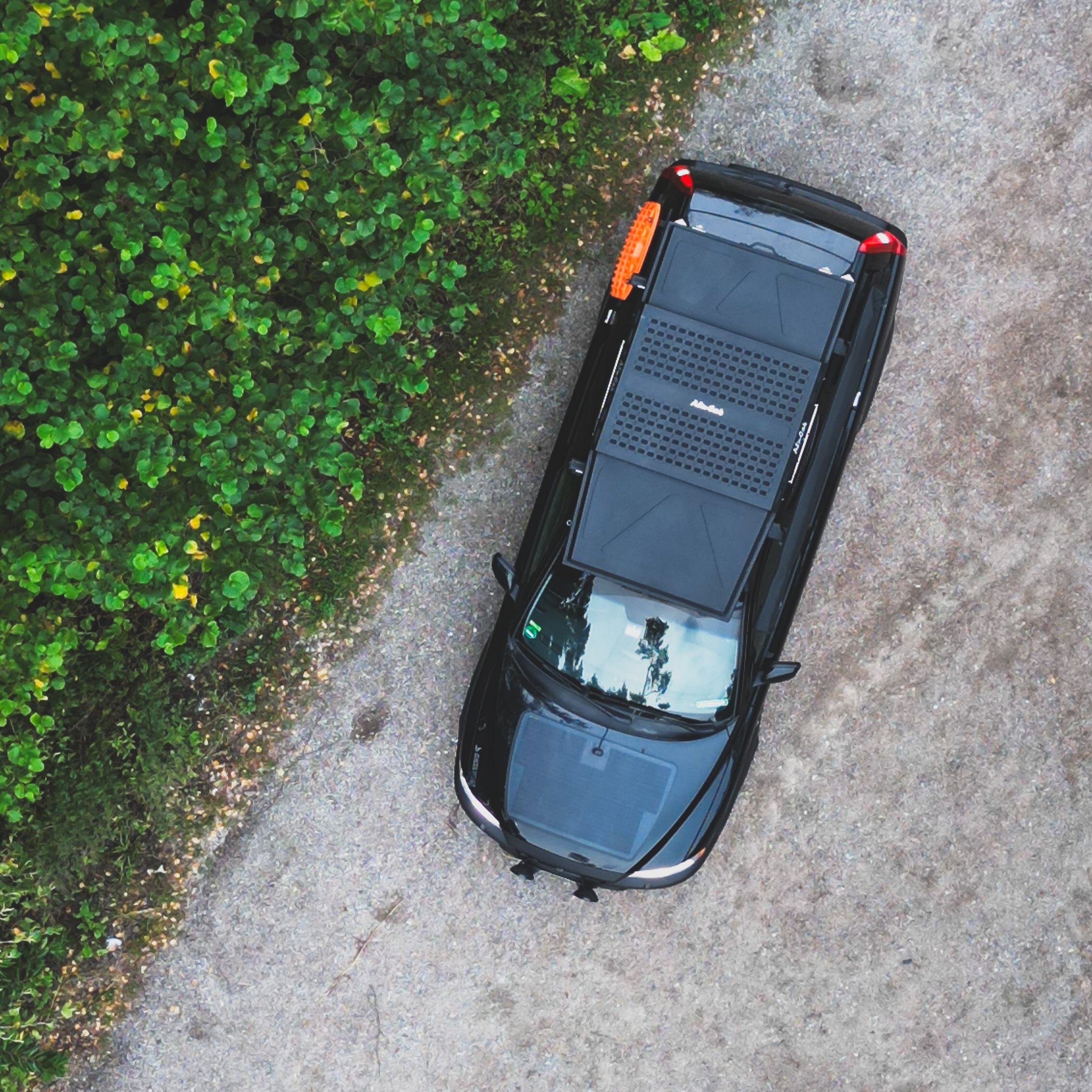
For any wagon-based overlander, the roof presents a particular challenge. Most have a dynamic load capacity of around 75 kilograms. That includes load bars, awnings and everything else mounted up there. Finding a roof-top tent that fits within those constraints while delivering genuine durability has traditionally been difficult.
“The market has changed and so have the rooftop tents,” Ove notes. “But most lightweight RTTs are either foldable or of very low quality. I was dreaming of a hardshell, aluminium-made RTT that leaves some kilograms for other gear.”
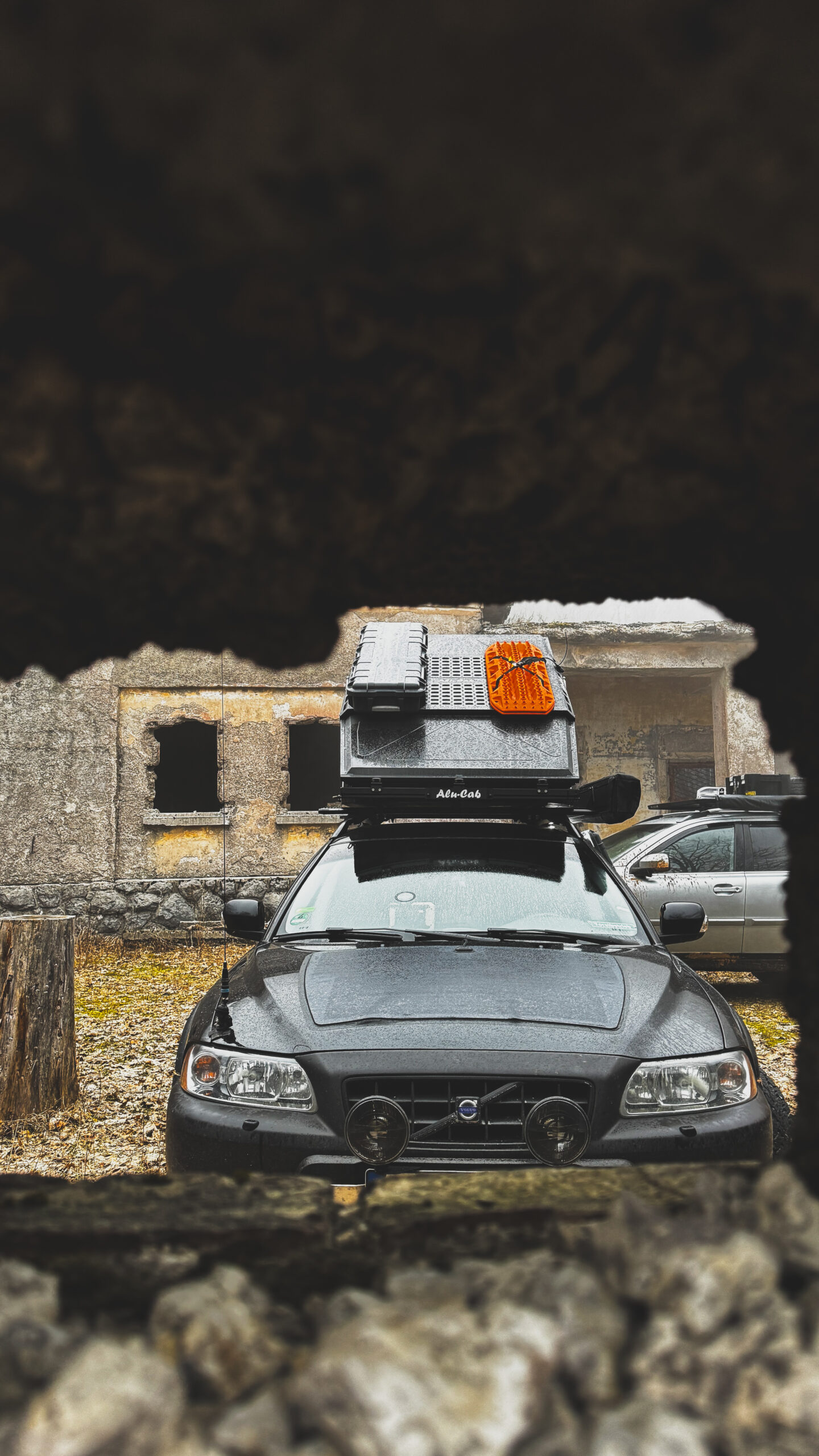
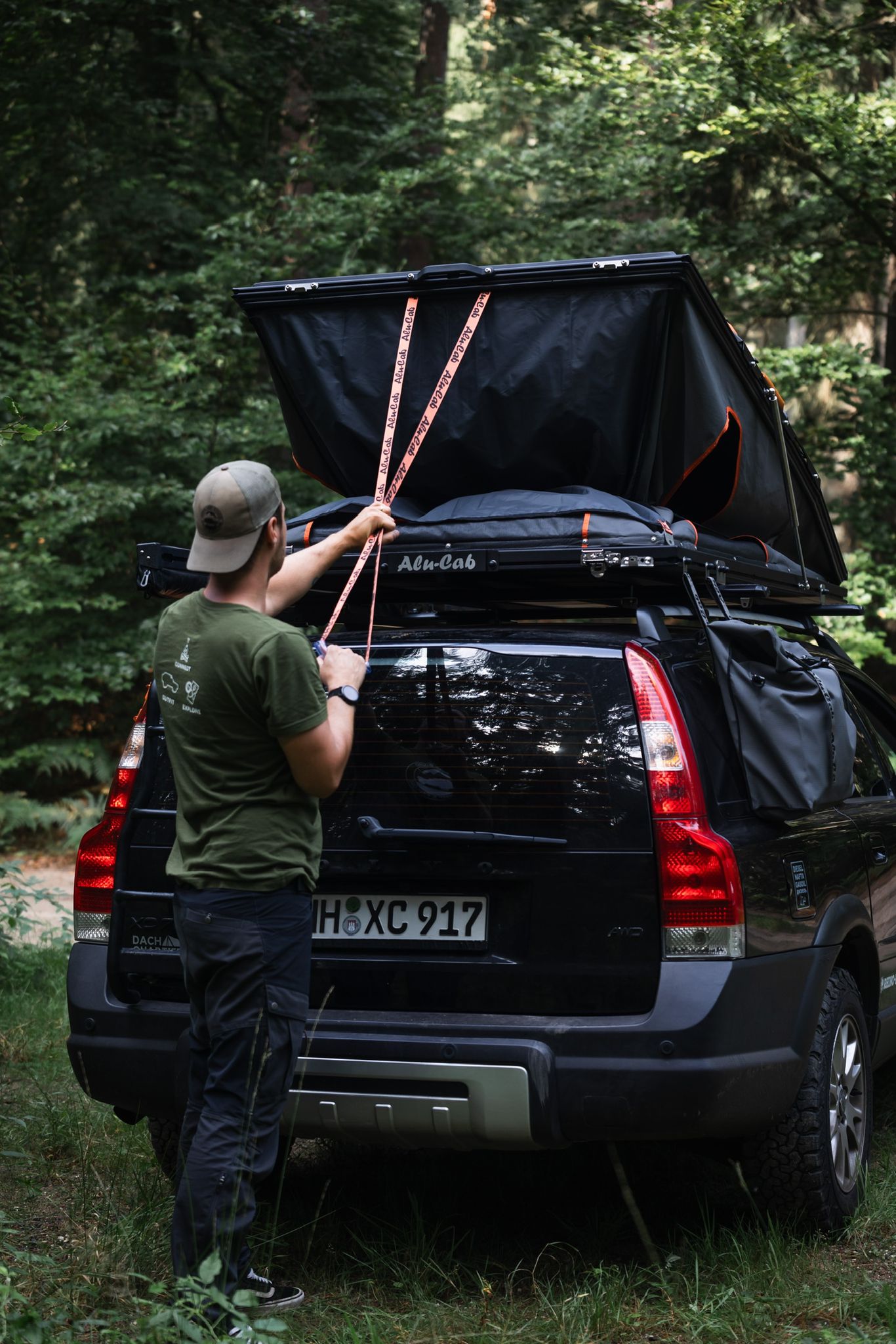
That dream materialized when he discovered the LT-50. Weighing in at just over 50 kilograms (110 pounds), it sits perfectly within the XC70’s limitations. But it was the design that truly captured him.
“I remember some years ago when Genesis Import at Abenteuer Allrad mentioned how Alu-Cab had engineered their lightest tent ever,” Ove recalls. “I couldn’t believe that MY RTT had been designed. The shape, the minimalistic design, no promises that turn into disadvantages in practice… Just what it needs to provide. A shelter off the ground.”
For Ove, the LT-50’s value is in its simplicity. “Don’t get me wrong – every overlander has their own mindset. But for me personally, I only use the RTT at night, for protection against wind and rain.”
Living with the LT-50
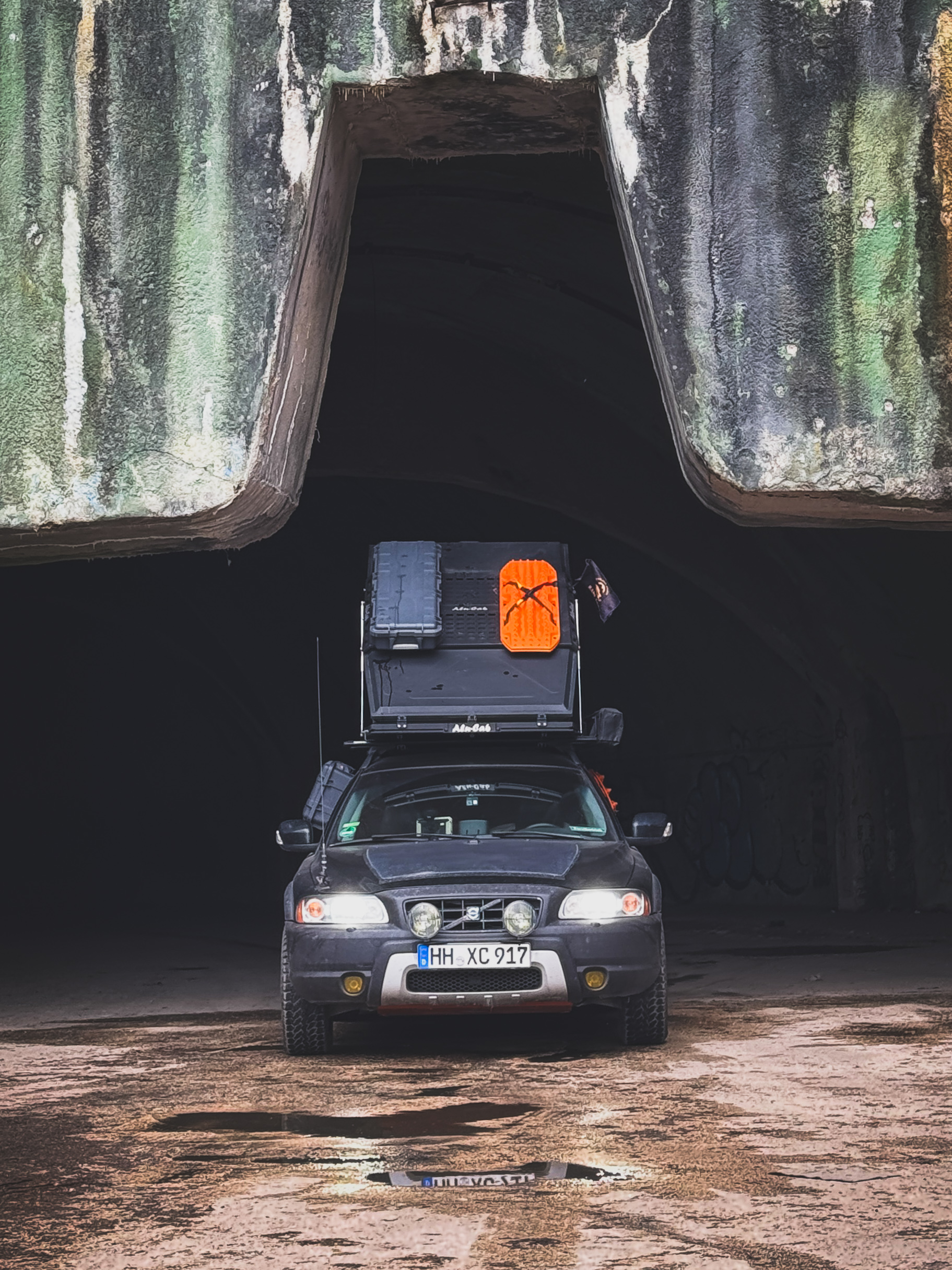
Living in Hamburg means dealing with the realities of city life even while building an adventure vehicle. The LT-50’s low profile has proven invaluable. “What’s important to me, as someone who lives in Hamburg, is that I can still fit into all underground garages and parking structures despite having the LT-50 on the roof,” Ove says. “That’s a definite plus.”
The ease of use has transformed his travel rhythm. While some roof-top tent owners dread the nightly setup, Ove has refined his routine. “I actually always open the roof tent right before going to sleep,” he explains. “That’s always worked well for keeping the smoke out of the tent.”
But it’s the spontaneous possibilities that truly matter. “Even for a quick nap on long drives, there’s no question of whether you might just close your eyes for a moment in the driver’s or passenger’s seat. The LT-50 can be set up in seconds. And yes, that ease of use does encourage more spontaneous stops. When you know it only takes a moment to set up camp, you’re more likely to pull over at a beautiful spot rather than pushing on to a planned destination.”
The LT-50’s roof is rated to carry up to 30 kilograms (66 pounds) of additional gear, and Ove has put that capacity to work. His setup typically includes a pair of Maxtrax MK2s and a protective case housing a shovel, a 9-metre kinetic rope, soft shackles and bin bags for one essential task. “I also always keep bin bags so I can take rubbish away from the places I camp.”
The Driver Matters More
After years of travel with his wife Ena and their Golden Retriever Fuchur (Falcor), Ove has distilled some hard-won wisdom. His most valuable lesson cuts to the heart of what overlanding truly means.
“The most valuable lesson I’ve learned is that the driver matters far more than the vehicle or the gear,” he states. “You can have the most capable rig with the most advanced equipment, but if you don’t know your limits or your vehicle’s limits, you’ll get stuck. Literally and figuratively. Over the years, I’ve seen people with basic setups go further and have richer experiences than others with heavily modified rigs. Simply because they knew how to read terrain, plan ahead and stay calm when things didn’t go as expected.”
That’s not to dismiss the value of good equipment. “I’ve also learned that good gear earns your trust over time,” Ove adds. “The relationship between driver, vehicle and gear grows with every trip. You start to feel what the car can handle. You know exactly where every piece of equipment is stored. You develop a rhythm. That balance isn’t something you buy. It’s something you build through experience. And that’s why I always say just get out there and start.”
Finding Community on the Road
On a recent 12-day journey through Croatia, Montenegro and Bosnia and Herzegovina, Ove travelled with four XC70s and one XC90. The experience reinforced something he already knew. Who you travel with matters as much as where you go.
“I believe it’s absolutely vital to find people with whom you can communicate well. To be able to address issues that aren’t going smoothly quickly and effectively, and to ensure that the group always looks out for the person who needs the most support at any given moment,” he says.
The trip also produced one of those moments that make overlanding so special. After arriving at a campsite, the group was invited by a Montenegrin man to share a meal in his living room. “We communicated with gestures and body language and together we created a moment that will certainly not be forgotten.”

What’s Next?
Like any well-loved vehicle, Ove’s XC70 requires attention after so much adventure. New springs, dampers and a steering box are on the immediate horizon. But the travel plans keep coming. Scotland, Wales and England are next, followed by a return to Norway with the International XC Club.
A destination he fulfilled a few years ago, Iceland, calls again. Morocco beckons. And there’s always the dream of the Silk Road, from Paris to Beijing, though geopolitics may keep that one on hold for now.
But Ove is just as content exploring closer to home. “My mate Benni and I have discovered and ridden so many woodland and forest tracks here in northern Germany,” he says. “Even legal river crossings are possible. If you only look far away, you’ll miss the beauty of what’s close by.”
The Last Word
When asked what advice he would give to someone looking at their daily driver—a wagon, a minivan, a small SUV—and wondering if it could be their ticket to adventure, Ove doesn’t hesitate.
“Of course, it’s cool to have the latest and best-equipped vehicle on the market. If I were free to choose another vehicle, it would probably be an Ineos Grenadier with a Silenus roof conversion and Lennartz portal axles. But that’s not what this is about at all.”
He returns to the core question: “What exactly do I want to achieve with vehicle-based travel? Where do I want to go and what do I want to experience? And this is precisely where the Overland Bound philosophy comes into play: ‘It doesn’t matter what you drive!'”
His final words offer a call to action that resonates with anyone who’s ever hesitated at the starting line: “Fold down the back seats, pop in a sleeping mat and a sleeping bag and off you go. A mate of mine has just bought a Golf 2 Country. On our last trip he slept in the passenger seat. It’s all about having an adventure.”
“Focusing on what really matters is the best way to experience travel at its deepest level,” Ove concludes. “Be open to other people, cultures and traditions, and you will gain so many valuable experiences. Treat unfamiliar places as something special and precious. Don’t leave rubbish behind; take other people’s rubbish with you instead.”
Instead of being overly focussed on gear, equipment and modifications, Ove offers a quieter, more intentional path. His Volvo XC70 and Alu-Cab LT-50 prove that adventure is measured in miles traveled, cultures encountered and moments shared. Not tyre dimensions. And you can start exactly where you are, with exactly what you have.