There’s a saying “Buy what the locals drive.” If that’s true, then Dieter Losskarn, a German-born, Cape Town‑based motoring journalist and travel author, has taken the advice to heart. After 25 years of reviewing cars and decades of writing guidebooks for German‑speaking visitors to Southern Africa, he finally bought his own vehicle. And he didn’t buy just any old car either. Here’s why a motoring journalist built a Hilux.
We sat down with Dieter to talk about his rig, the gear he built it with and the trip that turned his wife from a lodge‑lover into an overlander who now wakes up to coffee served at rooftop height.
From Motorcycle Adventures to a Life in Cape Town
Dieter’s relationship with Southern Africa began with a motorcycle. “I ended up there after an assignment to do a motorcycle adventure piece about travelling in South Africa, for a German magazine, in December 1993,” he recalls. He’s been in the region ever since, living in Cape Town for “as long as democracy’”
For the past quarter‑century Dieter’s been reviewing cars, while also authoring travel guidebooks for German‑speaking visitors. It’s a rare combination. A European sensibility tuned to the rhythms of African travel, and a professional eye that’s driven hundreds of vehicles across every kind of terrain.
The Curse of the Motoring Journalist
When you drive new cars for a living, commitment becomes complicated. “The curse is real,” Dieter admits. “You are always looking forward to your next ride.”
But sometimes a vehicle breaks through. He still lights up talking about the Porsche 911 Dakar (“one of my all‑time favourite cars”) and the Mercedes G500 4×4 Squared (“proof that German engineers have a sense of humour after all”). More recently, he was tempted by a Land Rover Defender Trophy.
Then a red Toyota Hilux GR‑Sport entered his life.
Why a Hilux? The Numbers Don’t Lie
The GR‑Sport arrived as a four‑week test vehicle in January last year. Dieter and his wife, Franzi (who is responsible for half the photos in this feature), immediately put it to work, racking up 9,200 km across Southern Africa. “My wife was convinced, that this was our car to buy,” he says. “It took me a bit longer.”
When he finally made the decision, it was with the clarity of someone who’s driven the competition on every surface. “It’s a combination of resale, reliability, parts availability and on‑ and off‑road performance. Thanks to its wider stance and more power the GR‑S is a perfect long‑distance tar and gravel companion.”
He’s also pragmatic about geography. “I think in Europe I wouldn’t have bought a Toyota Hilux. But Southern Africa is definitely Hilux Country.” And on their recent 7,000‑km Namibia shakedown, that observation was confirmed. “About 98% of all the rigged out 4x4s we saw were mostly Land Cruisers and Hiluxes.”
Building the Ultimate Overlander
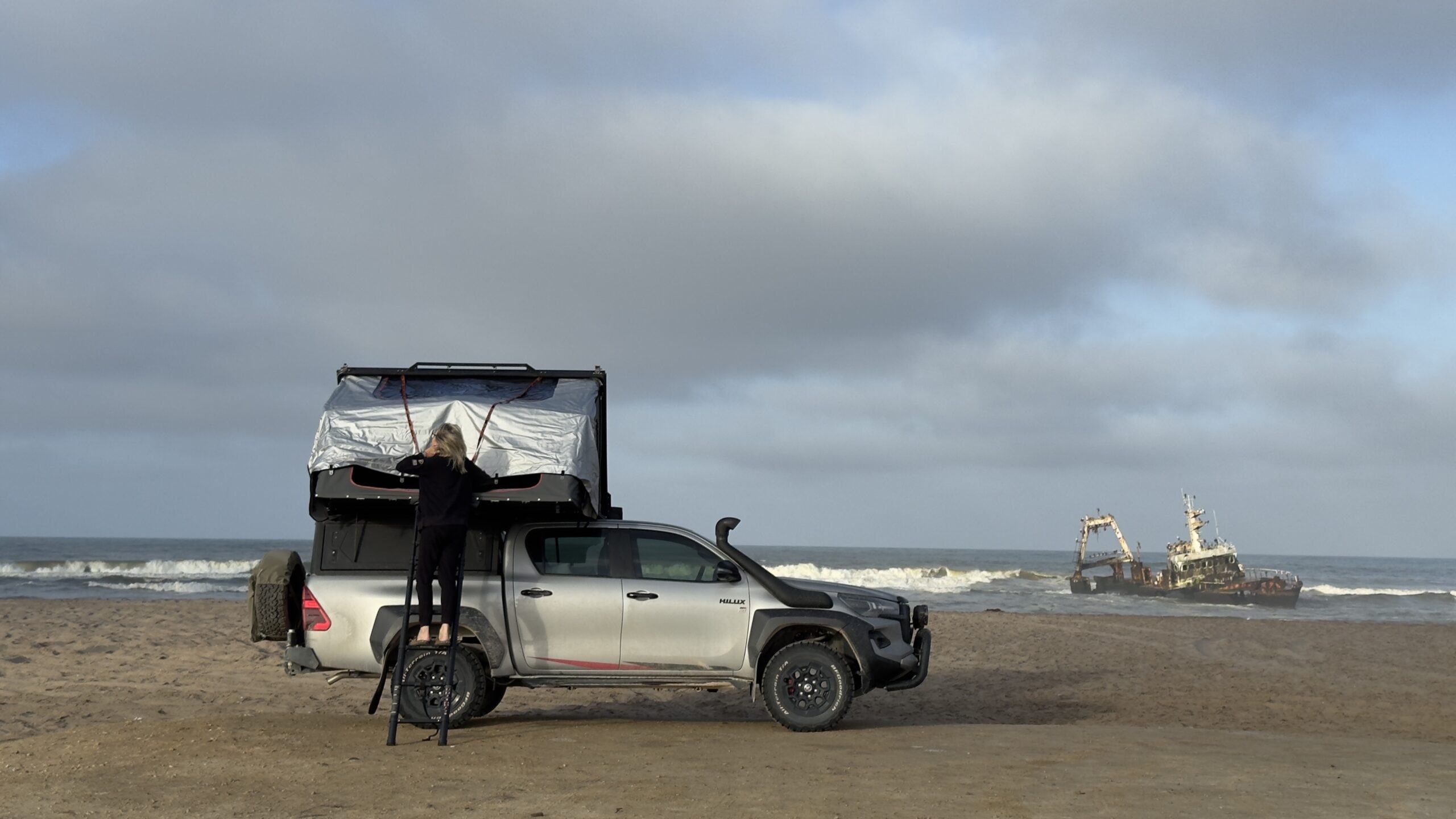
Dieter’s plan was always to turn whatever base vehicle he chose into a proper overlander. “It’s true, a Hilux GR‑S simply begs to get modified for adventure.”
When it came to choosing the camper setup, one name stood out. “In my opinion you can’t beat Alu‑Cab as a gravel companion,” he says. “I am a very visual person and all their products are not only practical and functional, but they look damn stunning on your rig as well.”
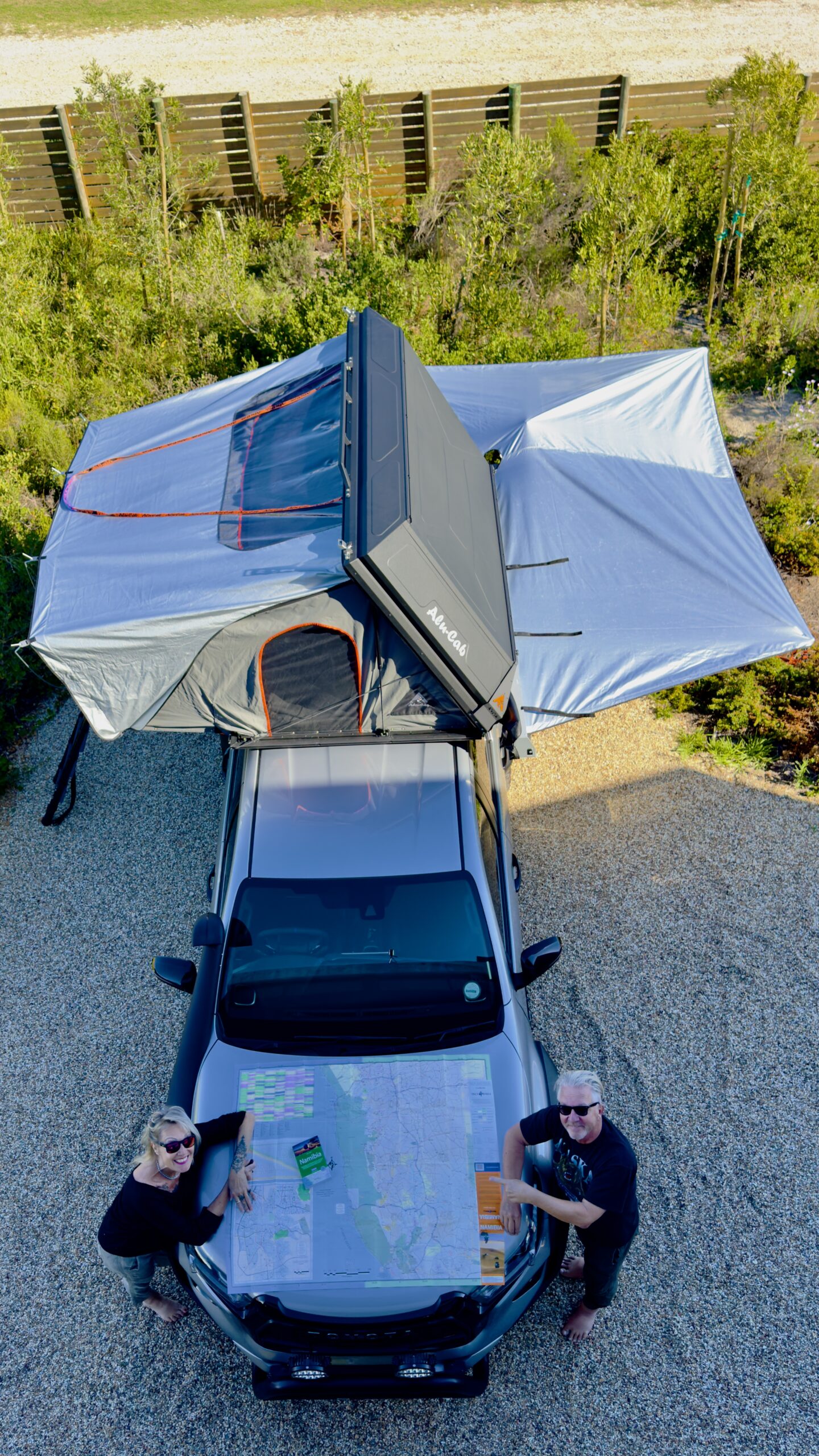
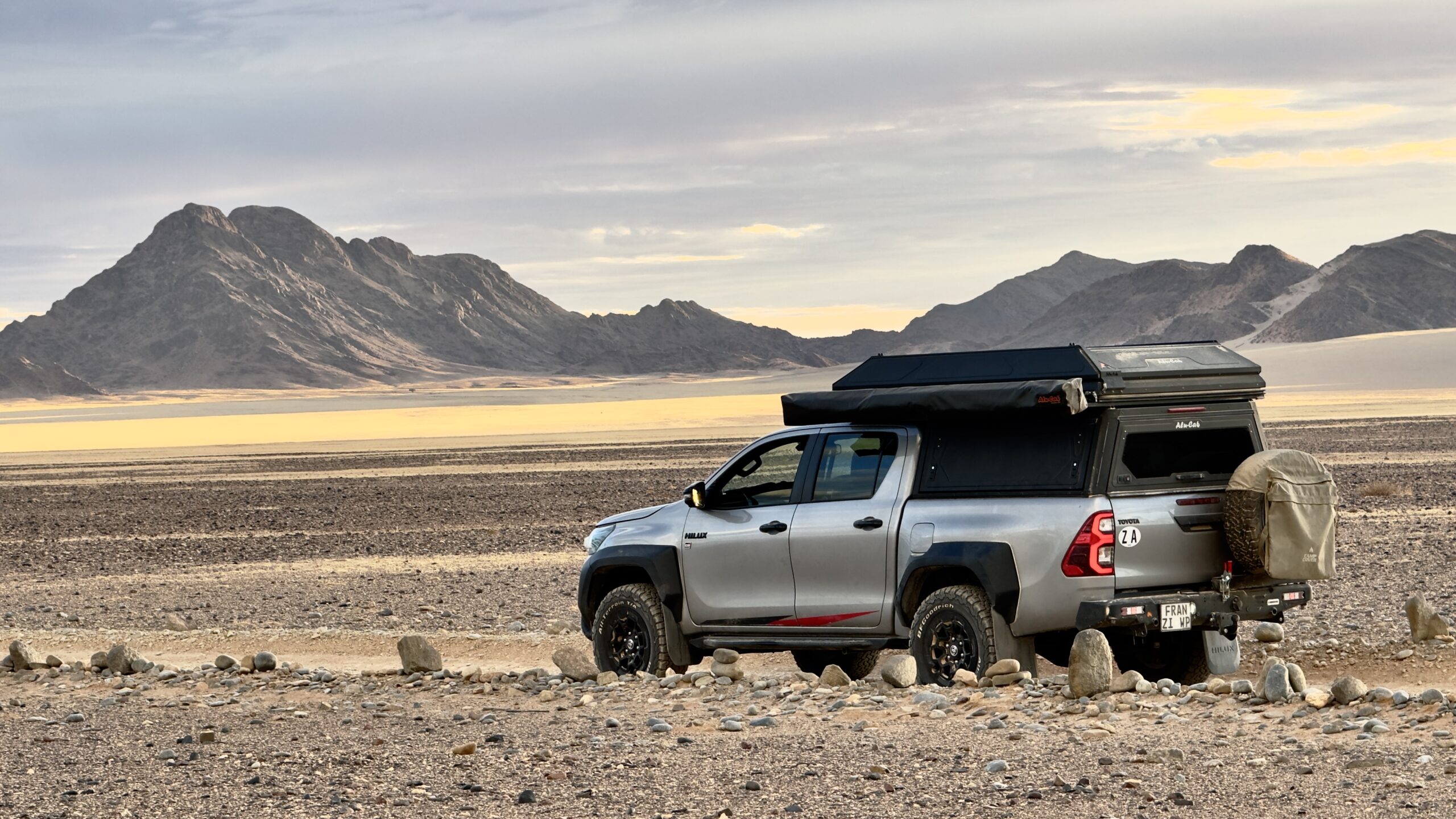
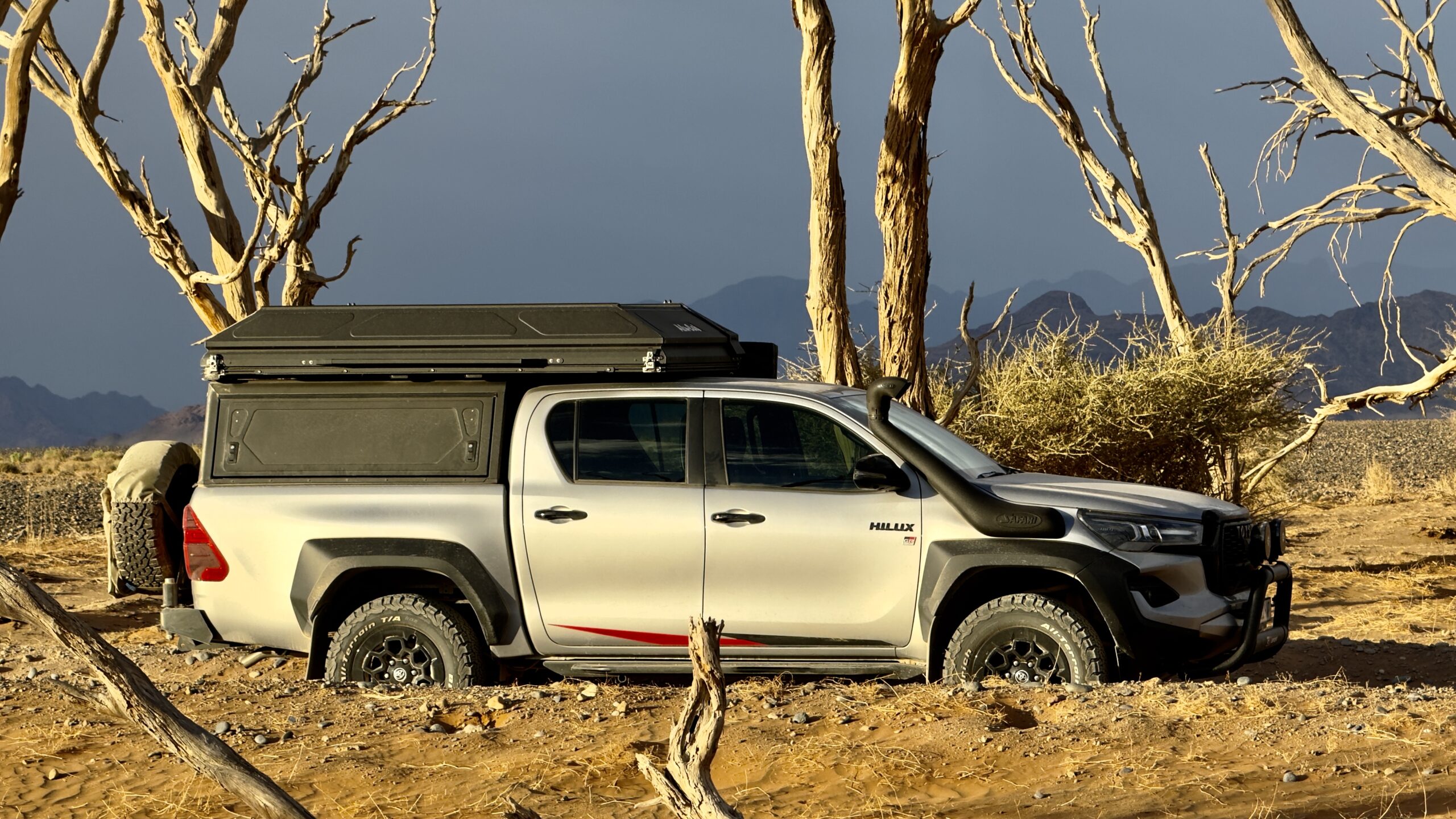
The centrepiece is the Contour Canopy fitted with a RT‑4S Rooftop Tent. “Not being youngsters anymore, Franzi and I loved the fact that Alu‑Cab offered the largest roof tent in the market, the super‑spacious, king plus‑sized RT‑4S.”
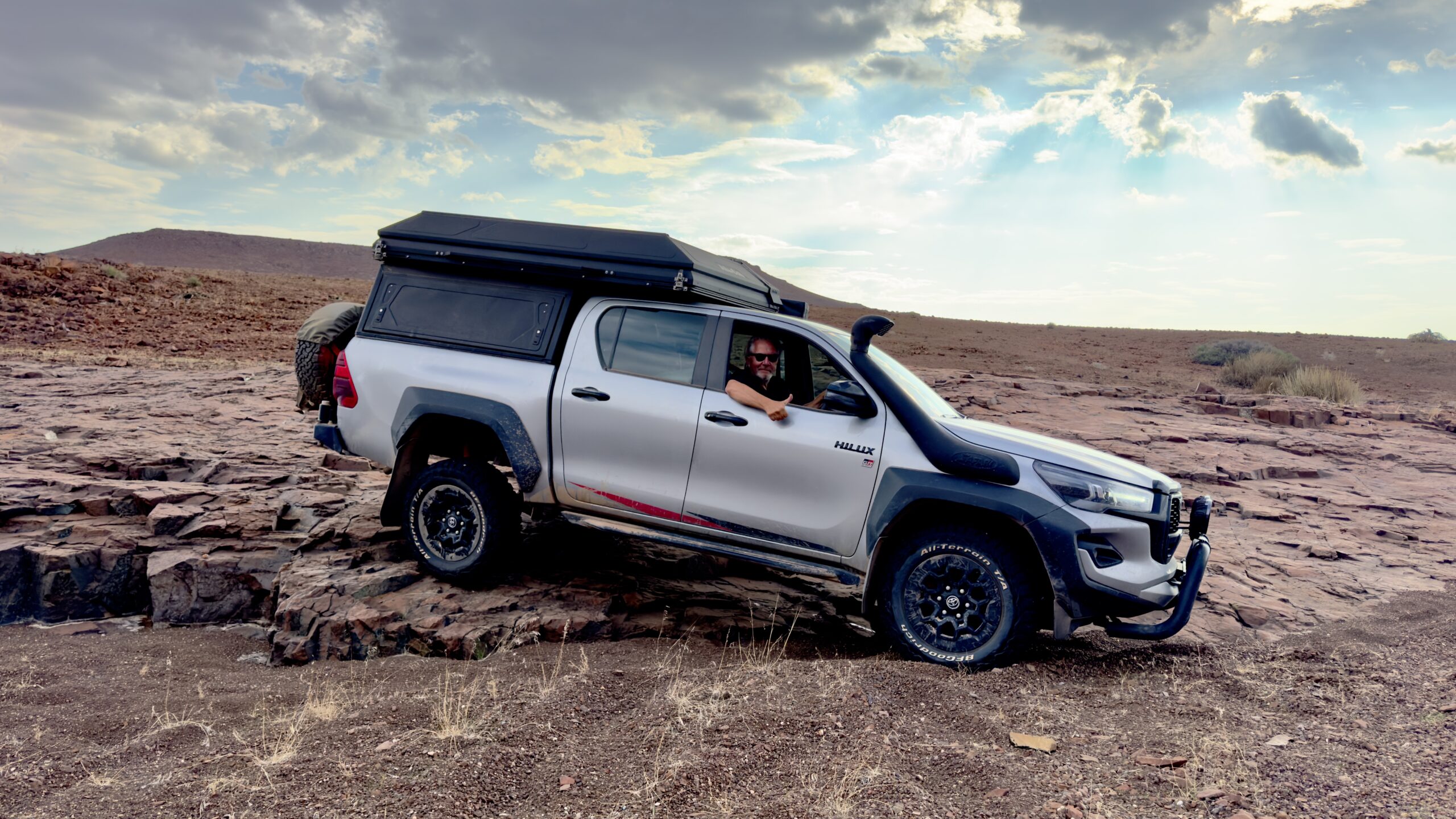
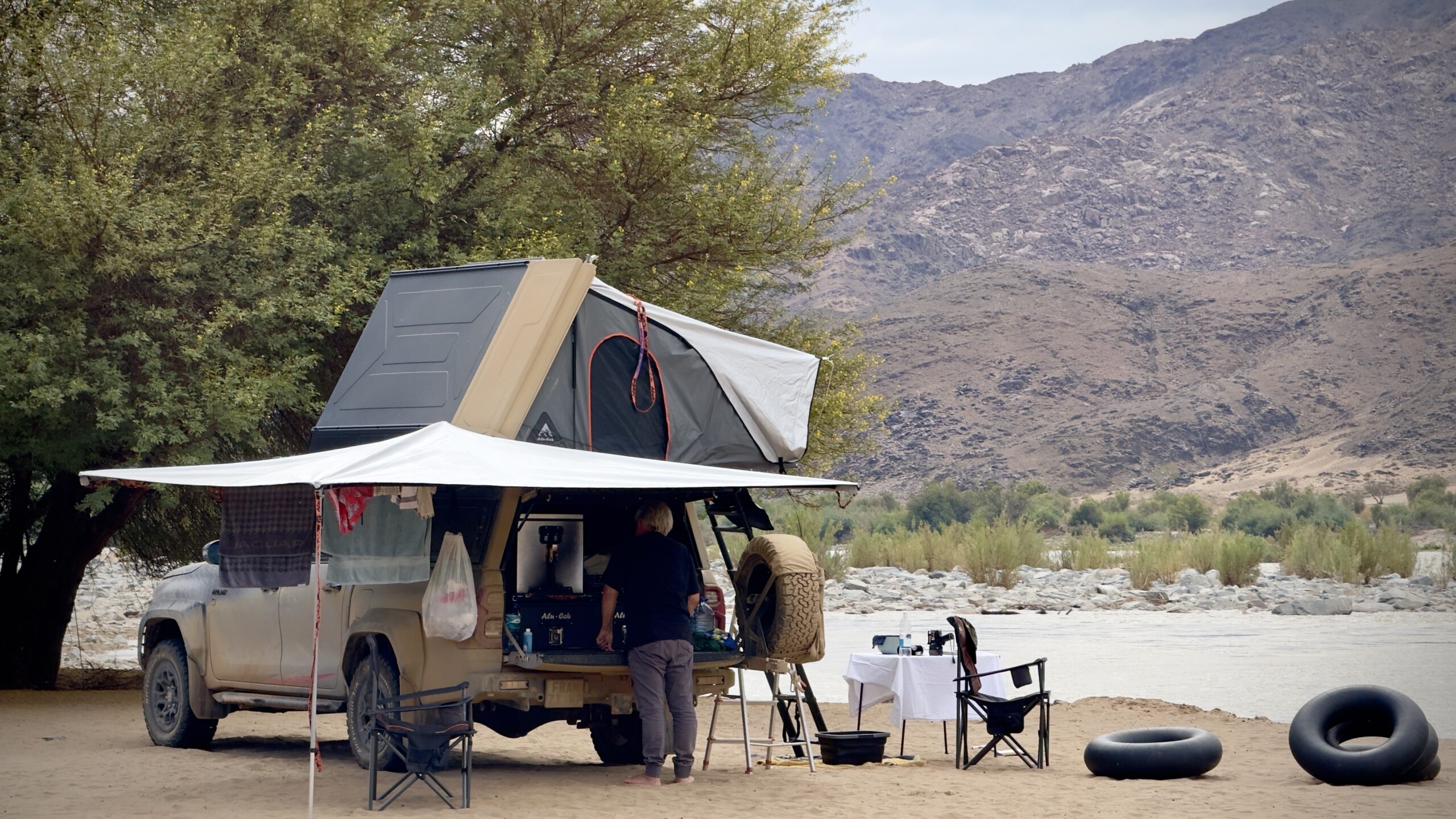
He didn’t stop there. The build includes a GobiX steel rear bumper with spare wheel carrier, steel rock sliders, and a National Luna fridge/freezer mounted on a Tilting Fridge Slide above Double Drawer System. For Dieter, the difference between any gear and the right gear is simple. “It’s quality, pride in the workmanship and products, and style.”
Weight, Handling and the Shadow Awning
With all the gear, how’s the drive? “The extra weight is almost not tangible on road. The on‑road abilities are still the same. We just pump the BF Goodrich All Terrains a bit harder.” Off‑road, the weight makes itself felt and Dieter’s added a Tough Dog suspension upgrade for more technical terrain.
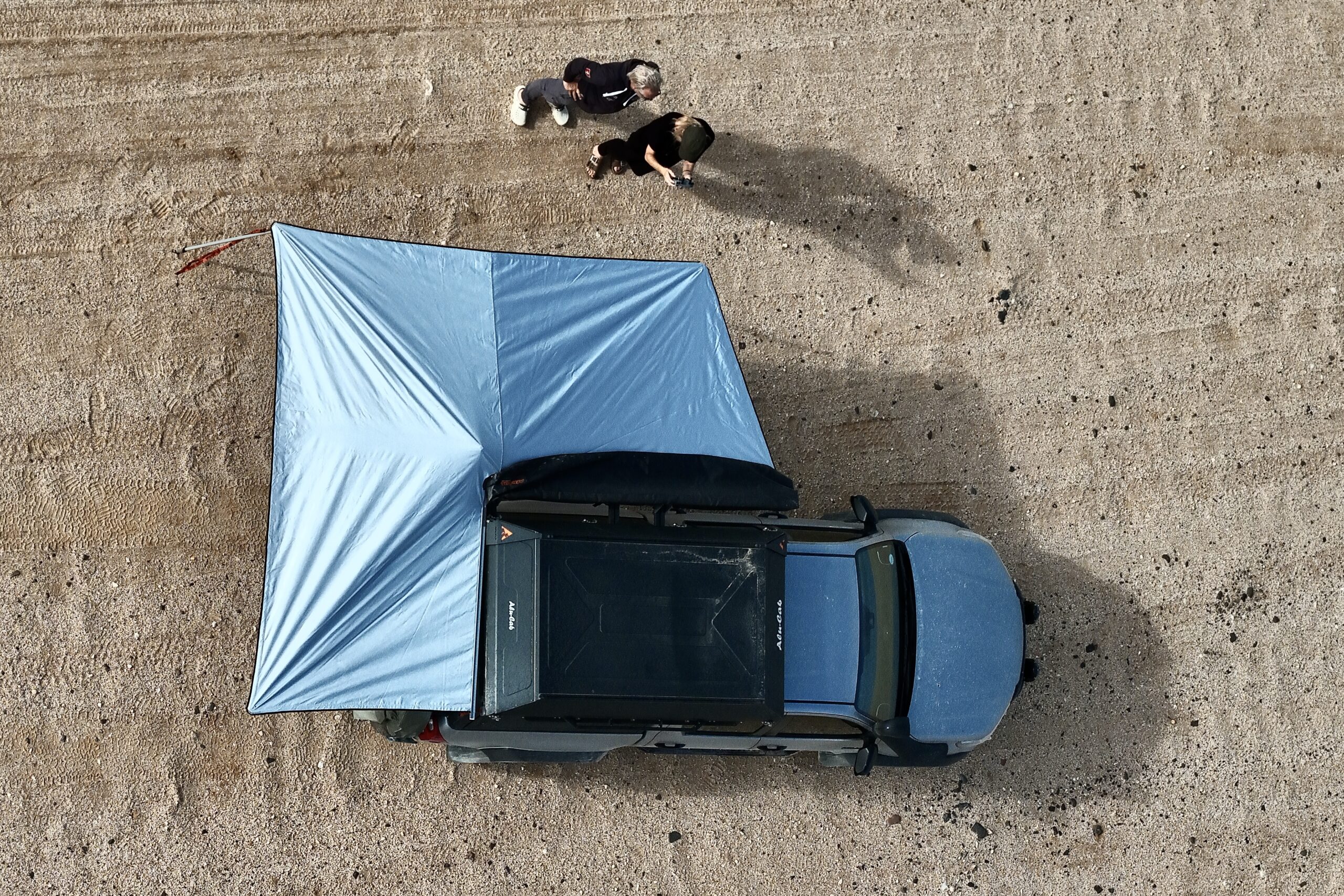
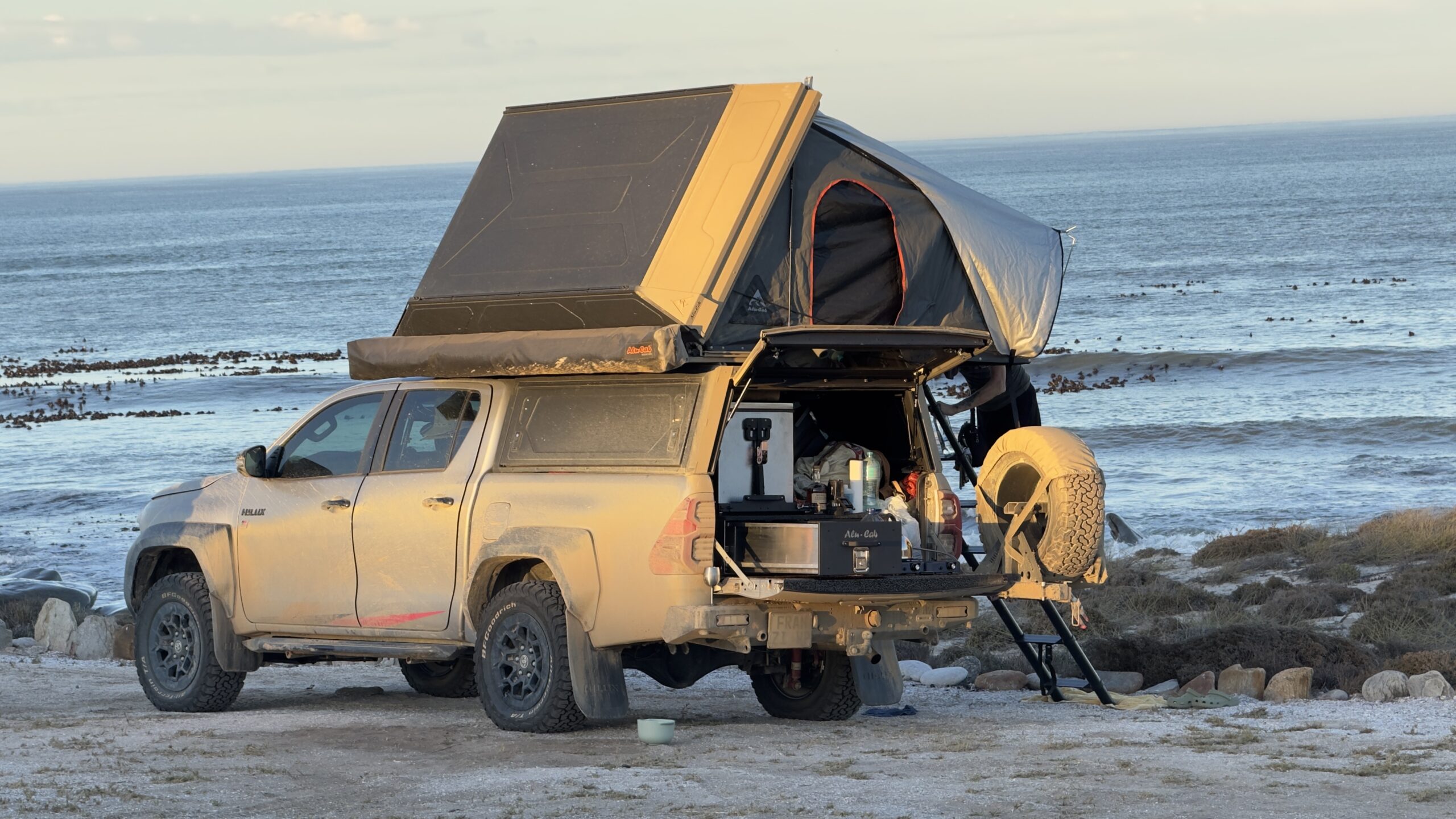
One piece of gear that immediately proved its worth was the Shadow Awning. “The Shadow Awning really allows you to stop in the middle of nowhere. Open the rear door, slide out the National Luna fridge/freezer and enjoy a cold one in the shade.”
From Glamping to Genuine Adventure
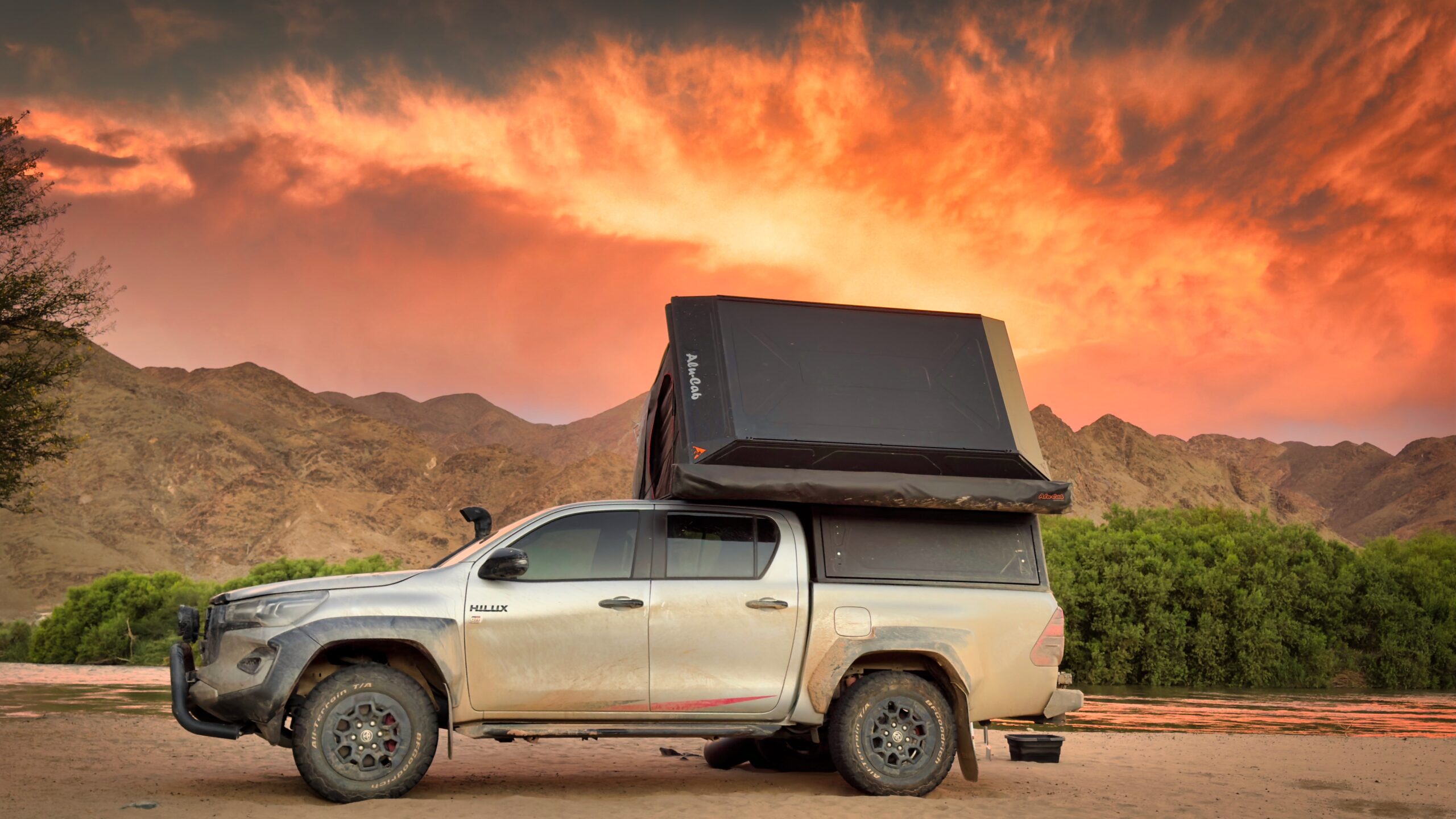
This first major trip with the built‑up Hilux was a shakedown, but it became something more. The couple headed into Namibia, and Dieter captured imagery that tells the story better than any spec sheet.
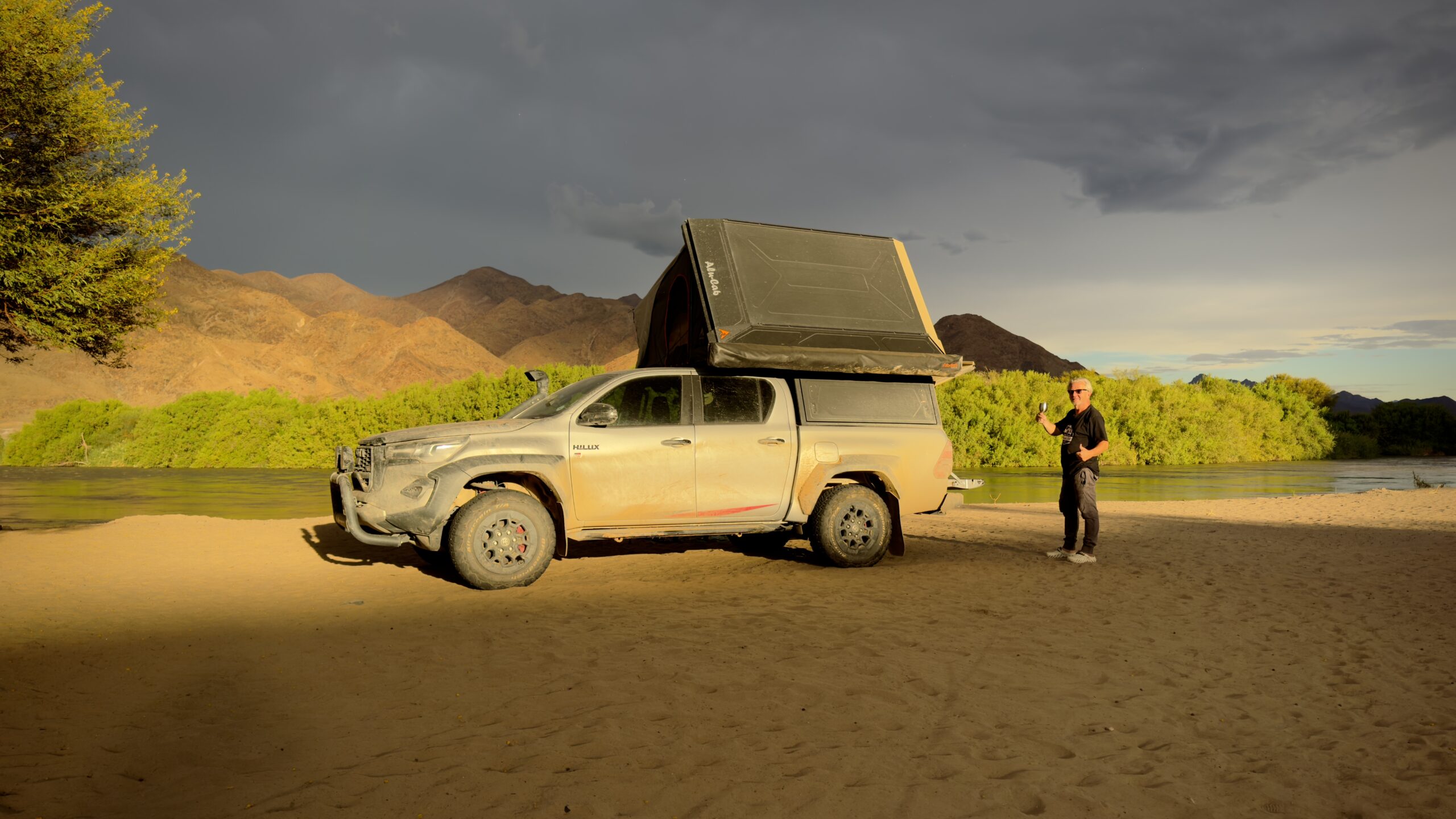
When asked about the most memorable shot, he doesn’t hesitate. “Sossusvlei at sunset.” His approach to photography is methodical: “The light first. Then the story. A picture should always tell one.” Late afternoon, 60 to 30 minutes before sunset, and then shortly after, is his golden window.
But the real magic of the trip wasn’t only in the photographs. It was in the moment Franzi became a convert.
“Franzi Woke Up to a Formidable Karoo Morning”
Before the Hilux, camping wasn’t really on the table. “Me and Franzi stayed in lodges, hotels and B&Bs, which we then featured in the German travel books. The closest to camping was glamping.”
That changed on the couple’s first night. “The Tankwa Karoo National Park, at Langkloof campsite, Franzi woke up in the spacious RT‑4S to a formidable Karoo morning, while I brewed some delicious fresh coffee.”
That image of coffee delivered to the rooftop tent, with the Karoo stretching out below is the kind of moment that turns a reluctant camper into an enthusiast.
Dieter points to other advantages, too. “You’re sleeping in an elevated position. High above all the various creepy‑crawlers. The tent is much easier to erect. You basically just open it up. Well, the RT‑4S, due to its size demands a bit more team work and preferably a step ladder.”
And in wilder parts of Africa, height brings safety. “Observing predators, elephants and rhinos from above is much more enjoyable than at eye level.”
Built for What’s Next
This Namibia trip was only the beginning. Dieter has a two‑month adventure planned for later in the year, cutting through South Africa, Namibia and Botswana with stops in Kaokoland, Chobe, the Makgadikgadi Pans and the Central Kalahari Game Reserve.
The build will evolve. “As it was our first ‘test’ trip the next one will involve more camping. Much more. Preferably with a water tank solution, Shower Cube and Roof Box with two Jerry Can Holders fitted to FRANZI‑WP.”
And there’s one photo he’s still chasing: “We are still trying to create a drone shot straight from above, in perfect late afternoon light, on a clean piece of landscape, preferably red‑coloured. With roof‑tent and awning open.”
Final Words of Wisdom
For a man who’s spent decades separating hype from genuine quality, Dieter has a simple test for overlanding gear. When asked how he distinguishes real‑world capability from marketing noise, he says: “Show me the convincing proof with footage of the locations and places you‘ve been to. If you can’t clearly determine the location, it’s fake news.”
It’s the same standard he applies to his own builds, his photography, and his choice of vehicle. The Hilux GR‑Sport, kitted out with Alu‑Cab, passed the test. And somewhere in Namibia’s wild open spaces, over fresh coffee served above it, Franzi passed it too. Which is exactly why a motoring journalist built a Hilux.