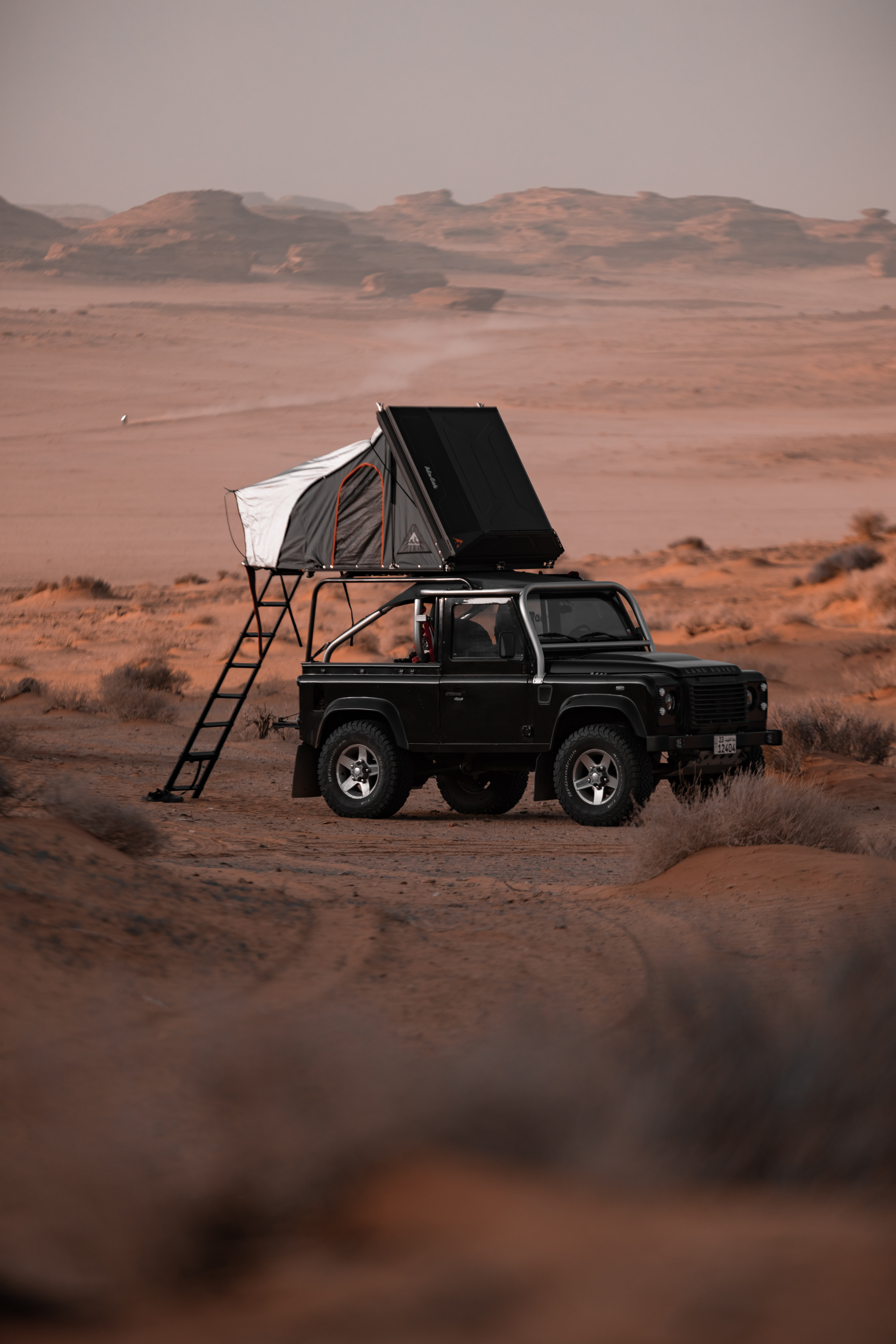
Last year we sat down with Nawaf Alshuraian for his feature The Spirit of Overlanding. This story introduced the overlander from Kuwait and his 2009 Mercedes G500. An 8-cylinder petrol with full-time 4WD and triple differential locks that’s carried him across deserts, mountains and the kind of remote horizons most of us only dream about. So when we saw him chasing the Dakar in a Defender 90 we had to find out more.
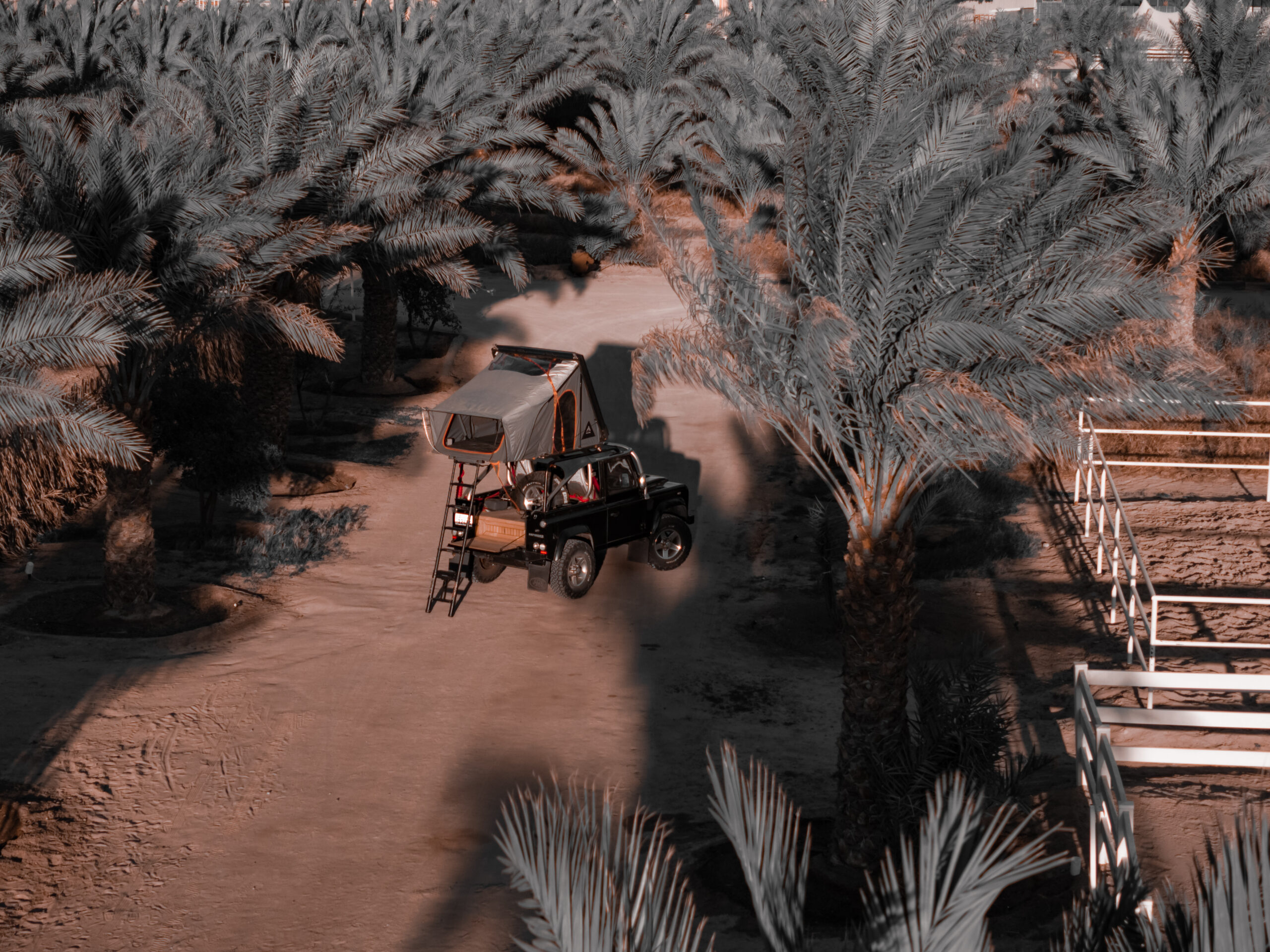
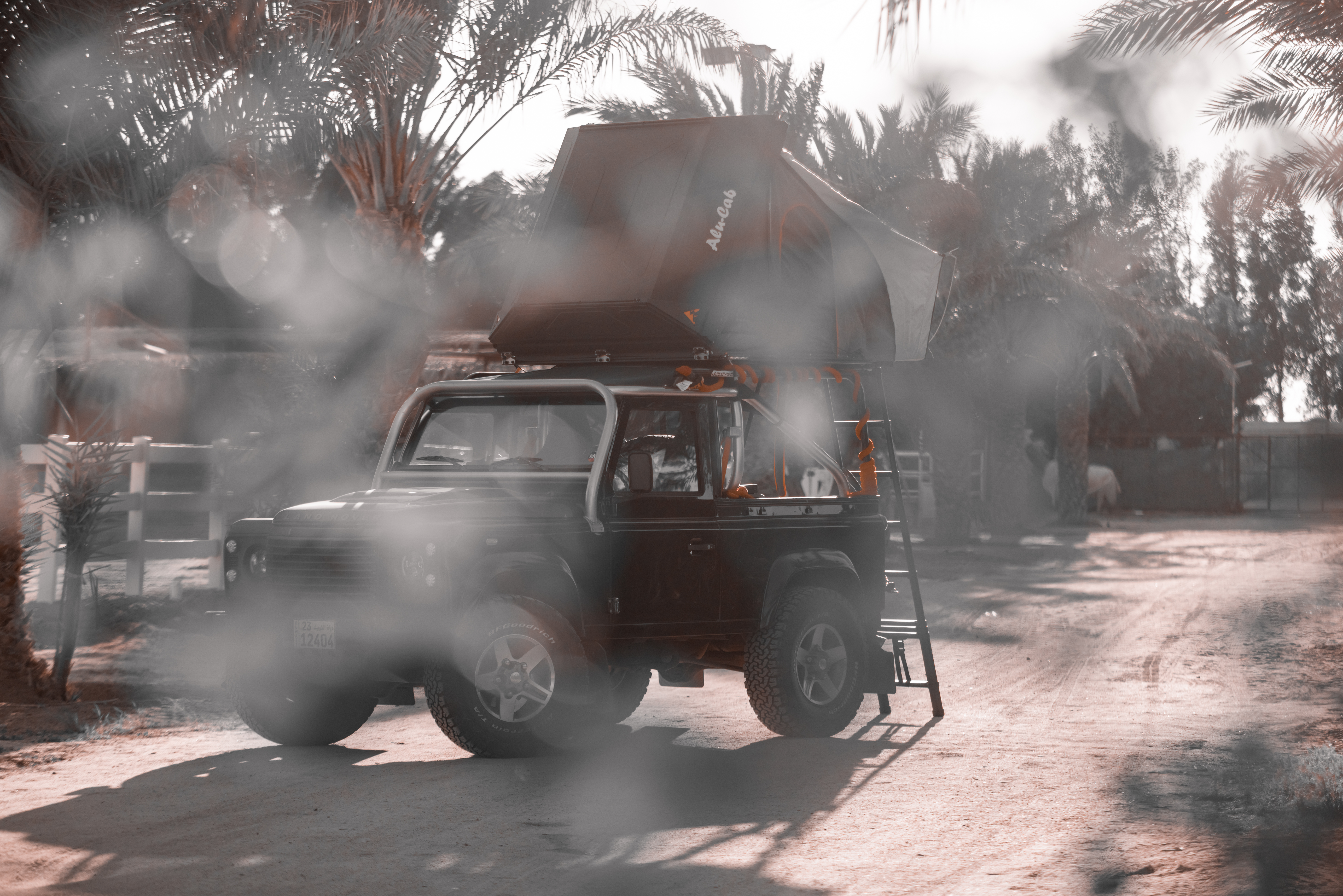
With the G500 garaged at home, Nawaf brought out his Land Rover Defender 90 topped with our new RT-2S rooftop tent. His mission? To chase the most punishing motorsport event on the planet.
Why the Defender 90 Replaced the G500
Ask any overlander why they choose a vehicle, and you’ll hear about reliability, comfort, or nostalgia. Ask Nawaf, and you’ll hear about terrain.
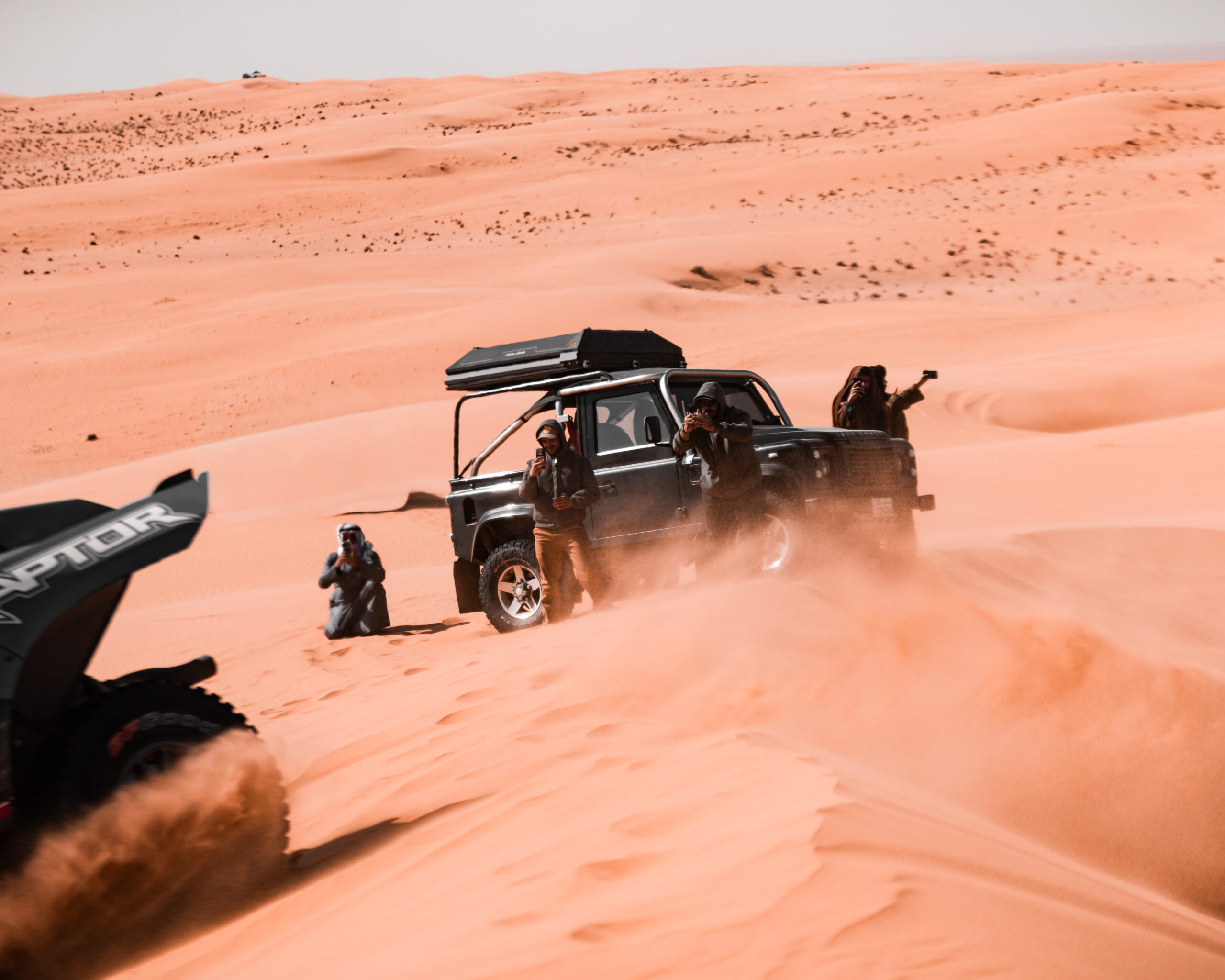
“The Defender D90 was a natural addition alongside my G500,” he explains. “I wanted something lighter, more agile and purpose-built for technical terrain. The short wheelbase makes a huge difference in dunes and tight sections, which is exactly what I needed for Dakar-style chasing.”
The G500 remains a legend. Stable, commanding and remarkably comfortable across long-distance rough tracks. But the Dakar doesn’t reward comfort. It’s about precision. And in the shifting dunes and knife-edge ridge lines of the Saudi Arabian desert, the Defender’s playful, responsive character came alive.
“Each has its strength,” Nawaf admits. But for this mission—following an 8,000-kilometer loop where every second counts—the Defender’s agility won the day.
That doesn’t mean the G-Class has been retired. Think of it less as a replacement and more as a specialization. The Defender is now the scalpel for the kind of trips where maneuverability means the difference between catching the action or watching dust trails fade on the horizon.
Feeling the Dakar From the Driver’s Seat
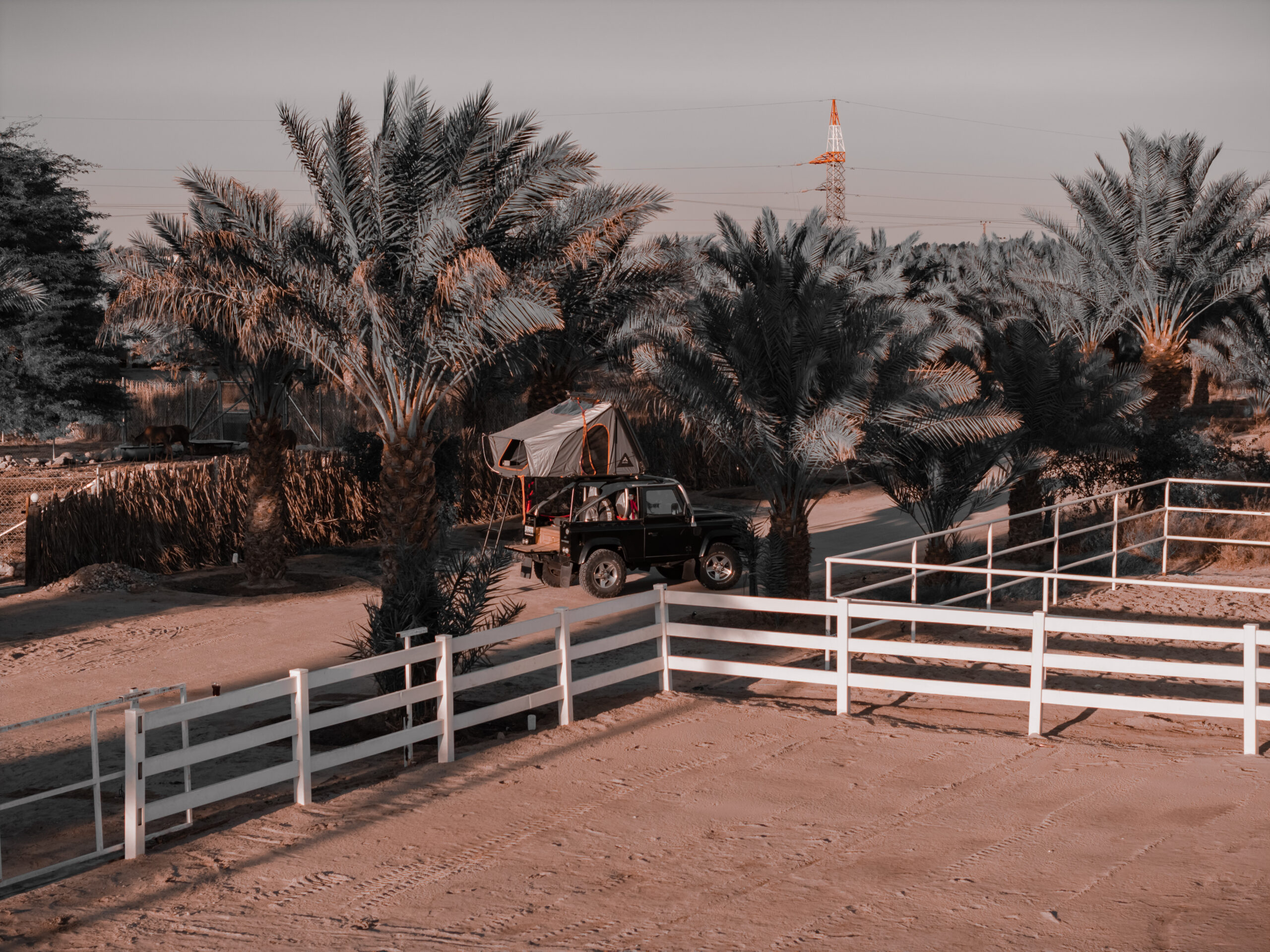
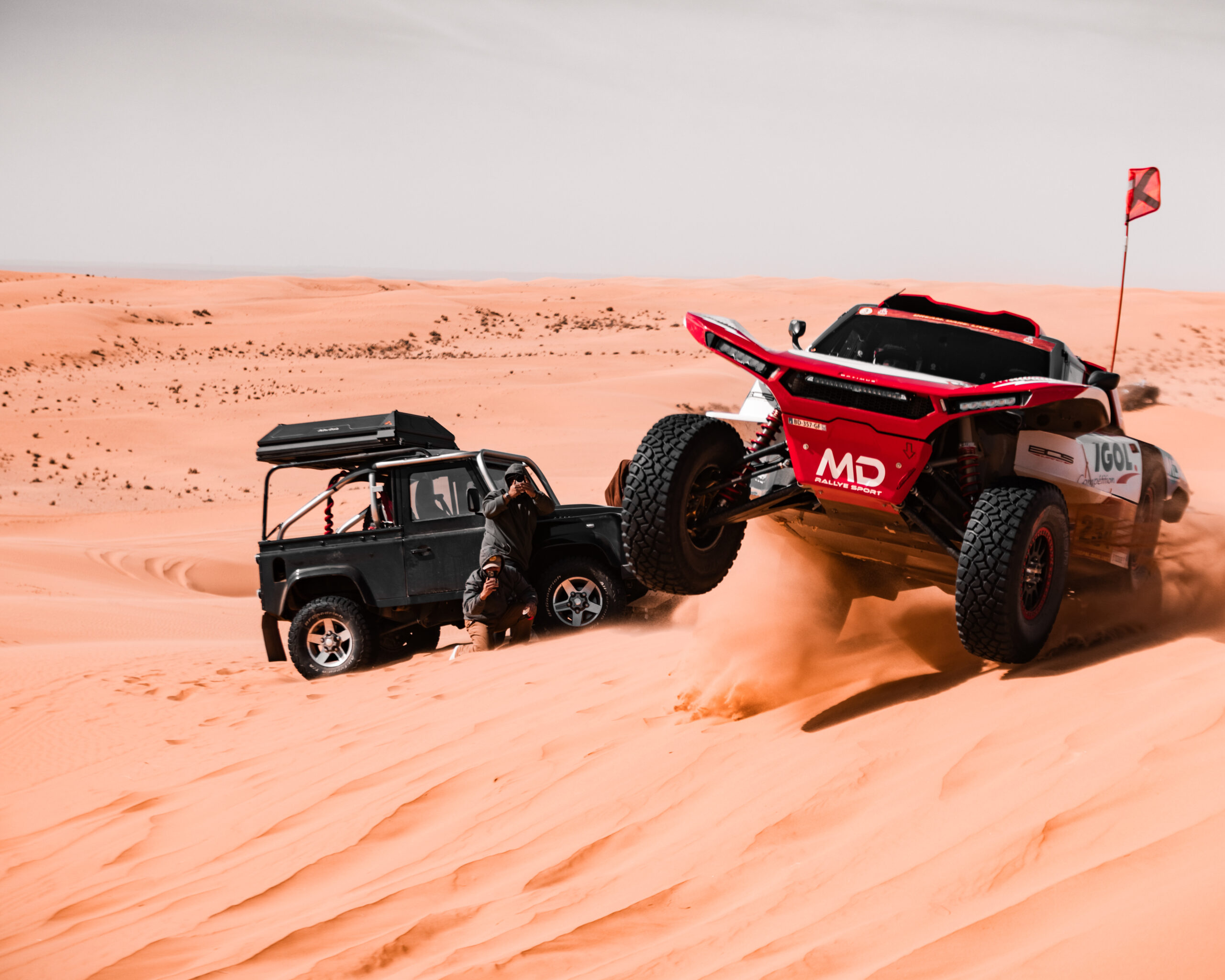
There’s a fundamental difference between watching the Dakar Rally and chasing it. Competitors operate inside a bubble. Stage, time, navigation, survival. Their world narrows to the ribbon of terrain ahead.
Chasers live in the negative space around that ribbon.
“You’re constantly adapting,” says Nawaf. “Moving between locations, predicting the race flow and staying ahead of logistics without the structure the teams have. It’s less physically extreme, but mentally more unpredictable. In some ways, it’s harder because you don’t have a fixed rhythm. You’re building your own every day.”
That unpredictability is precisely why Nawaf wanted a vehicle that connected him to the terrain. Driving his own rig through the same dunes, facing the same heat and dust, he found himself developing a completely different level of respect for the racers.
“It definitely makes me feel more connected to the event,” he says. “It’s not just following. It’s experiencing a small part of what Dakar really is.”
And that experience has reshaped how he thinks about every piece of gear he carries.
How the RT-2S Won the Desert
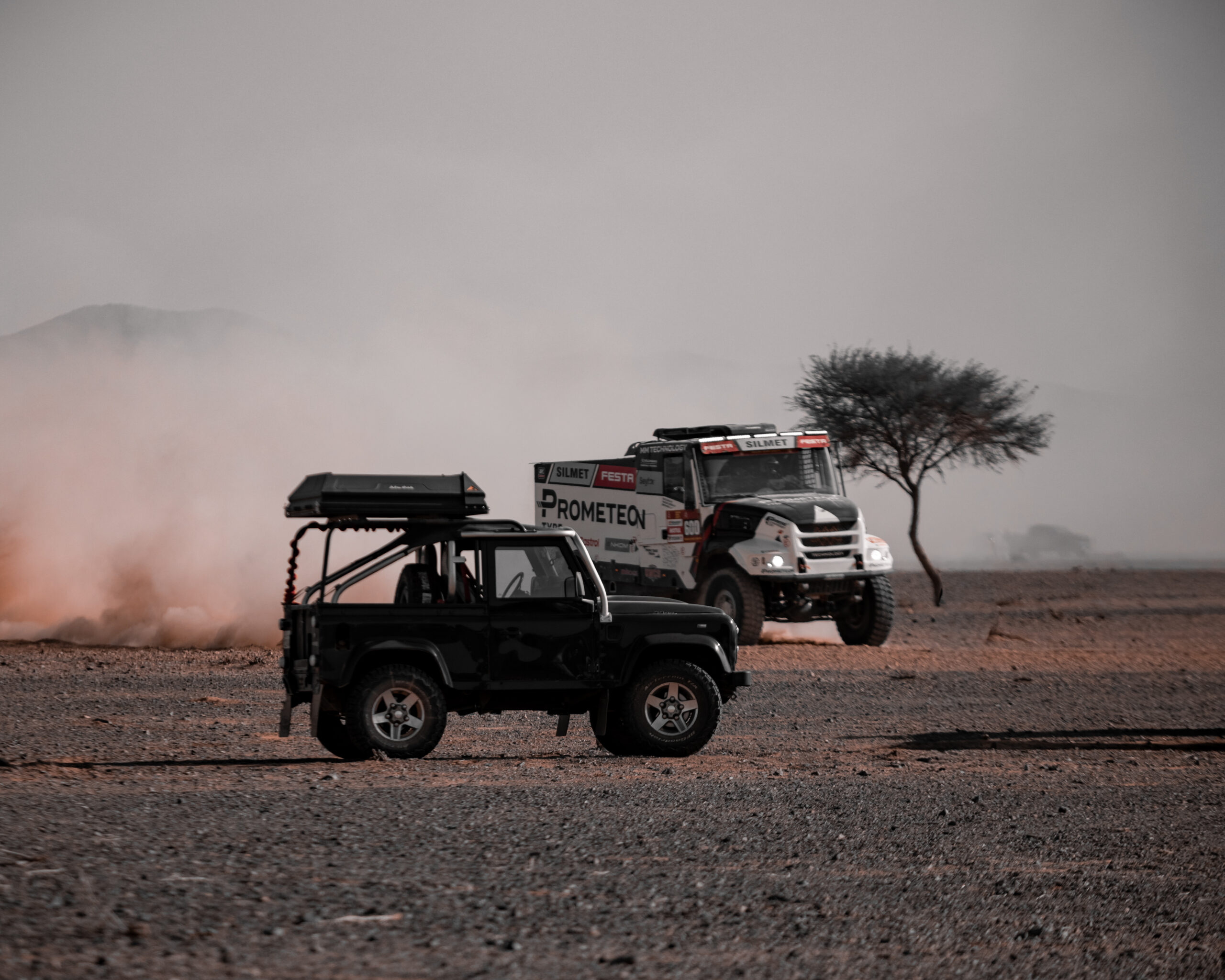
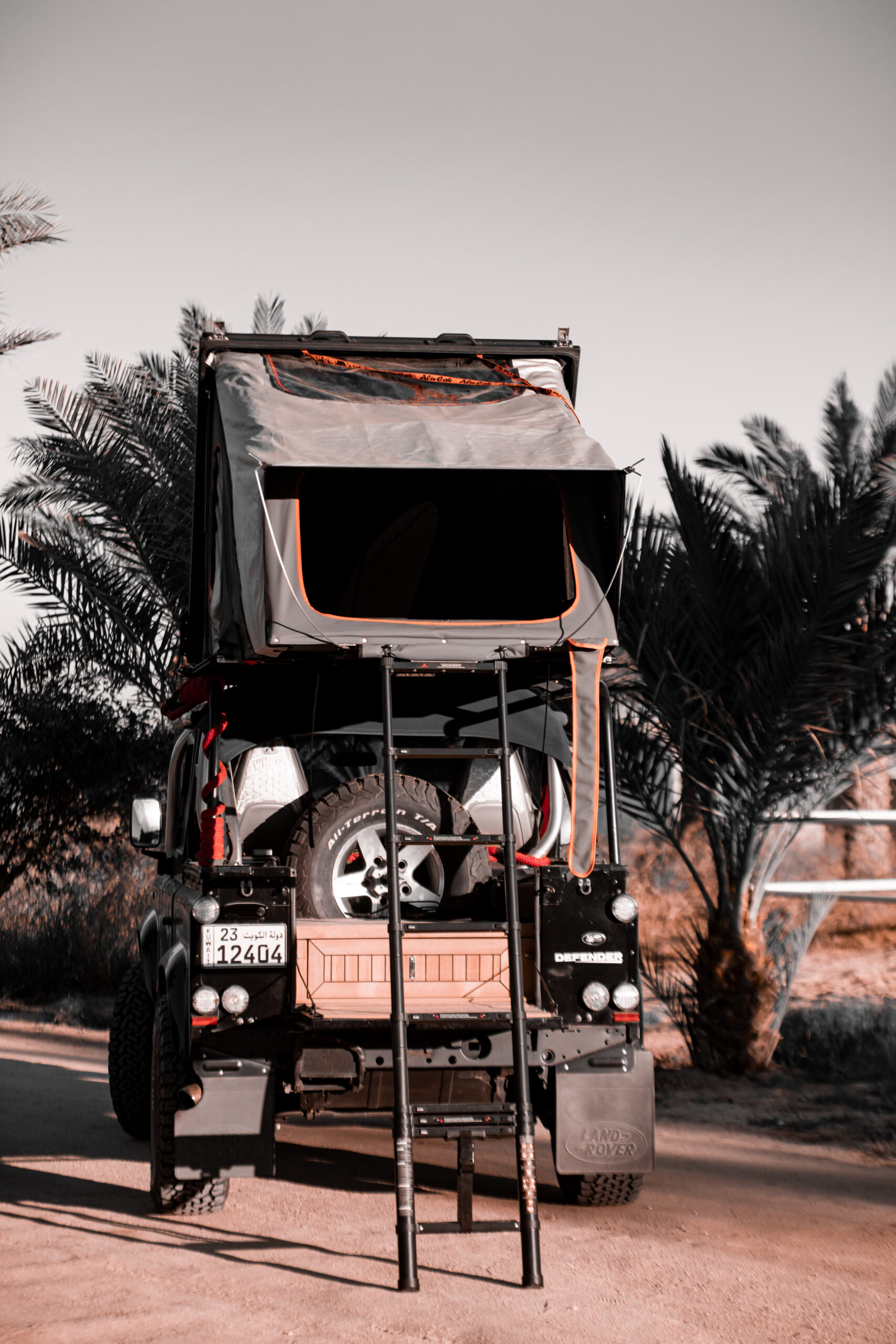
In our previous feature, Nawaf was unequivocal about his Alu-Cab Gen 3-R rooftop tent: it was “one thing I can’t live without.” So when he showed up to chase the Dakar with the new RT-2S, we had to ask why.
“The Gen 3-R is an incredible setup,” he says. “But the RT-2S felt like a natural evolution. It’s more compact, quicker to deploy and better suited for a fast-paced trip like Dakar where you’re constantly on the move.”
Let’s be precise about what “constantly on the move” means here. This isn’t a leisurely week in the dunes. We’re talking daily relocations, often at race pace, with zero margin for a tent that fights you at the end of a 14-hour day.
“The biggest difference is efficiency,” Nawaf explains. “The RT-2S fits seamlessly into my daily routine. Less time setting up means more time resting. Sleep quality has improved simply because the process is smoother and less tiring.”
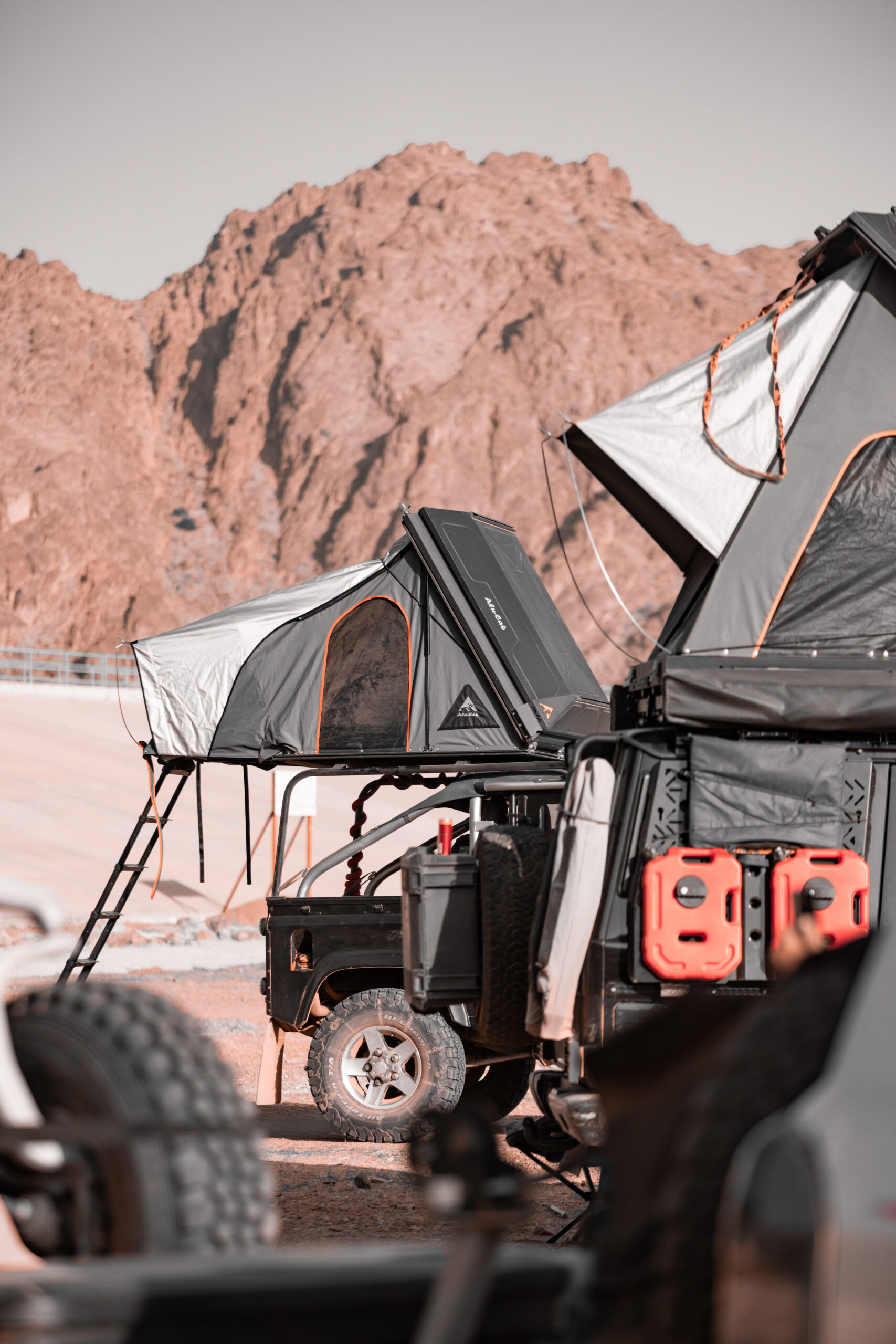
In the desert, that efficiency becomes survival. Strong winds, dramatic temperature swings and pervasive dust are simply part of the environment. The RT-2S handled all of it flawlessly. But what stood out most wasn’t the ruggedness, but its ease of use.
“Size and speed matter a lot in this kind of trip,” he says. And when you’re moving daily, a tent that sets up and packs down without drama is the difference between waking up fresh and ready to seize the day or waking up exhausted.
Comfort vs. Capability
Ask ten overlanders whether they prioritize comfort or ruggedness, and you’ll get ten different answers. Nawaf’s answer is simpler: you don’t get to choose.
“Comfort becomes essential on a trip like this,” he says. “Capability gets you there, but comfort keeps you going. When you’re moving every day, sleeping well, recovering properly and having a functional setup makes a huge difference. It’s all about balance and you can’t sacrifice one for the other.”
That philosophy extends beyond the tent and into every corner of the Defender’s interior. Nawaf has modified the cabin for efficiency and durability: secure storage, quick-access systems and a fixed place for everything. No loose gear. No time wasted searching.
“Everything has a fixed position now,” he says. “I also prioritised reducing setup time at camp so I can transition quickly from driving mode to living mode without losing energy or time.”
This is overlanding as systems engineering. And the Dakar is the ultimate stress test.
What Real-Time Pressure Reveals
Normal expeditions allow for recovery. Push hard, then rest. Break something, then fix it. Learn, and adapt.
The Dakar doesn’t offer such courtesy.
“It compresses years of wear-and-tear into days,” says Nawaf. “Constant movement, extreme dust, heat cycles and zero downtime make it one of the harshest environments you can put gear through. If something works here, it will work almost anywhere.”
But the real revelation wasn’t whether the gear worked. It was whether it still worked perfectly after ten consecutive brutal days.
“Normal expeditions allow for recovery time and gradual stress,” he explains. “Dakar doesn’t. It exposed how everything performs under nonstop cycles. Setup, breakdown, dust sealing, internal organisation and fatigue after repeated use.”
That level of testing has pushed Nawaf to think differently about his entire setup. Not just what works, but what works efficiently. Not just what survives, but what doesn’t drain your energy every time you touch it.
“This is just the beginning of refining that approach for bigger and longer expeditions ahead,” he says.
Navigating the Chaos
The Dakar route covers roughly 8,000 kilometers and following it requires more than a good map.
Nawaf’s approach mixes pre-planning with real-time adjustment. He maps key spectator zones and bivouacs in advance, but refuses to lock into a full daily route too early. Dakar changes constantly. Timing shifts, road access changes, weather intervenes.
“I keep flexibility built into every day,” he says. “And I prioritise being close enough to the action while still having the freedom to disappear into remote spots for the night.”
That freedom is the whole point. The Defender setup has opened access to terrain and remote angles that weren’t possible with his previous configuration. Being able to go further off-grid, stay self-sufficient and still operate comfortably means he can reach quieter, more raw perspectives of the rally that most people miss completely.
“Brief encounters at bivouacs with teams still working late into the night, or seeing competitors arrive completely exhausted yet still focused on the next day,” he says, recalling the moments that best captured the Dakar spirit. “There’s a shared understanding among everyone here. No matter the role, everyone is pushing limits in their own way.”
What Comes Next
After an experience this intense, you might expect Nawaf to declare the Defender 90 and RT-2S his permanent setup for all future adventures. Not quite.
“This Dakar experience has definitely been a defining test,” he says. “It’s shown me a level of reliability, practicality and adaptability that fits exactly the kind of expeditions I want to do next.”
But he stops short of calling his Defender 90 and RT-2S setup final.
“I wouldn’t call it ‘final’ yet, because every big trip still teaches you something new. But it’s very close to what I’d consider a long-term platform. For a project like my dream Africa journey, this setup already feels proven in the most demanding conditions I’ve faced so far. The confidence is there, now it’s just about refining and evolving it based on what Dakar revealed.”
That refinement is already underway. Dakar taught Nawaf to think more minimal, more efficient, more intentional about every single component he carries. The vehicle and the tent are just the beginning.
“No matter how advanced the setup is, it always comes down to execution, timing and resilience,” he says. “For me, this project isn’t just about the vehicle or equipment. It’s about building a system that allows me to stay fully mobile, fully independent and still fully connected to the experience.”
Live the Life You’re Chasing
We asked Nawaf how the rest of us can live a life as exciting as his.
“Take the trip. Chase the unknown. And don’t wait for perfect conditions because they never come.”
This is the wisdom of someone who has spent time learning exactly what he needs and rejecting everything else. But the real lesson from Nawaf’s Dakar chase isn’t about vehicles or tents. It’s about showing up.
The rally will be there next year. The desert isn’t going anywhere. But the version of you who hesitates, who waits for the perfect setup, who tells yourself next time… that’s the only thing standing between you and your goals.
Nawaf chose to chase. What’s stopping you?